

Stencil Gallery

Tattoo Symbol Stencils

Compare compact tattoo symbol stencils to see which silhouettes, internal gaps, repeated details, and orientation cues stay readable before adapting your own reference. This reviewed set contrasts paired emblems, angular origami forms, object-led symbols, carved masks, expressive theater masks, ornament-framed designs, and a stacked anatomical emblem without turning the collection into a meanings or tattoo-ideas guide.

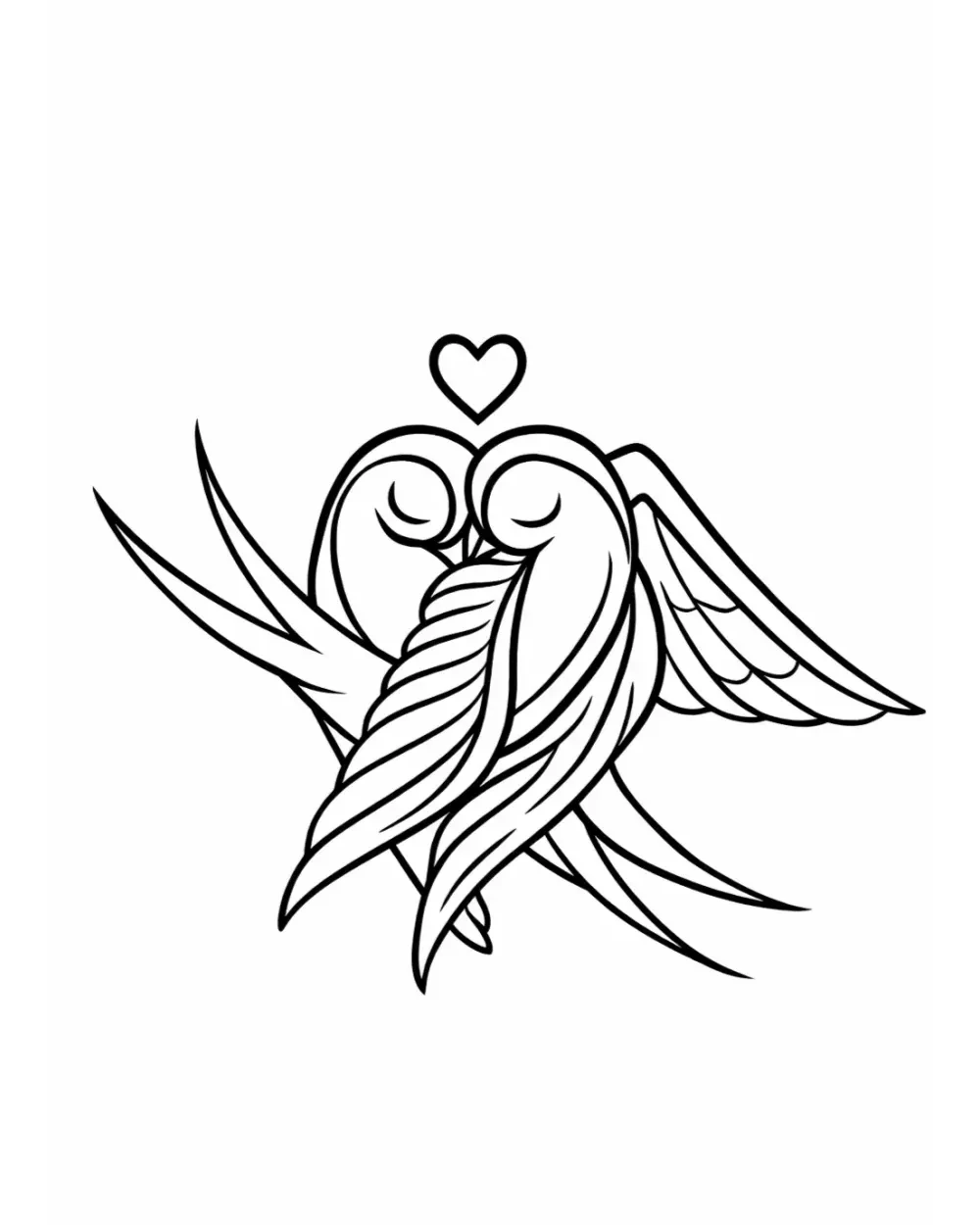
Paired bird emblem stencil with two clean silhouettes and open space between the forms
7
7
Final size

Curated compact symbol references

Compare compact geometry before ornament becomes the first read.

Seven reviewed examples span paired emblems, origami geometry, an object-led silhouette, carved and expressive masks, ornament framing, and an asymmetrical anatomical stack. Use the image notes first, then run the same designs through the Compact Symbol Readability Test.

Paired bird emblem stencil with two clean silhouettes and open space between the forms

Paired-symbol reference for checking whether two simple forms still read separately after reduction.

The design reads from the two bird silhouettes and the controlled central spacing before any small interior marks matter.
Comparing relational symbols where spacing between two forms is part of the stencil structure.
If the birds move too close together, the open center can close and the pair can become one dark shape.
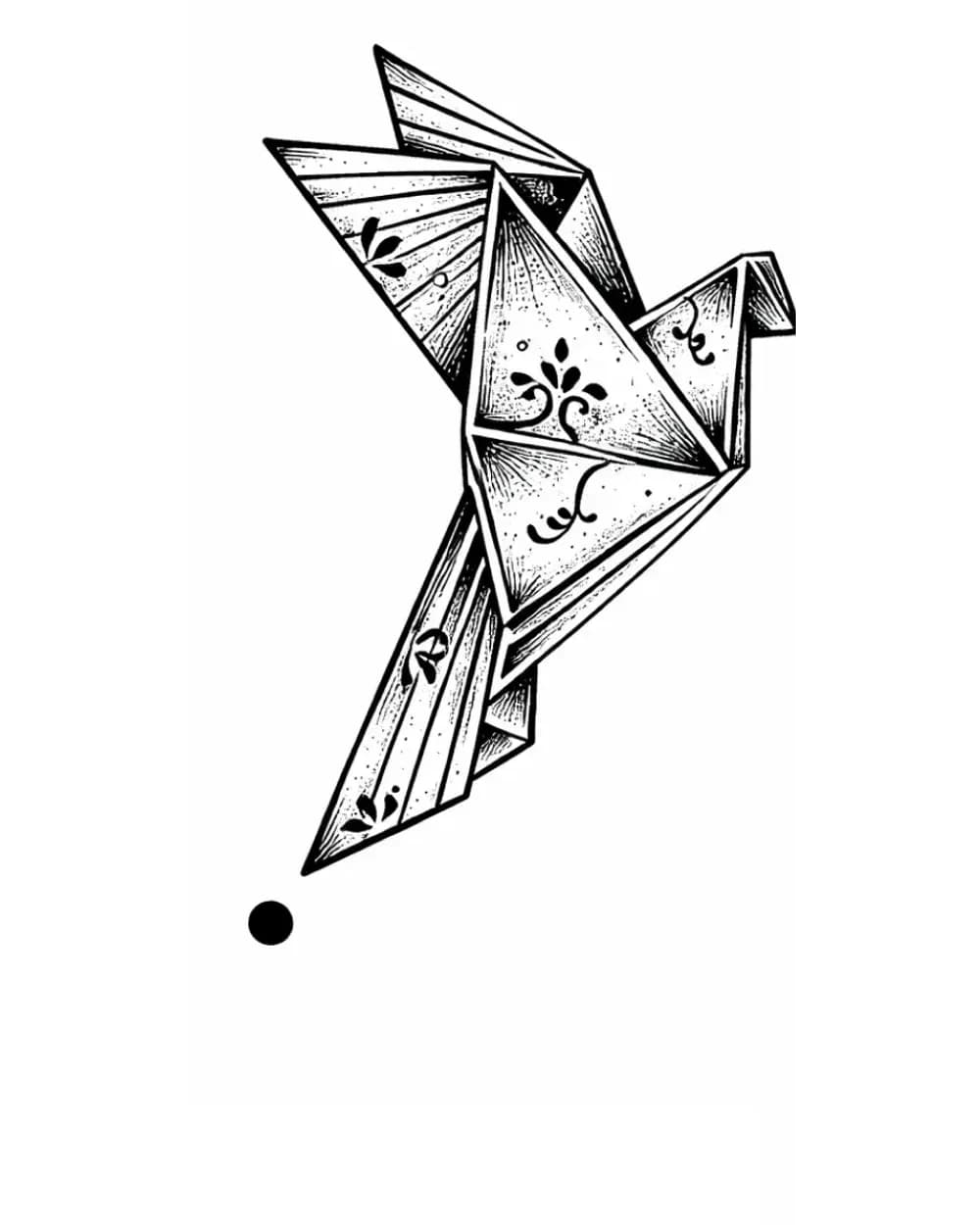
Origami bird stencil with angular folded planes and narrow triangular interior gaps

Geometric reference for comparing outer bird shape against fragile fold lines and narrow openings.

The angular bird silhouettes remain clear because the major folded planes establish the form before smaller crease lines.
Compact geometric symbols where edge hierarchy and internal negative space matter more than texture.
Narrow triangular gaps and repeated fold lines can merge first when the stencil is reduced.
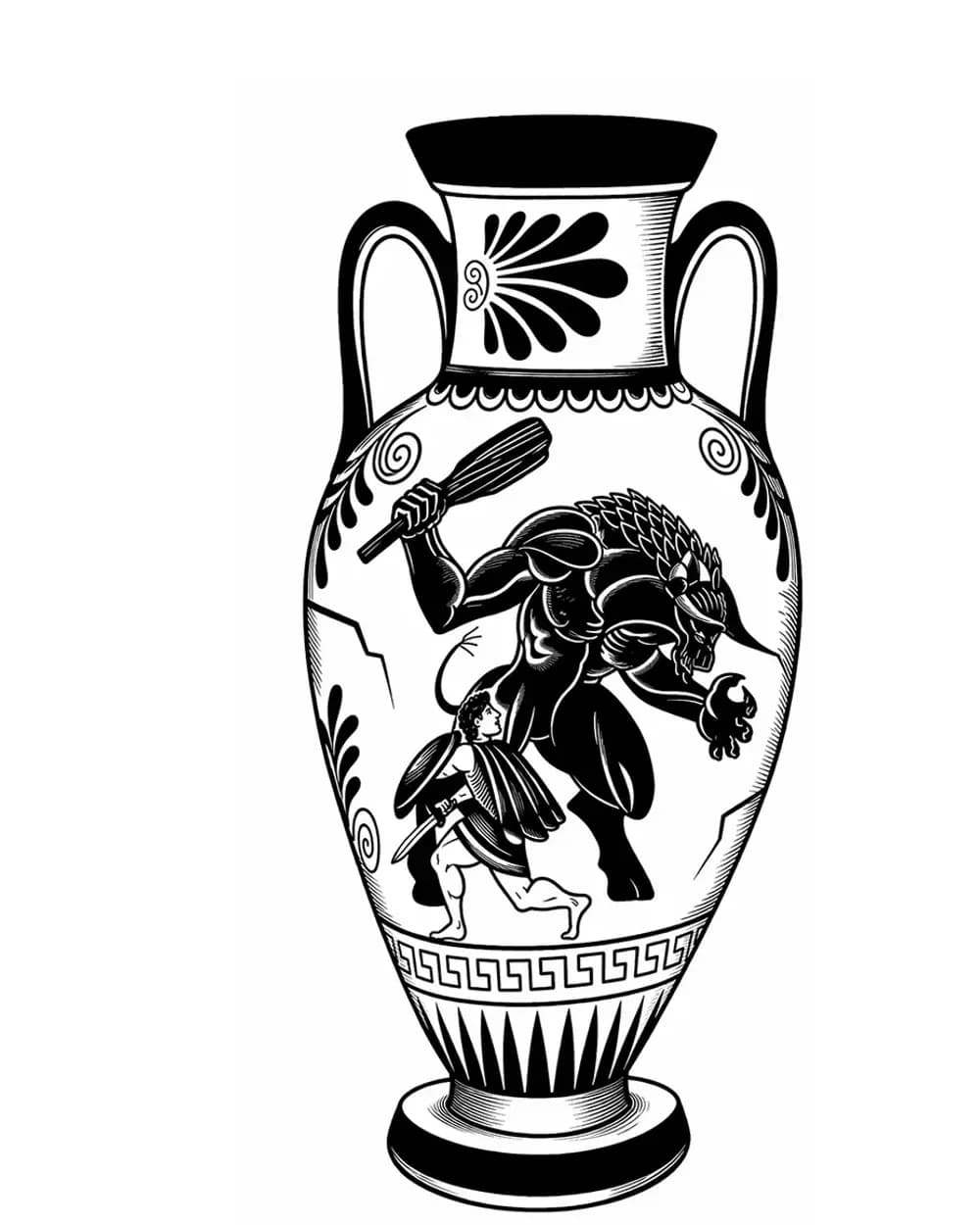
Amphora stencil with a strong vessel outline, open handles, and restrained decorative bands

Object-emblem reference showing how the outer vessel shape can carry recognition before ornament.

The body, neck, handles, and base establish the object immediately while the decorative bands remain secondary.
Object-led emblems where one stable silhouette should survive before interior pattern detail.
Handle openings and narrow decorative spacing can close before the main outer contour loses readability.
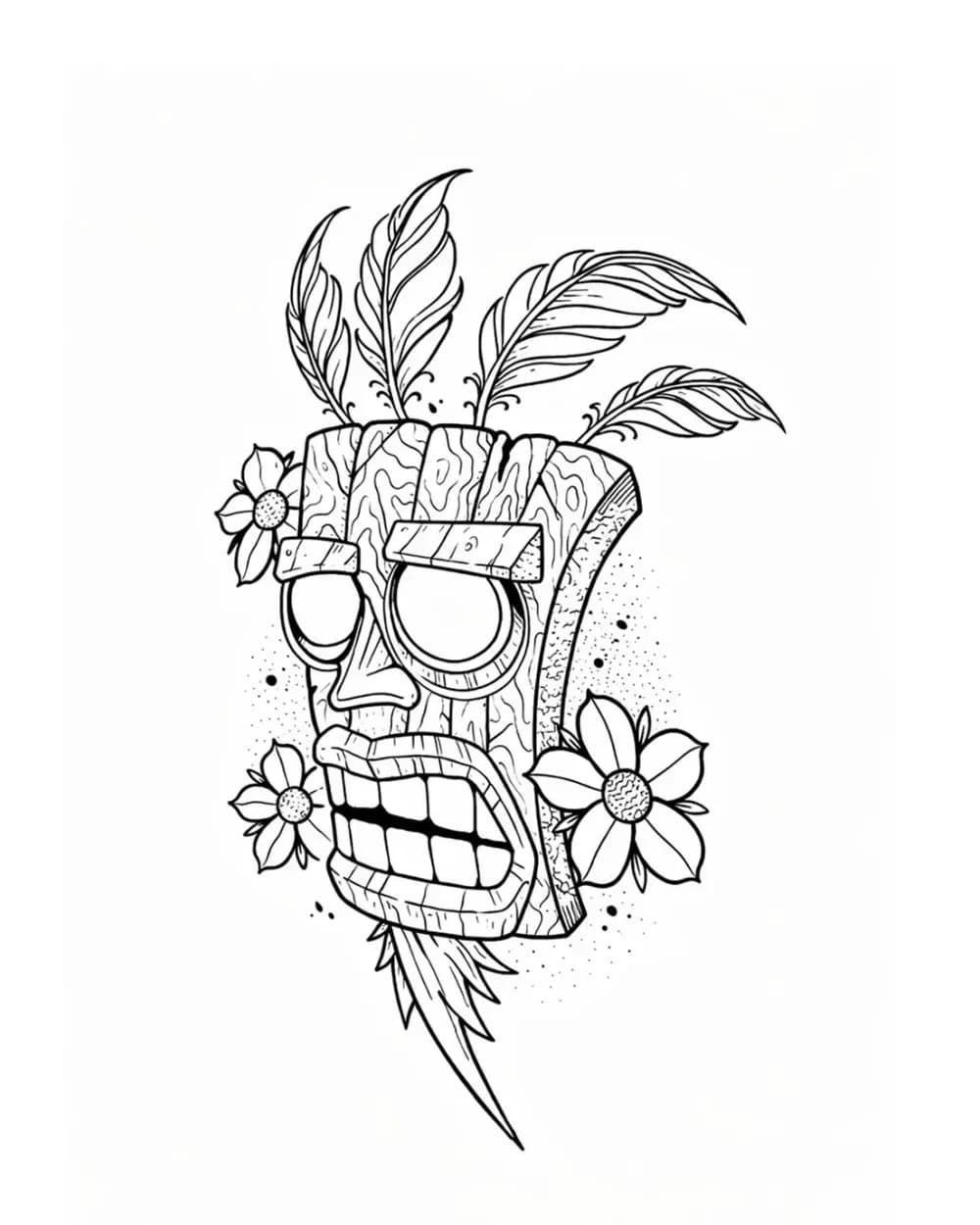
Carved mask emblem stencil with large facial openings and botanical framing

Mask-led reference for testing central geometry against smaller carving lines and surrounding ornament.

The mask outline and large eye-mouth openings establish the emblem while the botanical frame stays outside the primary read.
Central emblems where a strong main shape needs ornament without allowing the frame to become the subject.
Parallel carving lines and nearby leaves can crowd the facial openings when every mark is preserved at equal weight.
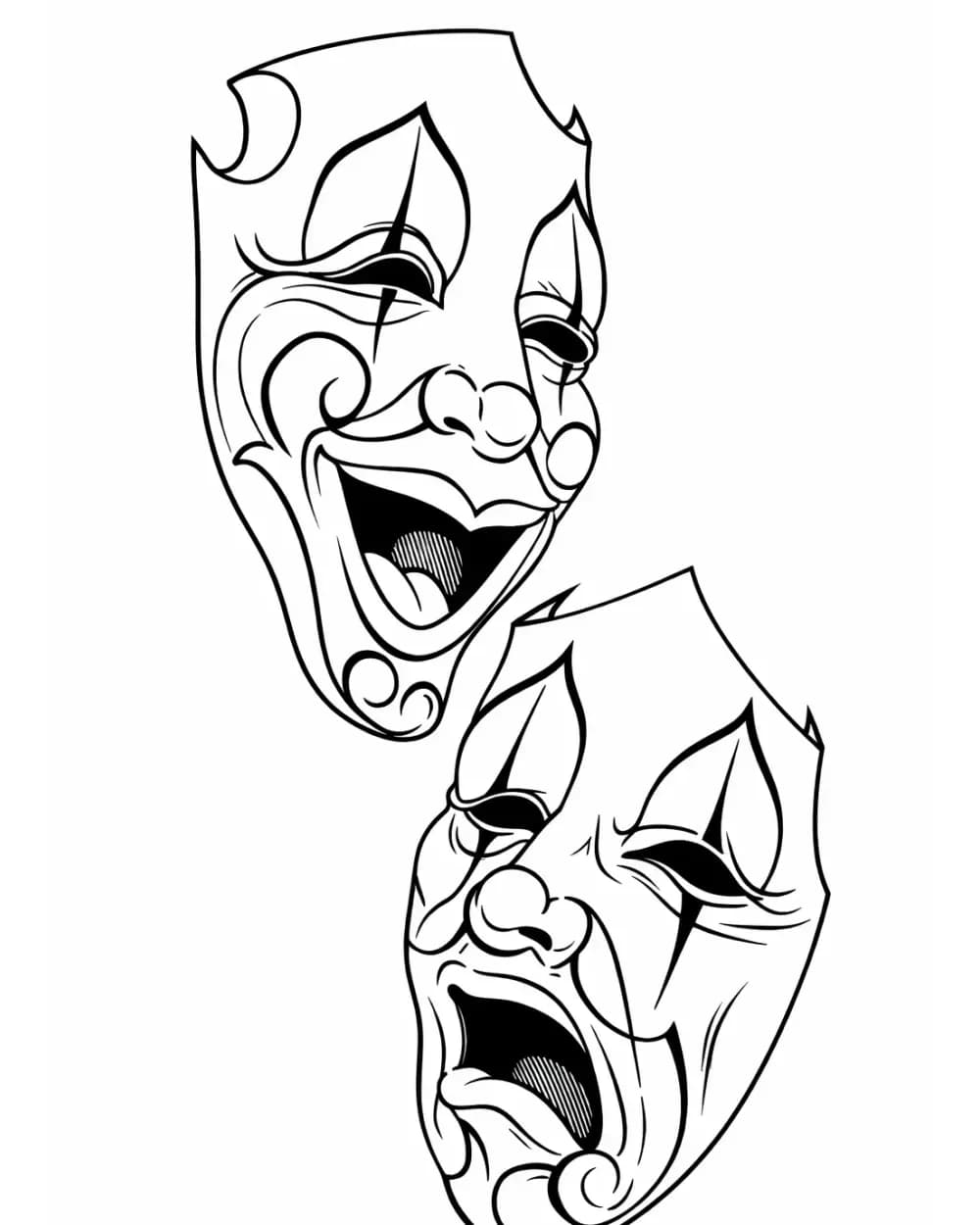
Expressive theater-mask stencil pair with large eye voids, teeth, tears, and overlapping face shapes

Expressive paired-mask reference for checking face separation, internal voids, and repeated detail risk.

The two masks remain recognizable because their large eye and mouth shapes establish opposing expressions before scratch texture.
Mask-led symbols where expressive detail must stay subordinate to the paired face shapes.
Teeth, tears, eye contours, and the overlap zone can merge into dense patches at smaller output sizes.
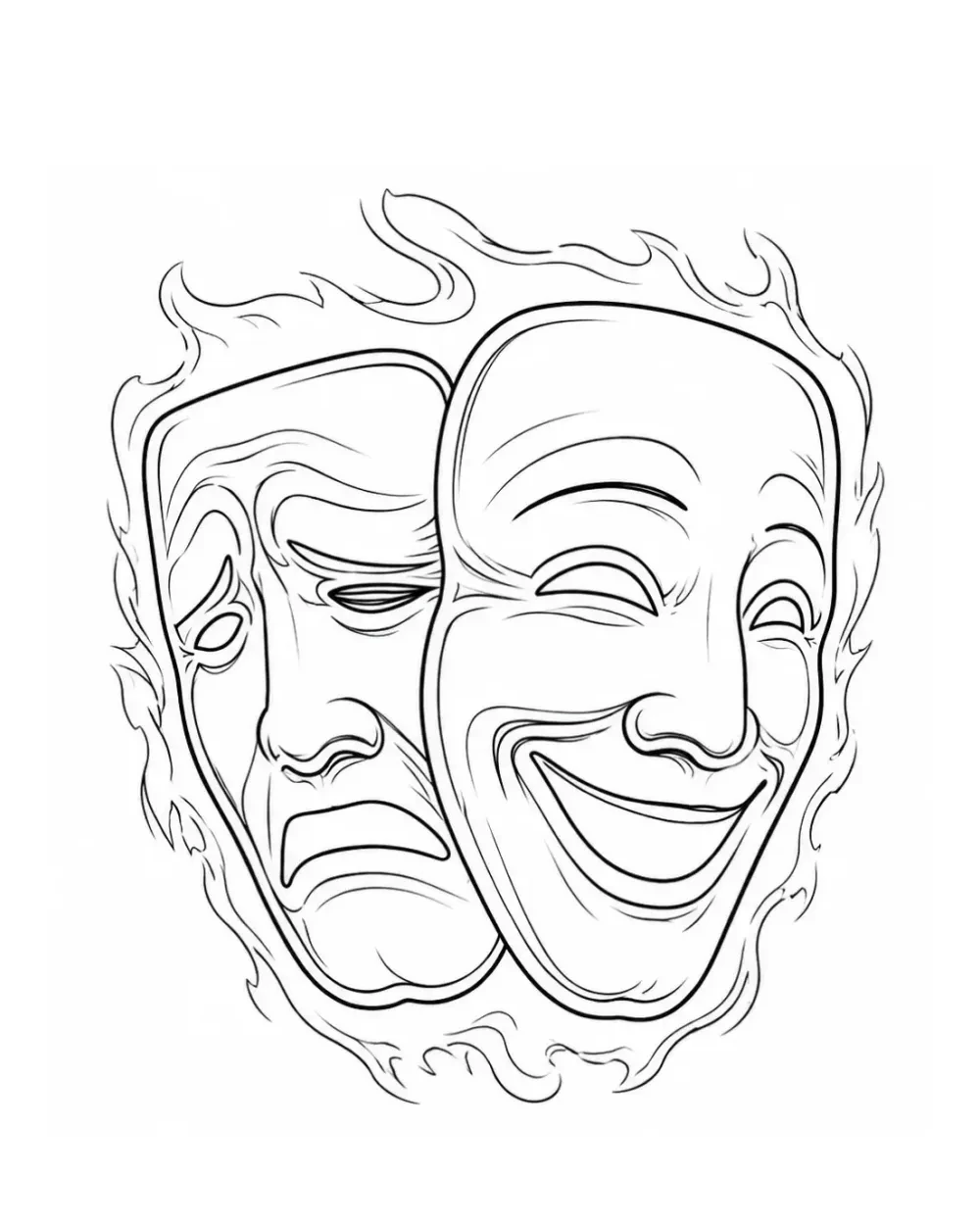
Theater-mask stencil pair inside a flame border with visible space between faces and ornament

Ornament-framed reference for testing whether an outer border supports or buries the central emblem.

The masks remain the first read because the flame contour wraps around them instead of crossing their main facial openings.
Compact emblem compositions where ornament needs a clear priority below the central subject.
Fine flame splits and facial detail can create a uniformly busy perimeter if the border-to-face gap becomes too tight.
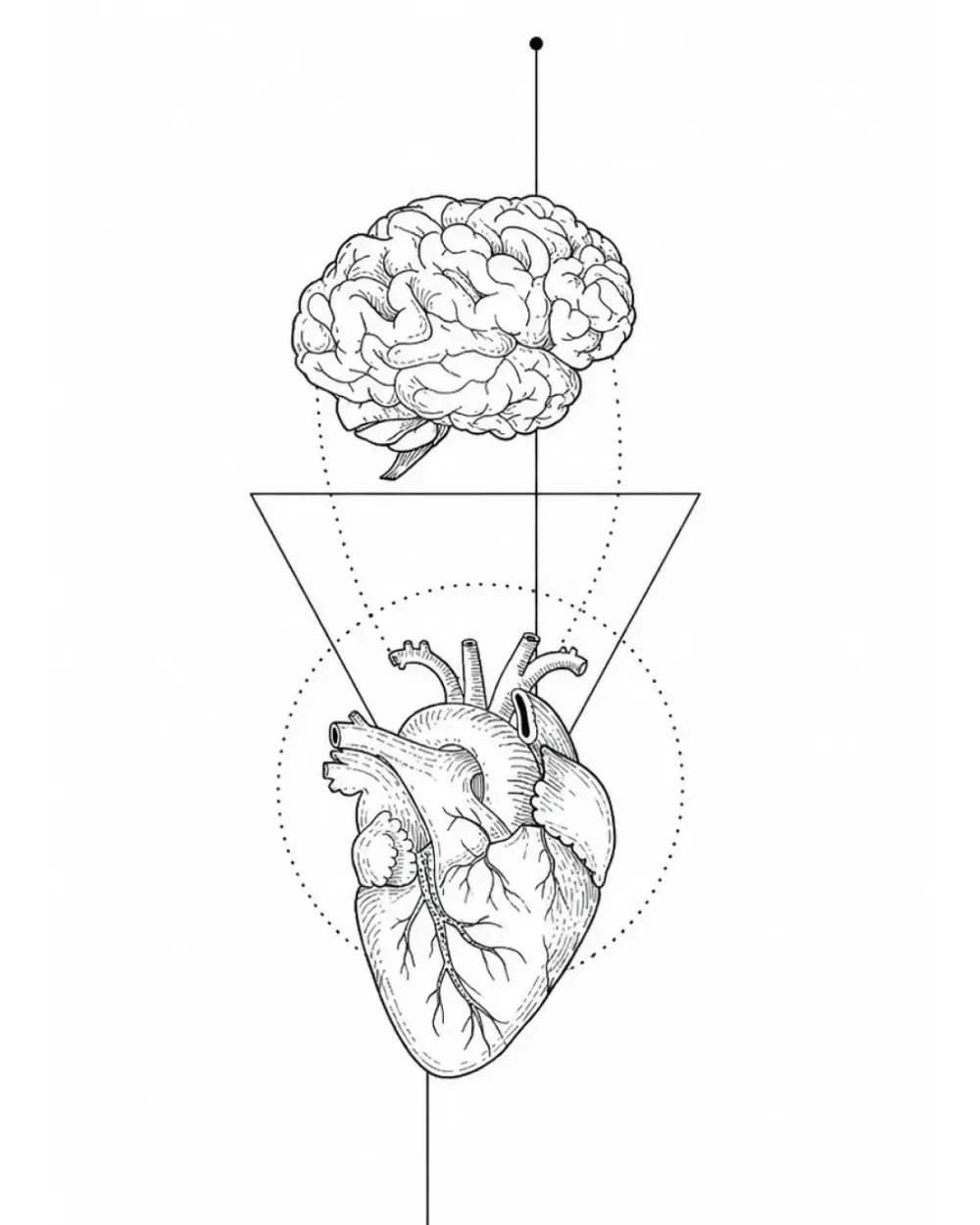
Brain and anatomical heart stencil stacked with geometric arcs and small vessel details

Asymmetrical stacked emblem for comparing organic silhouettes against fine vessels and geometric framing.

The brain and heart stay distinct because their two silhouettes and vertical relationship read before the surrounding geometric marks.
Asymmetrical symbols where orientation and local negative space matter more than bilateral balance.
Small vessel gaps, dotted arcs, and nearby contour lines can compress into one dense region when reduced.

Compact Symbol Readability Test

Inspect what survives before a compact symbol turns into noise.

Start with the first-read silhouette, then inspect symmetry only where the design depends on it, confirm mirror orientation, find the smallest important gap, and identify which repeated marks or ornament can disappear first. The test does not assign a universal minimum tattoo size. It tells you what to inspect once the intended physical size is known.

Paired birds

First-read silhouette
The two bird bodies and the open space between them create the first read before tiny interior marks matter.
Symmetry sensitivity
Moderate. The pair benefits from visual balance, but it does not need strict bilateral symmetry to remain recognizable.
Orientation / mirror sensitivity
Moderate. Mirroring preserves the pair but reverses the facing direction and the left-right relationship between the birds.
Smallest internal gap
Watch the central separation between the birds and the narrow spaces around overlapping wing or body lines.
Repeated-detail risk
Small feather or interior marks can disappear before the two main bird silhouettes do.
Ornament priority
Interior texture is secondary. Preserve the two-body relationship and open center before keeping small marks.
Final-size readability
At intended size, confirm that two birds still read as two forms and do not merge into one dark emblem.
Set the intended physical size

Origami birds

First-read silhouette
The angular outer bird shapes and major folded planes create recognition before the smaller crease network.
Symmetry sensitivity
Low. The geometry needs consistent angles, but deliberate asymmetry is part of the folded-bird construction.
Orientation / mirror sensitivity
High. Mirroring reverses the flight and facing direction, so orientation should be confirmed before transfer.
Smallest internal gap
The narrow triangular openings between folded planes are the first negative spaces likely to close.
Repeated-detail risk
Parallel crease lines can merge or disappear when several folds compete inside one small region.
Ornament priority
Crease detail is subordinate to the outer bird geometry. Remove redundant fold marks before weakening the silhouette.
Final-size readability
Reduce to real output size and check whether the narrowest triangular gaps still separate cleanly.
Diagnose a closing gap

Greek amphora

First-read silhouette
The vessel body, neck, handles, and base identify the object before the interior decorative bands do.
Symmetry sensitivity
High for the outer object. A small left-right distortion in the handles or body can make the vessel feel visibly off balance.
Orientation / mirror sensitivity
Low. A clean mirrored vessel still reads as the same object when no directional text or numerals are present.
Smallest internal gap
The handle-to-body openings are the most important enclosed gaps to keep open.
Repeated-detail risk
Small decorative bands and repeated pattern lines are more vulnerable than the outer vessel contour.
Ornament priority
Interior pattern work can simplify first. The outer amphora silhouette should remain dominant.
Final-size readability
Check the two handle openings and the smallest decorative band before preserving more ornament.
Choose how much interior detail belongs

Carved mask

First-read silhouette
The central mask outline and large eye-mouth structure establish the emblem before the carved interior lines or foliage.
Symmetry sensitivity
Moderate to high in the mask itself. The surrounding botanical support can remain intentionally less symmetrical.
Orientation / mirror sensitivity
Moderate. The central mask survives mirroring, but asymmetric leaves or supporting shapes reverse their visual flow.
Smallest internal gap
The eye and mouth openings, plus the separation between the mask edge and nearby leaves, are the first gaps to inspect.
Repeated-detail risk
Carved interior lines can compress into texture when too many parallel marks survive reduction.
Ornament priority
Botanical accents should simplify before the central mask silhouette or major facial openings.
Final-size readability
Confirm that the eyes, mouth, and mask edge stay separated from the botanical frame at intended size.
Compare line mass when gaps tighten

Theater masks

First-read silhouette
The paired face shapes and opposing mouth-eye expressions create the first read before tears, teeth, and scratch texture.
Symmetry sensitivity
Low as a strict rule. The two masks are intentionally different, so preserving emotional contrast matters more than matching both sides.
Orientation / mirror sensitivity
Moderate. Mirroring keeps the pair recognizable but reverses front-to-back and left-right composition.
Smallest internal gap
Eye voids, tooth separations, and the narrow space between overlapping masks are the most vulnerable openings.
Repeated-detail risk
Teeth, tear lines, and scratch marks can merge into dark clusters before the main expressions fail.
Ornament priority
Texture and small expression marks can simplify before the large eyes, mouths, and paired silhouette.
Final-size readability
Check that each mask still reads as a separate face and that teeth and tears have not collapsed into one dark area.
Compare the tighter theater-mask set

Masks with flame border

First-read silhouette
The paired masks should remain the central emblem while the flame border acts as an outer frame rather than the first subject.
Symmetry sensitivity
Low to moderate. The border can be irregular, but the mask pair still needs stable balance inside it.
Orientation / mirror sensitivity
Moderate. Mirroring reverses flame flow and overlap direction even though the broad subject remains recognizable.
Smallest internal gap
The space between the flame border and the mask contours is the critical buffer that keeps ornament from merging into the faces.
Repeated-detail risk
Fine flame splits and facial lines can become one uniformly busy perimeter when reduced.
Ornament priority
Small flame tips should simplify before the mask eyes, mouths, or central overlap.
Final-size readability
Inspect the border-to-face separation first, then confirm that flame tips do not form a continuous dark ring.
Diagnose density at final size

Brain and heart stack

First-read silhouette
The separated brain and heart silhouettes plus the vertical stack create the first read before vessels, arcs, and geometric marks.
Symmetry sensitivity
Low. Organic asymmetry is part of both anatomical forms, so forcing bilateral symmetry would be the wrong test.
Orientation / mirror sensitivity
High. Mirroring reverses anatomical and geometric direction, so the intended orientation should be confirmed before transfer.
Smallest internal gap
Small spaces around heart vessels and the separation between organ contours and framing geometry are the first openings to inspect.
Repeated-detail risk
Vessel branches, dotted arcs, and repeated contour marks can disappear or merge before the two main organ shapes do.
Ornament priority
Geometric framing and dotted accents can simplify before the brain-heart silhouettes and the vertical relationship between them.
Final-size readability
At intended size, verify that the two organs remain distinct and that vessel clusters do not become one dense patch.
Preflight the finished file at size

Geometry, not interpretation

This collection tests the stencil artifact, not what a symbol means.

The examples are compared by silhouette, spacing, negative space, symmetry, orientation, repeated detail, and ornament. This page does not provide spiritual, religious, cultural, zodiac, or identity interpretations.

Once the structure you want is clear, use Generate for your own approved reference. Use Tattoo Stencil Size & Print to establish physical dimensions before making a final readability decision.

Compact symbol preparation notes

Keep the emblem readable before secondary marks compete.

Use these notes after the readability test: protect the first-read silhouette, important openings, intended orientation, and repeated geometry before decorative lines take equal priority.

Make the symbol readable before asking interior detail to explain it

Compact symbol stencils work best when the outer form or primary pair is already identifiable before the viewer needs decorative bands, carving lines, tears, teeth, fold marks, or texture. The first check is not whether every detail survived. It is whether the emblem still reads when attention is pulled away from those smaller marks.

Find the smallest gap that carries structure

The vulnerable point is often an opening rather than a line: the space between paired birds, a triangular origami fold, an amphora handle opening, an eye void, a border-to-mask channel, or a gap around fine vessels. Identify the smallest opening that must stay open, then inspect that same location after the design is set to its intended physical size.

Treat symmetry and mirroring as design properties, not universal rules

Some compact symbols depend on centered balance or matched geometry, while others are deliberately asymmetrical. Mirroring can also reverse a directional composition even when the broad subject remains recognizable. Confirm the intended transfer orientation before production, especially for asymmetrical forms, directional pairs, or any design that contains lettering or numerals.

Reduce secondary marks before they bury the emblem

Repeated creases, teeth, carving lines, flame splits, vessels, and decorative bands can fail before the main symbol does. There is no universal minimum tattoo size for these examples. Set the intended dimensions, inspect the tightest gap and repeated-detail cluster, and simplify ornament only where it competes with the first-read shape.

Related stencils

Keep exploring.

Useful guides

Take the next step in the workflow.

Browse guides

FAQ

Compact symbol stencil questions.

The outer shape can stay recognizable while a smaller internal opening, repeated line family, or decorative border closes first. Set the intended physical size, then inspect the narrowest important gap and the densest repeated-detail cluster instead of judging from screen zoom alone.

Next step

Prepare your own compact symbol reference

After you decide which silhouette, gaps, orientation cues, and repeated details need to survive, generate a stencil from the reference you actually plan to use.