
Theater Mask Tattoo Stencil Ideas
This collection focuses on comedy and tragedy mask designs, including classical theater forms, clown variations, ribbon framing, rough expressive linework, and a flame-b…
- 7
- Practical
- Artist-first
This collection focuses on comedy and tragedy mask designs, including classical theater forms, clown variations, ribbon framing, rough expressive linework, and a flame-bordered composition. The central challenge is consistent across every example: both emotional faces must remain readable while still functioning as one unified tattoo design.
Preserving the Emotional Contrast
The smiling and grieving expressions depend on eye angle, mouth shape, cheek direction, and the relationship between the two masks. A strong stencil should make that contrast visible before tears, wrinkles, teeth, or decorative marks are added. When the expressions are too similar, the symbolic idea becomes weaker.
Classical Masks and Clown Variations
Traditional Thalia and Melpomene references usually use smoother facial curves and simpler ornament. Clown versions add round noses, makeup lines, sharper mouths, and more dramatic eye treatment. Those details can create a stronger visual identity, but they also increase the number of small intersections around the eyes and lips.
Overlap, Ribbons, and Flame Borders
Stacked masks need a clear front-to-back relationship. Ribbon tails and flame tips should frame the pair rather than merge into the facial contours. When decorative borders become too heavy, the masks can start to read like background elements instead of the primary symbol.
Scale and Detail Watchouts
Teeth, tear lines, eyelid hatching, nostrils, flame tips, and ribbon curves need enough room to remain distinct. For smaller placements, simplify interior expression lines while protecting the major mouth and eye shapes. Avoid filling every facial shadow with equal weight.
Continue Through the Broader Workflow
Browse more emblem-led work in the symbol tattoo stencil collection, or test a custom mask reference in the tattoo stencil maker.
Examples
Theater Masks stencil examples
Compare the linework, spacing and detail choices that make each stencil read differently.
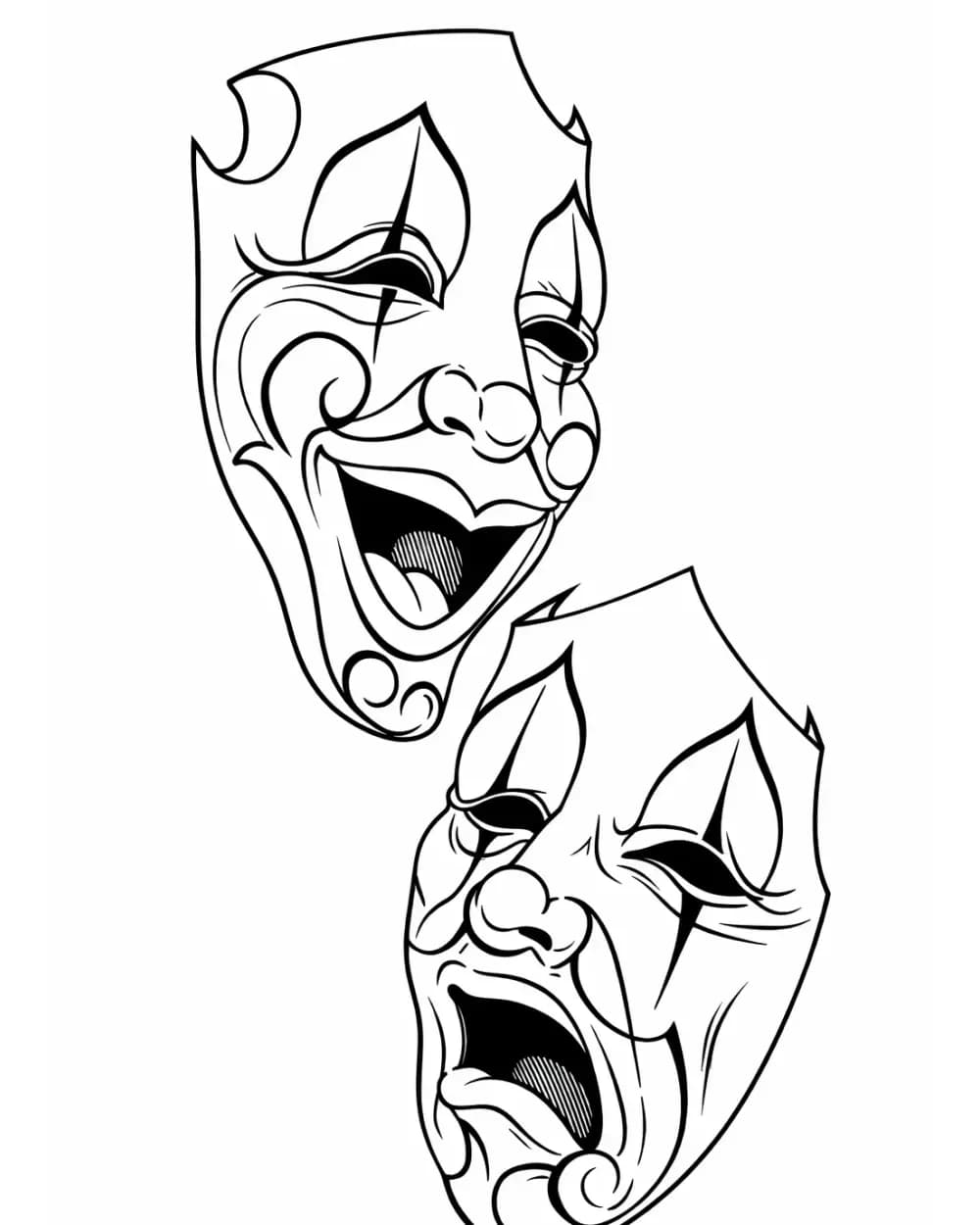
A classic two-mask stencil where eye angle, mouth shape, and the front-to-back relationship create the emotional contrast before smaller facial detail.
Explore more tattoo symbol stencils stencils
- The pair reads immediately because the opposing expressions are established through large eye and mouth shapes while the two faces remain visually connected as one symbol.
- Artists comparing traditional comedy-and-tragedy layouts with a relatively clean symbolic line budget.
- Small wrinkles, tears, teeth, and nostril marks should not become as heavy as the main expression lines or the two faces can lose contrast.
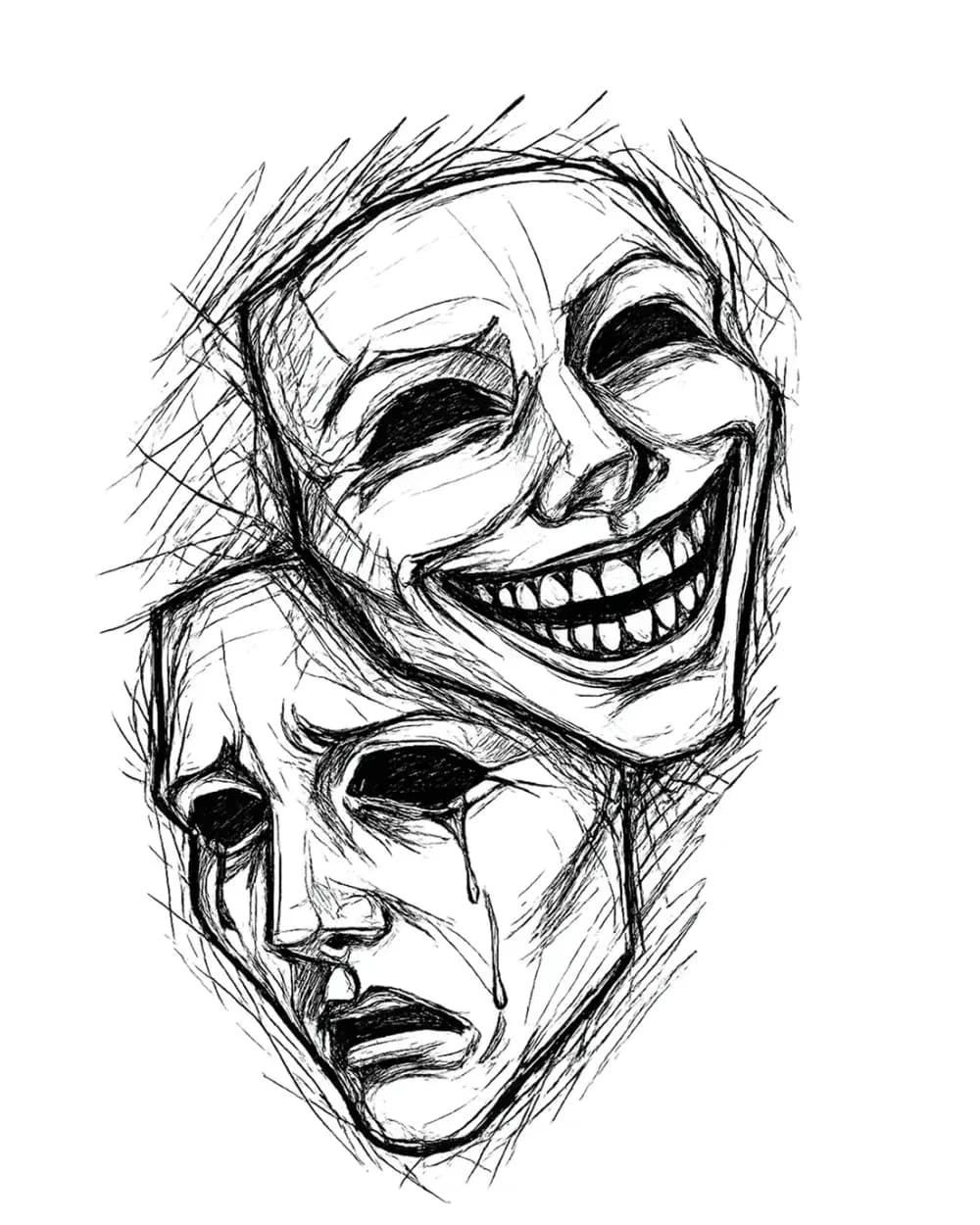
A rougher theater-mask pair where exaggerated eyes, teeth, smiles, and tears push the emotional contrast without losing the familiar paired-mask symbol.
Explore more tattoo symbol stencils stencils
- The masks remain instantly recognizable because the eye voids, grin, grief expression, and paired silhouette all reinforce the same symbolic subject.
- More aggressive or expressive theater-mask concepts that still need a clear emblem-like read at stencil stage.
- Teeth, tears, and eye contours can merge into dark patches when reduced; preserve the mouth and eye shapes before keeping secondary texture.
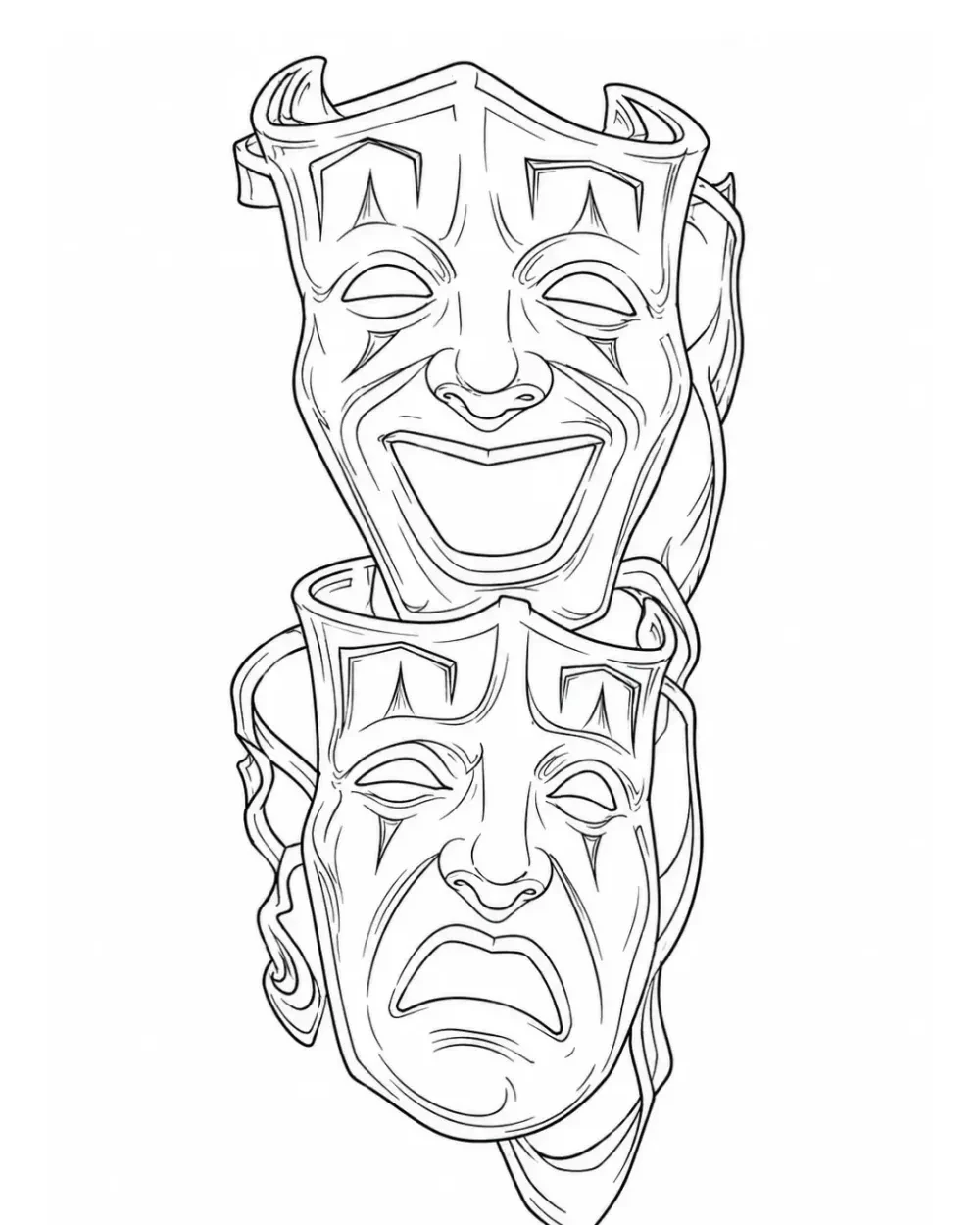
A ribbon-framed theater-mask pair where the fabric movement supports the composition but must stay outside the primary eye, mouth, and cheek landmarks.
Explore more tattoo symbol stencils stencils
- The masks stay dominant because the ribbons create an outer flow around the faces instead of crossing through the most important expression geometry.
- Traditional symbolic compositions that need a little more movement and vertical flow than a plain two-mask emblem.
- Ribbon folds can create too many parallel contours near the jaw and mouth; keep fabric lines lighter and more separated than the facial landmarks.
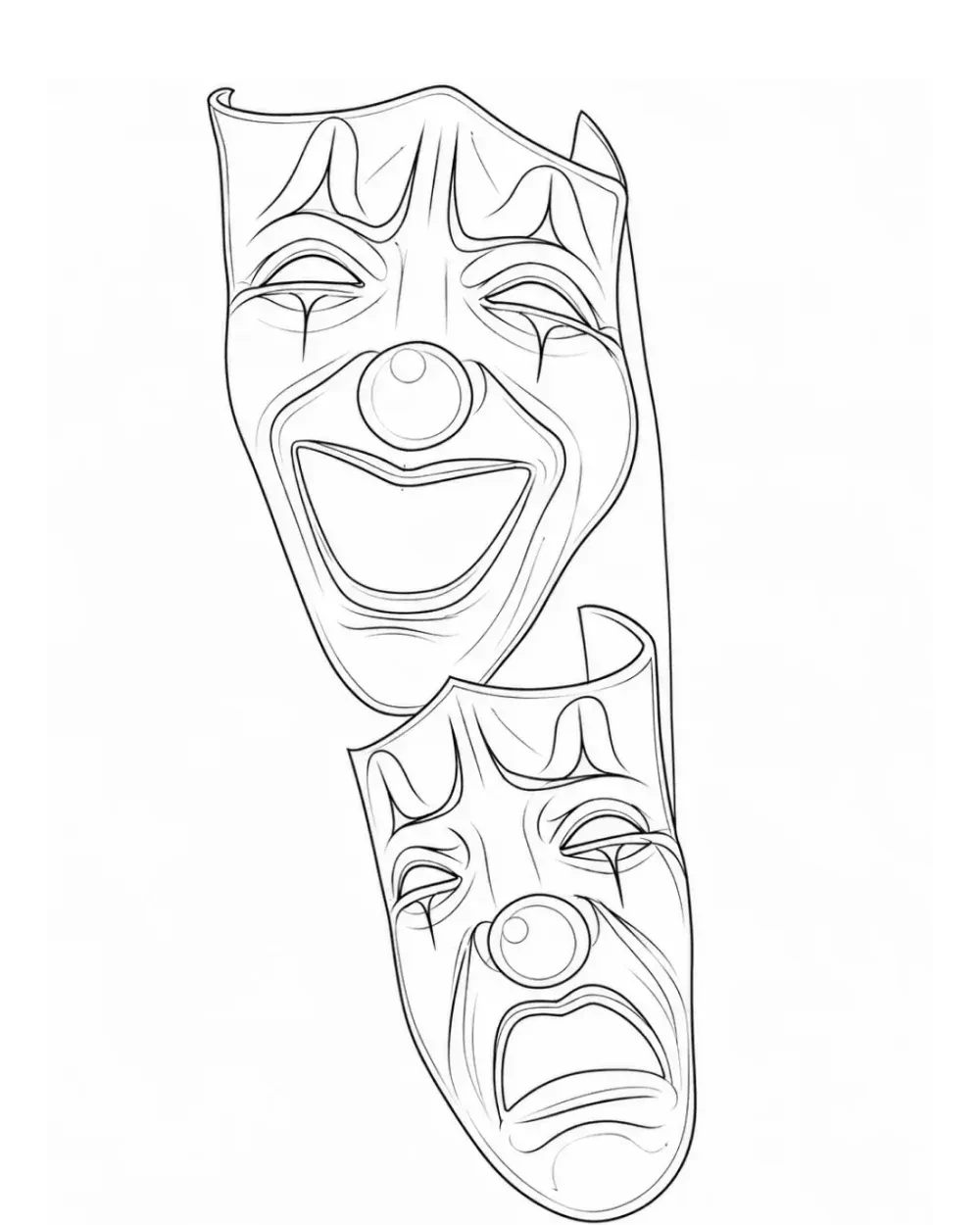
A clown-led theater-mask variation where round noses, makeup lines, and exaggerated mouths add character while the opposing emotions still need to read first.
Explore more tattoo symbol stencils stencils
- The pair remains coherent because both clown faces share a common visual language while the mouth and eye directions clearly separate laughter from grief.
- Clown-influenced comedy-and-tragedy designs that want stronger character styling without abandoning the classic paired-symbol structure.
- Makeup edges, teeth, nose contours, and tear lines can crowd the center of each face; simplify secondary marks before the expression anchors.
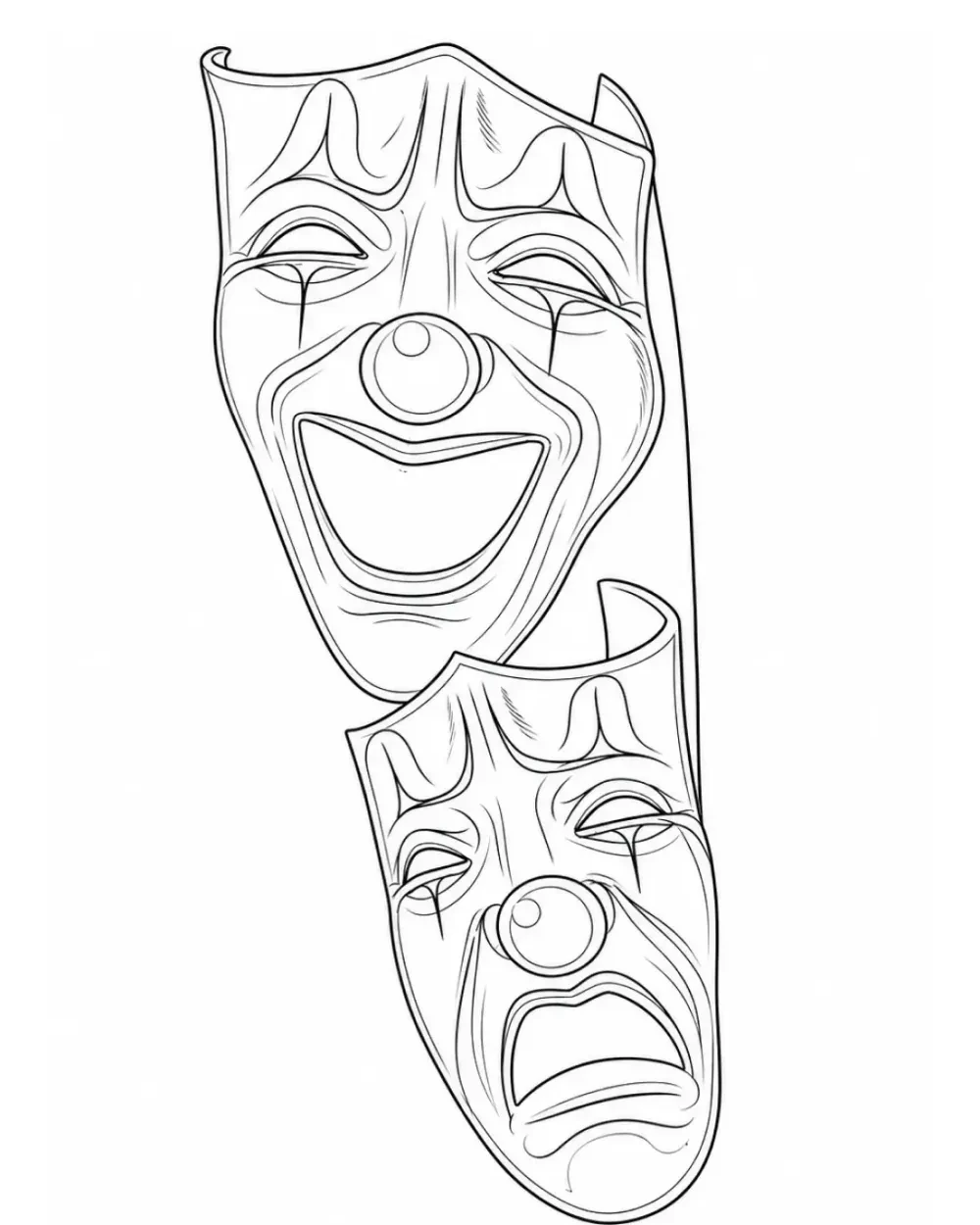
A vertically stacked clown-mask composition where overlap depth and facial separation are more important than decorative micro-detail.
Explore more tattoo symbol stencils stencils
- The stack reads as two distinct faces because the front and rear masks retain separate eye, nose, and mouth zones instead of blending into one portrait.
- Vertical placements where the classic two-mask idea needs a tighter stacked silhouette rather than a side-by-side layout.
- Shared contour areas can become ambiguous where one mask overlaps the other; preserve a clear front-to-back edge and avoid equal line weight at the intersection.
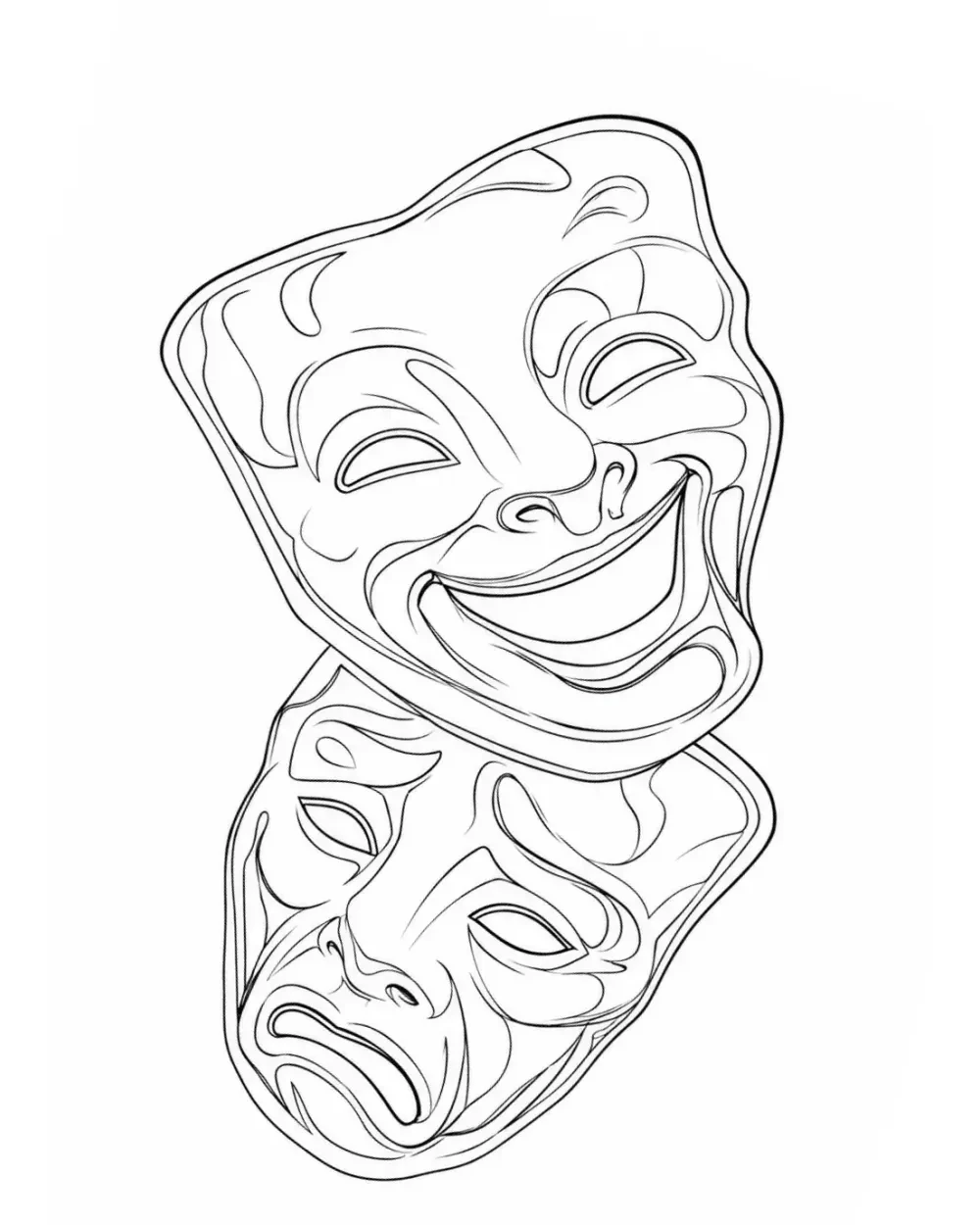
A traditional theater-mask reference emphasizing smooth face curves and the clear contrast between comic and tragic expression.
Explore more tattoo symbol stencils stencils
- The classical read comes from restrained facial geometry: each mask has a decisive mouth and eye direction without needing dense texture or costume detail.
- Artists looking for a cleaner classical theater direction where symbolism and expression matter more than horror or clown styling.
- Because the design is cleaner, subtle changes in eye angle or mouth curvature can alter the intended emotion quickly; protect those relationships at final size.
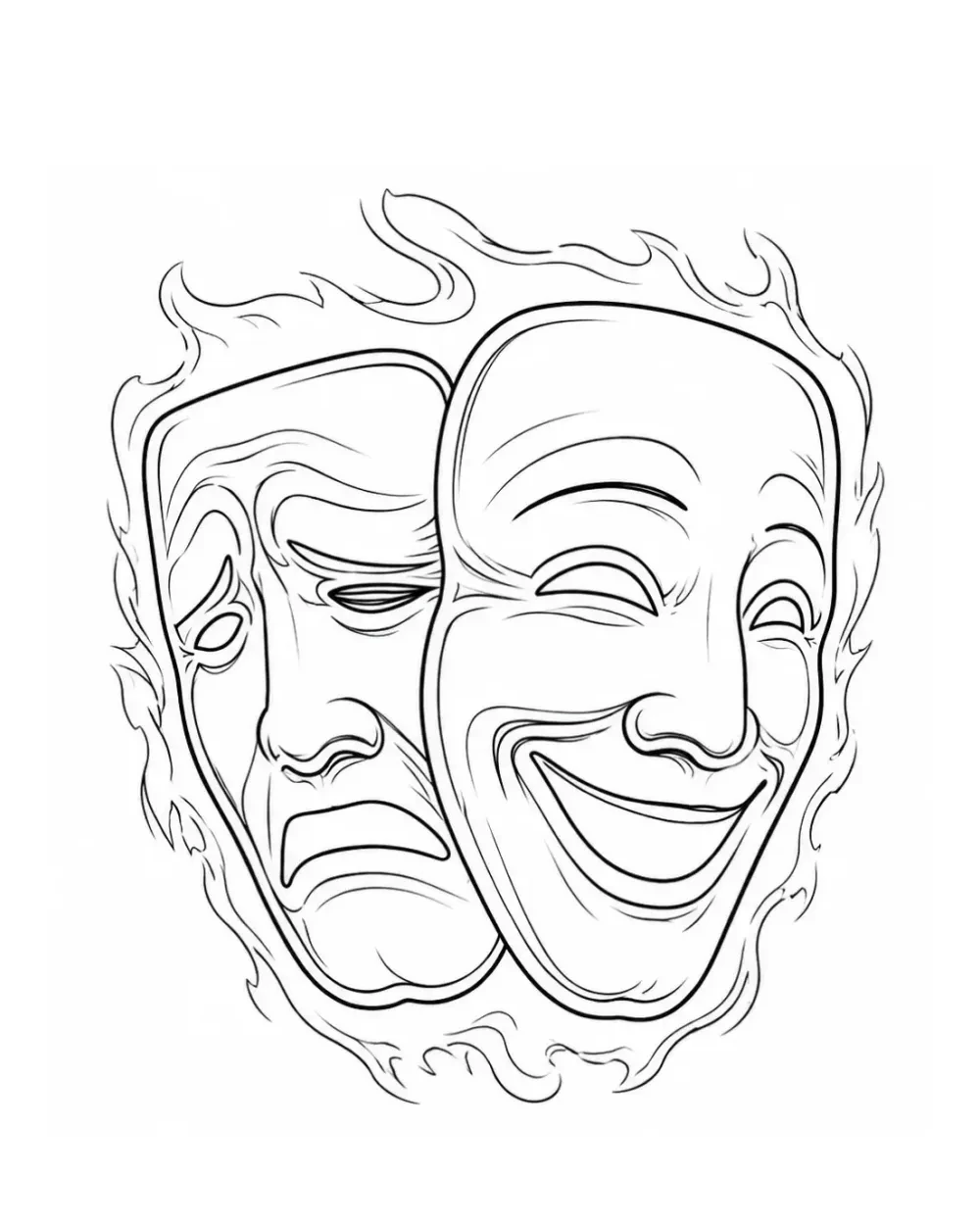
A flame-framed theater-mask composition where the border adds energy but must remain secondary to the paired faces and their opposing expressions.
Explore more tattoo symbol stencils stencils
- The masks still control the read because the flame silhouette wraps around the pair rather than cutting through the eyes, mouths, or central overlap.
- Larger dramatic theater-mask designs that need a strong outer frame and more movement than a simple emblem.
- Flame tips and facial linework can create a uniformly busy perimeter; maintain negative space between border and face and reduce small flame splits before expression detail.
Related galleries
Keep browsing nearby stencil ideas.
Next step
Turn your own reference into a clean stencil draft.
Use what reads clearly here as direction, then start from your own reference.