

Butterfly Tattoo Stencils: 4 Reference Examples
Compare four butterfly stencil references for professional transfer work, covering wing symmetry, vein simplification, pairing layouts, and final-size checks.
- 4
- Practical
- Artist-first
Compare four butterfly stencil references for professional transfer work, covering wing symmetry, vein simplification, pairing layouts, and final-size checks.
Two examples are butterfly-led: a butterfly-and-roses pairing and a caterpillar-to-butterfly mirror concept. Two are honestly labeled accent studies where the butterfly is secondary: monarch accents on a bulldog portrait and micro-butterflies on a nursery elephant. The accents earn their place because they isolate venation and scale comparisons that the two led pieces cannot show alone.
Four Butterfly References, Compared
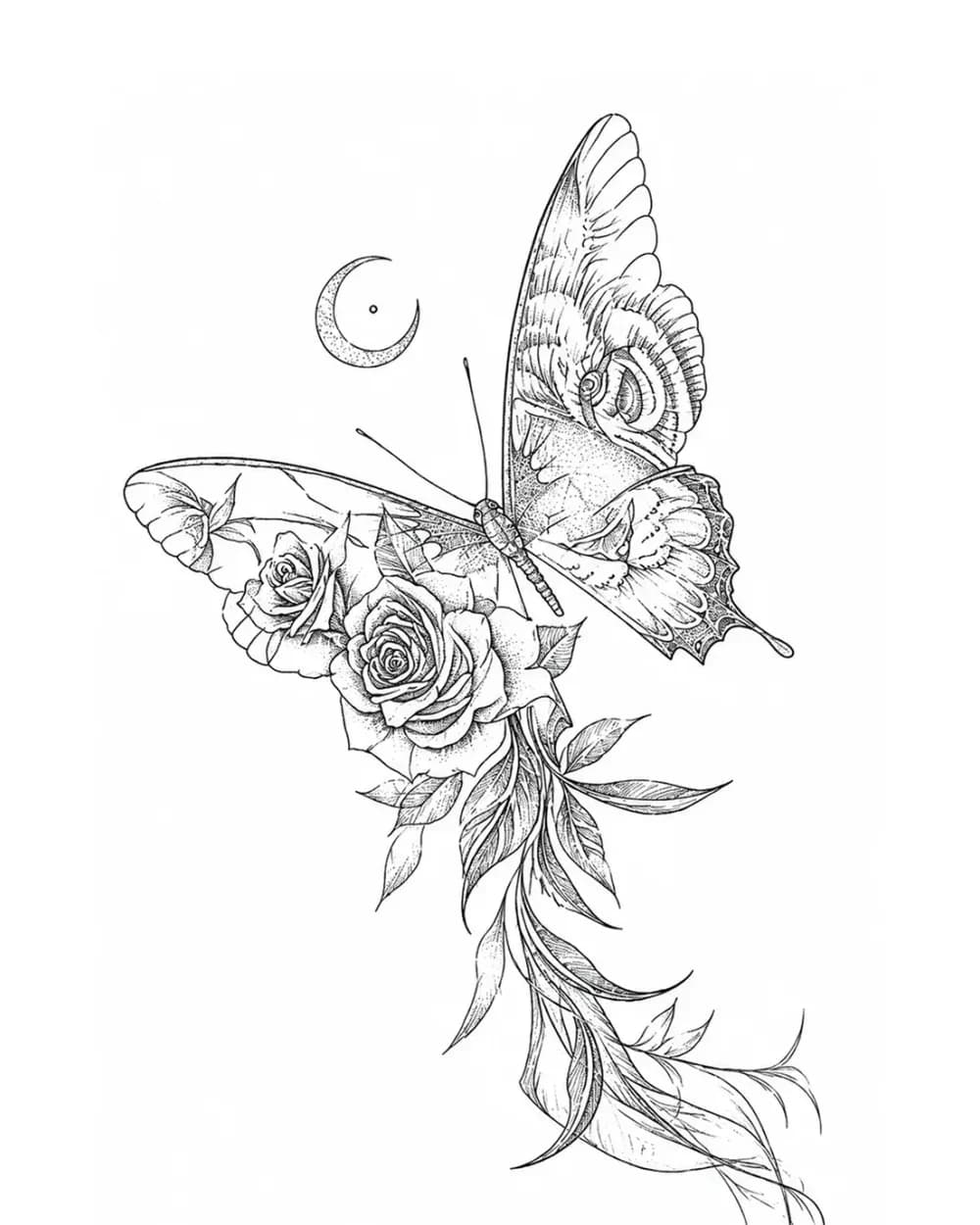
- Butterfly with roses and crescent: the butterfly is the first read in asymmetric flight over a rose cluster. Protect the upper wing edges and the main rose heads before keeping inner wing pattern or secondary foliage.
- Caterpillar-to-butterfly mirror: a narrative concept with the caterpillar outside and the butterfly inside an ornate mirror. Protect the two body silhouettes and the wing edges before frame filigree or inner wing marks.
- Bulldog portrait with monarch accents: a dog-led sheet where the large nose butterfly shows full symmetric monarch venation and three smaller companions reduce the same species toward outline. Protect the dog landmarks first, then read the butterflies as a scale ladder.
- Nursery elephant with micro-butterflies: an elephant-led sheet with two tiny contour-only butterflies. Treat them as proof of what survives at accent scale, not as a guide for detailed wings.
Keep Both Wings Symmetrical Through Transfer
Check symmetry in two places: the drawing itself, and the mirror stage before transfer. Compare the nose monarch on the bulldog sheet, which shows true dorsal symmetry with matching vein cells on both wings, against the roses pairing, where the wings sit in deliberate asymmetric flight. Both are valid choices, but only the first can be checked by folding or mirroring one wing onto the other.
When symmetry is the goal, build one wing and mirror it rather than drawing both freehand, then verify the skin-facing direction before transfer so the stencil is reversed exactly once. Use the Symmetry Checker to compare left and right halves around an axis you choose, and follow the mirror workflow when the question is which stage performs the flip. Small mismatches in border dots, eyespots, or vein forks are the details that read as errors fastest, so resolve those before refining texture.
Simplify Veins in Steps, Not All at Once
The four examples form a practical venation ladder. The roses pairing and the mirror butterfly carry the densest interior veins with stippled shading. The nose monarch keeps bold vein cells with dark borders but drops the stipple. The small companions and the micro accents reduce further toward pure contour. Moving down this ladder in steps, instead of deleting all interior detail at once, is how a stencil keeps its species character while gaining transfer reliability.
Tie each step to style and size. Fine-line work at small sizes usually needs the middle or lower rungs, because thin veins packed at full density are among the first marks to close after transfer. Bolder work at larger sizes can hold the upper rungs longer. Compare the tightest vein cluster in your stencil at the intended physical size and simplify that cluster first. The line-weight guide explains which close lines merge, too detailed for size covers density against physical dimensions, and tight negative space isolates the single gap that matters most.
Choose Standalone or Floral Pairing
A standalone butterfly must carry the whole composition with wing shape alone, which is why the mirror concept leans on a strong frame and the micro accents only work inside a larger scene. A floral pairing shares the load: the roses pairing lets wing structure, rose clusters, crescent, and foliage each own a separate layer. The trade is negative space. Every added rose head and leaf cluster removes breathing room, so pairing demands wider channels between petal groups and wing edges than a standalone piece.
Decide by first read. If the butterfly should arrive before everything else, keep it standalone or keep the florals clearly subordinate. If the piece needs vertical flow or a larger placement, pairing earns its complexity, but preserve the wing edges and major rose contours before minor interior texture. For deeper rose-side guidance, the rose collection compares standalone and supporting rose roles across six compositions.
Check Final Size Before Print and Transfer
Judge every butterfly stencil at its real output size. Print the finished file at the intended dimensions with the Size Calculator, then inspect the tightest vein fork, border dots, and antennae before anything else. Run the same file through the Print Checker to catch fine-detail and density warnings while the fix is still cheap.
Confirm paper and placement with their owners rather than guessing: the paper guide covers media-family selection, and the placement guide with Fit to Body covers body measurement and visual preview. A stencil that reads at final size on paper, on the right media, and against the placement still needs a clean transfer, so let the applied stencil set fully before tattooing begins.
Compare Butterfly Examples Before Preparing Your Own Reference
These are curated butterfly tattoo stencil examples for visual comparison, not a separate butterfly generator. Browse the broader animal stencil collection for more animal-led compositions and the floral collection for flower-led flow, or explore every curated direction from the stencil gallery and the subject index. If you are starting from your own photo, drawing, or reference, use the photo-to-stencil workflow first, then generate one stencil online when the source is ready.
FAQ
How do I keep both wings symmetrical through transfer?
Draw or mirror one wing from the other so the pair shares construction, then verify the skin-facing direction so the design flips exactly once. Check border dots, eyespots, and vein forks first, since small mismatches there read as errors faster than texture differences. The Symmetry Checker and the mirror workflow linked above handle the verification steps.
How simplified should veins be at my target size?
Reduce the finished stencil to the real output size and find the first vein cluster that closes. Simplify that cluster one step down the ladder, from dense veining toward bold cells and then toward outline, until every remaining vein holds separation. There is no universal minimum size; the output-size test is the decision.
Should I do a standalone butterfly or pair it with florals?
Choose standalone when the butterfly must be the entire first read and the placement is small. Choose pairing when the placement needs vertical flow or a larger composition, and budget extra negative space between wing edges and petal groups. In a pairing, the butterfly and the main rose cluster should each keep a separate silhouette.
Why are dog and elephant examples on a Butterfly page?
They are labeled accent studies, not butterfly-led designs. The bulldog sheet carries the clearest symmetric monarch venation in this set, and the elephant sheet shows the extreme simplified endpoint at micro scale. Captions and commentary disclose the hierarchy on each piece. When the portrait or the nursery scene is the actual job, the animal collection remains the right owner.
Can I turn my own butterfly reference into a stencil here?
This page is a comparison gallery, not a separate butterfly generator. Use the photo-to-stencil workflow or the online generator for your own reference, then use these examples to judge symmetry, vein density, negative space, and final-size readability.
Examples
Butterfly stencil examples
Compare the linework, spacing and detail choices that make each stencil read differently.
A large butterfly in asymmetric flight over a rose cluster, crescent, and trailing foliage, with each layer keeping its own readable shape.
Explore more floral tattoo stencil group stencils
- The butterfly stays the first read because the upper wings rise clear of the roses while the lower wing overlaps only one bloom. Wing edges, the main rose heads, and the crescent each hold a separate silhouette instead of merging into one field of linework.
- Artists deciding a standalone-versus-pairing question, or studying how dense wing venation and stippled shading behave next to rose centers and leaf veins at a fixed final size.
- The lower wing pattern, rose centers, and small leaves share a similar density. At small sizes simplify the inner wing marks and secondary foliage before touching the wing edges or the main rose contours.
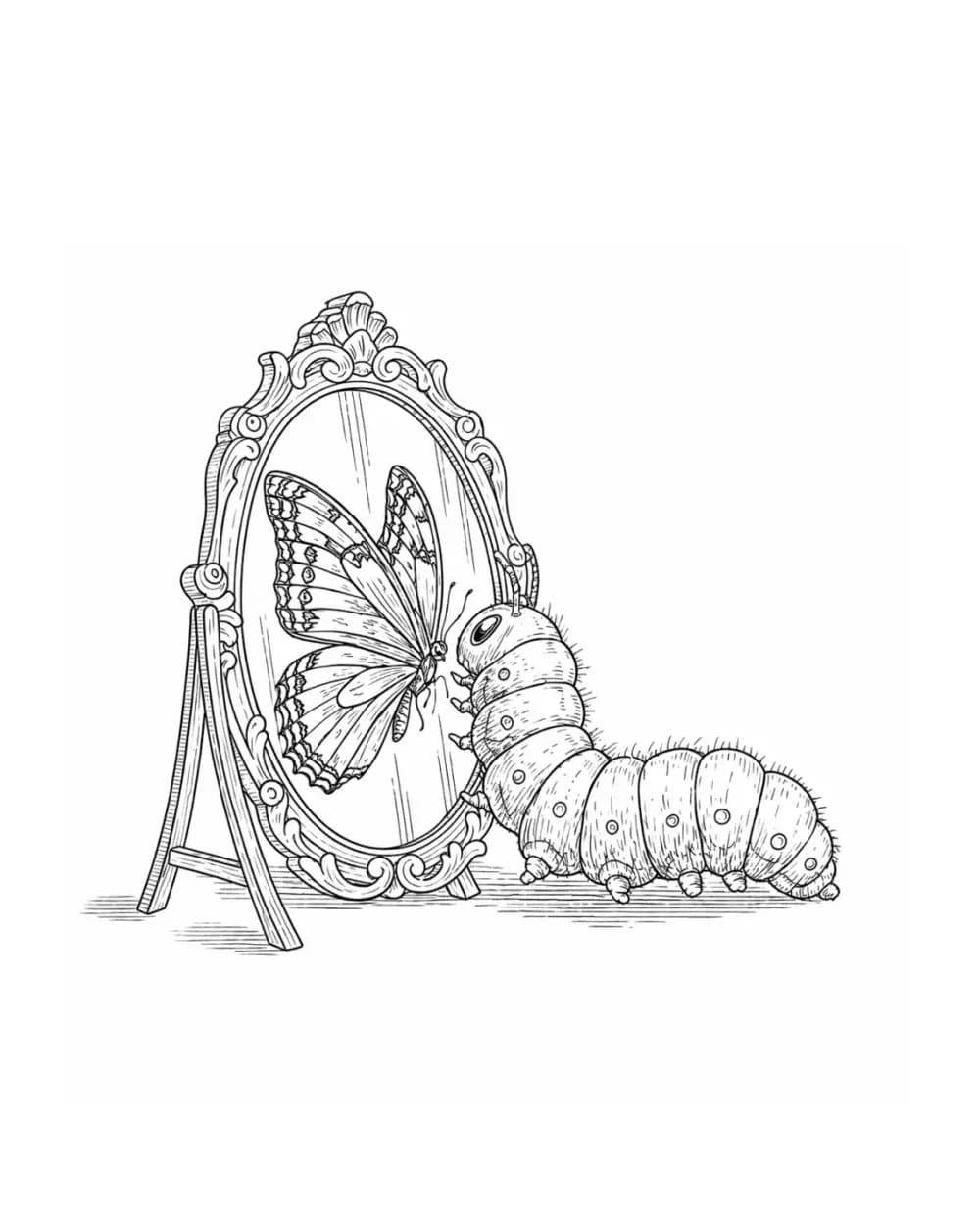
A metamorphosis concept where a caterpillar faces its butterfly reflection inside an ornate standing mirror, keeping the two forms visually distinct.
Explore more animal tattoo stencil gallery stencils
- The concept reads instantly because the compact caterpillar body and the open butterfly wings never share an outline. The butterfly keeps a clear outer wing shape with patterned borders, and the mirror frame acts as a structural container for the whole idea.
- Artists comparing narrative butterfly compositions, or studying how a detailed wing border and segmented body detail can coexist when each form owns a separate silhouette.
- Mirror ornament, wing border pattern, and body segments compete at the same fine scale. Protect the two primary silhouettes and the wing edges first, then reduce frame filigree and inner wing marks if the final size crowds.
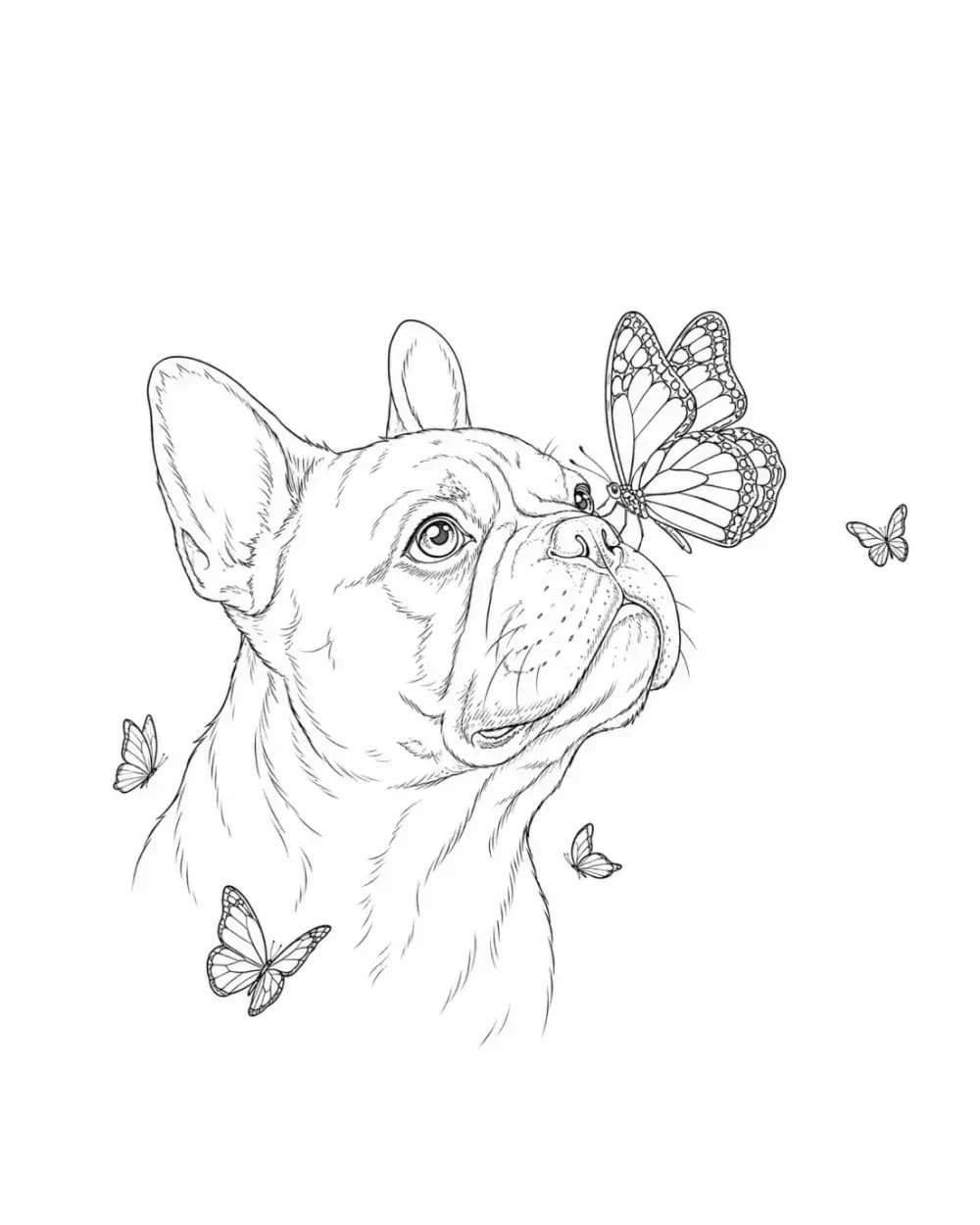
A bulldog portrait where the dog is the first read. The butterflies are secondary accents, included here because the large nose butterfly shows full monarch venation at stencil scale.
Explore more animal tattoo stencil gallery stencils
- The nose butterfly presents a symmetric dorsal monarch with bold vein cells and dark borders, which makes it a clean reference for how much vein structure survives transfer. The three smaller companions show the same species reduced to near outline, so one sheet spans the simplification ladder.
- Artists studying monarch venation simplification across scales, or judging how small companion butterflies read next to a dominant portrait subject.
- This is a dog-led composition, not a standalone butterfly stencil. Keep the butterfly accents subordinate: simplify wing pattern before touching the eyes, nose, or muzzle landmarks. When the portrait is the actual job, the dog subject page is the right owner.
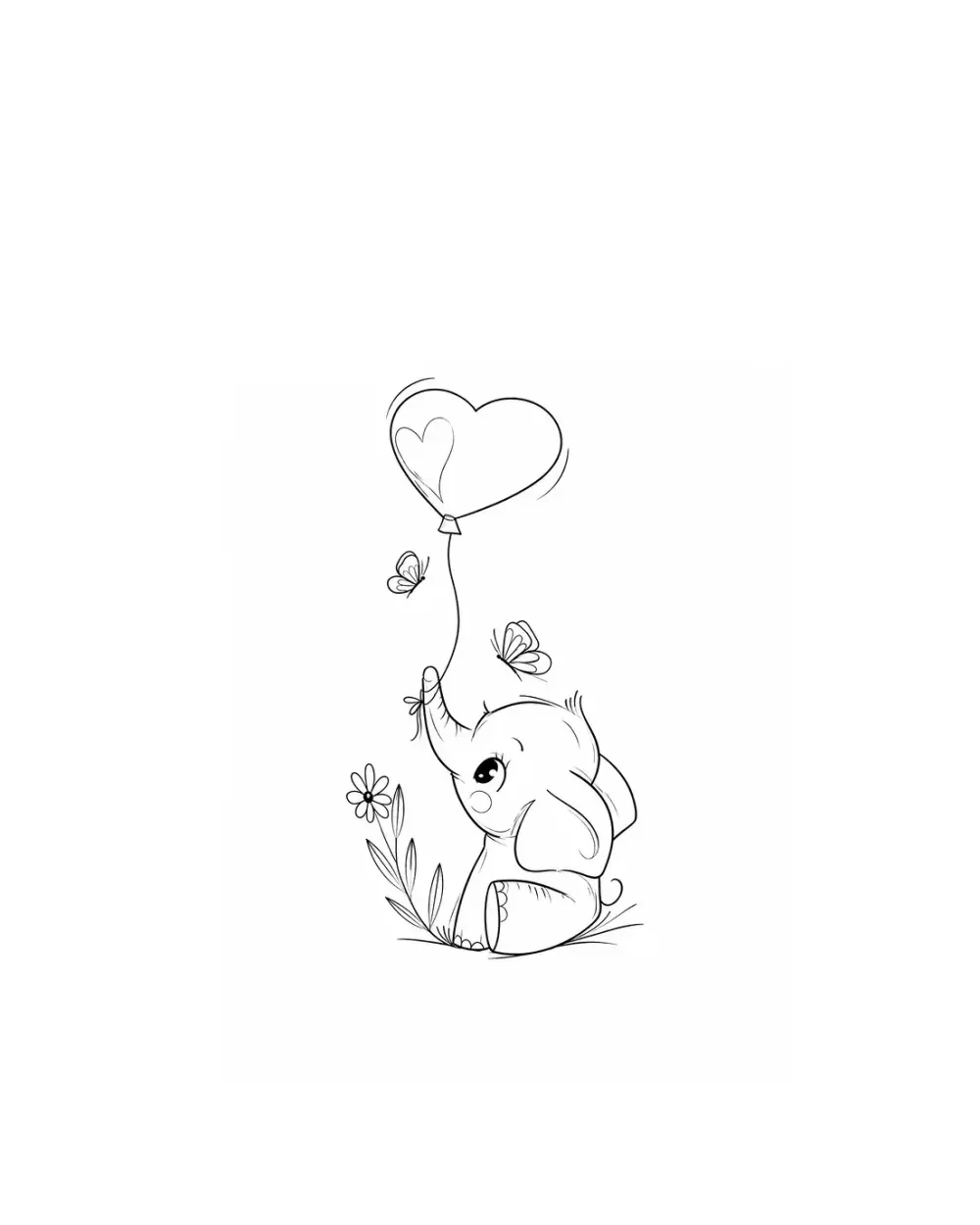
A nursery-style elephant holding a heart balloon. The two tiny butterflies are minimal contour accents, included as the extreme simplified endpoint of the venation ladder.
Explore more animal tattoo stencil gallery stencils
- The butterflies reduce to pure outer contour with no interior veins, which shows what remains legible when butterflies shrink to accent scale. The simple curves survive because nothing inside them can close up.
- Artists placing micro-butterfly accents inside larger compositions, or confirming how little interior detail a butterfly needs at very small sizes.
- These accents carry no venation information and cannot guide a detailed butterfly. Treat them as scale proof only. When the nursery composition is the actual job, the elephant subject page is the right owner.
FAQ
Quick questions about butterfly stencils.
Draw or mirror one wing from the other so the pair shares construction, then verify the skin-facing direction so the design flips exactly once. Check border dots, eyespots, and vein forks first, since small mismatches there read as errors faster than texture differences. The Symmetry Checker and the mirror workflow linked above handle the verification steps.
Next step
Turn your own reference into a clean stencil draft.
Use what reads clearly here as direction, then start from your own reference.