

Rose Tattoo Stencils: 6 Composition Examples
This collection compares six rose stencil directions: a standalone long-stem rose, roses framing a tiger, roses contained inside a cat silhouette, a butterfly-and-rose c…
- 6
- Practical
- Artist-first
This collection compares six rose stencil directions: a standalone long-stem rose, roses framing a tiger, roses contained inside a cat silhouette, a butterfly-and-rose composition, a pocket watch with a rose, and a skull framed with roses. The useful comparison is not simply how detailed each flower looks. It is how the rose changes role from focal subject to frame, interior texture, symbolic partner, or structural support while remaining readable in stencil form.
Six Rose Stencil Directions, Compared
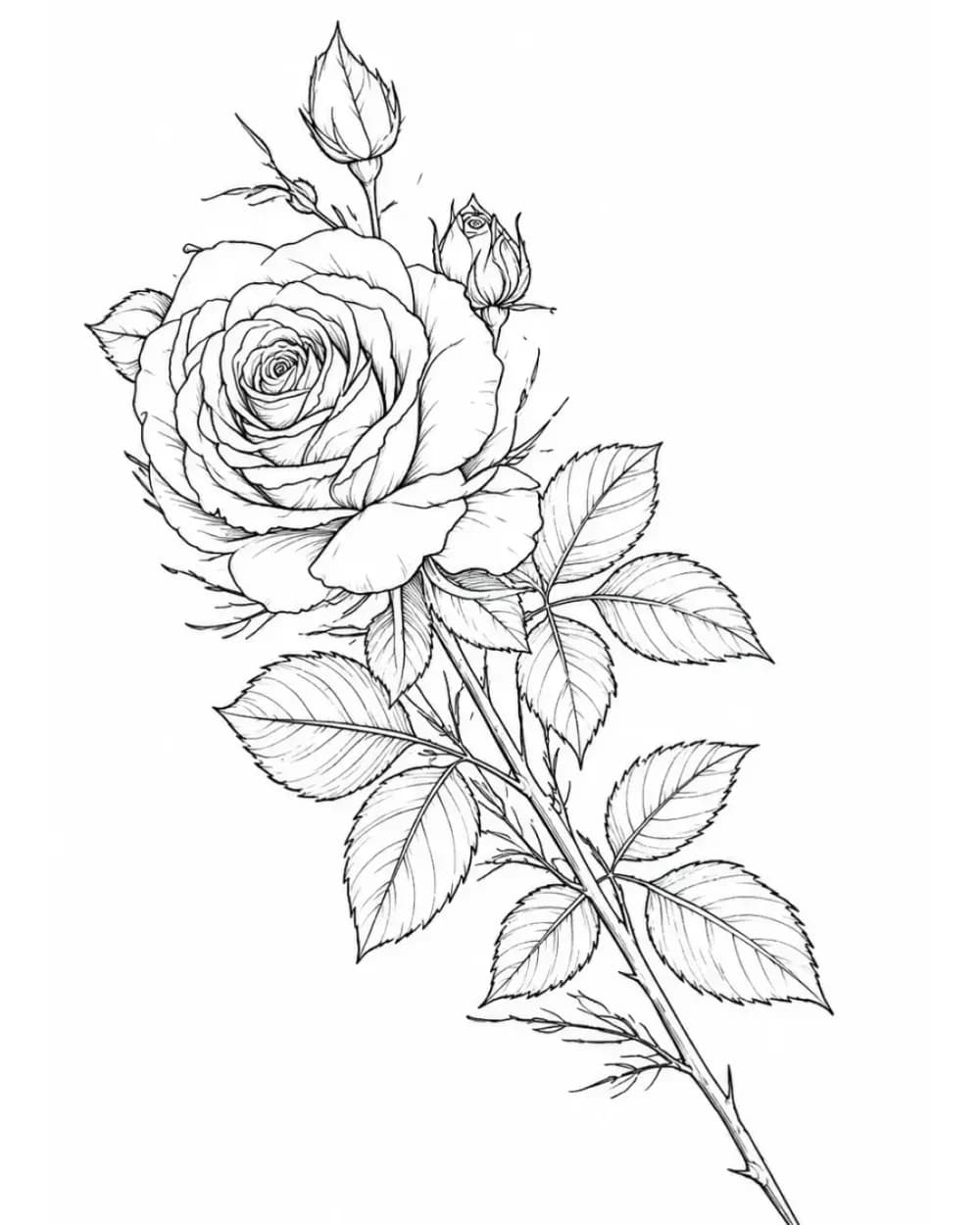
- Single long-stem rose: the rose itself is the first read. Protect the outer petal map, center direction, stem flow, and major leaf shapes before keeping fine interior folds.
- Tiger with roses: the tiger face is the first read and the roses are the frame. Protect the eyes, nose, muzzle, and major petal groups before fur, whiskers, leaf veins, or tight rose centers compete at the same density.
- Cat silhouette filled with roses: the cat contour is the recognition anchor and the flowers become interior structure. Keep negative-space channels between rose groups so the floral fill does not erase the enclosing silhouette.
- Butterfly with roses and crescent: the composition needs separate readable layers. Preserve wing edges and the main rose cluster first, then reduce small wing pattern or foliage if the final size becomes crowded.
- Pocket watch with rose: the hard clock circle and organic flower need different visual jobs. Keep the clock boundary and major rose silhouette stable before retaining tiny numerals, chain links, petal folds, and leaf veins.
- Skull framed with roses: the skull remains the central mass while roses soften the perimeter. Protect skull openings, teeth grouping, outer rose petals, and negative space before small cracks or floral texture.
A Rose Needs a Clear Outer Petal Map
The flower head should read before the smallest interior folds. Large petal edges, the center direction, the outer silhouette, and the relationship between flower and leaves do most of the recognition work. When every petal crease is given equal weight, a rose can become a circular knot of linework even if the source drawing looks detailed and attractive.
Standalone Roses and Supporting Roses Need Different Hierarchies
A single rose can carry the highest concentration of detail because there is no competing subject. In the tiger, skull, and pocket-watch examples, the flower has a different job. It should support the larger composition without obscuring the eyes, muzzle, skull openings, clock face, or other primary landmarks. Compare where the rose sits before deciding how much petal information it deserves.
Use Silhouette and Negative Space to Control Dense Floral Areas
The cat example works because the outer animal silhouette remains simple while the roses live inside it. The same principle applies to floral framing: leave clear channels between petal groups, leaves, and the adjacent subject. Negative space is not empty information. It is what prevents multiple rose heads and leaf clusters from merging into one dark mass after transfer.
Mixed Subjects Need One First Read
Rose compositions often pair the flower with animals, skulls, clocks, butterflies, portraits, or lettering. The strongest stencil usually has one dominant first read and a clear second layer. In the tiger example, the face arrives before the flowers. In the pocket-watch example, the circular clock structure anchors the composition while the rose breaks the geometry. If both subjects compete at exactly the same visual weight, final-size readability usually suffers.
Check Petal Centers and Leaf Veins at Final Size
The outer rose silhouette is rarely the first element to fail when a design is reduced. Tight petal centers, repeated leaf veins, tiny thorns, chain links, fur texture, teeth, and wing pattern tend to close first. Judge the stencil at the intended physical size and simplify the tightest cluster before removing the major flower shape or the main subject contour.
Use the Tattoo Stencil Line Weight Guide when the question is which close lines or gaps are most likely to merge. Use the Tattoo Stencil Size & Print Calculator when you need to inspect the finished stencil at a real physical size before printing.
Compare Rose Examples Before Preparing Your Own Reference
These are curated rose tattoo stencil examples for visual comparison, not a separate rose generator. Browse the broader floral tattoo stencil collection for more flower-led compositions, or compare roses used with animals in the animal stencil collection and with skulls in the skull stencil collection. If you are starting from your own photo, drawing, or reference, use the photo-to-stencil workflow first, then generate one stencil online when the source is ready.
FAQ
What should stay strongest in a rose tattoo stencil?
The outer petal silhouette, the direction of the flower center, the major petal separations, and the relationship between bloom, stem, and leaves should normally remain easier to read than tiny interior folds. In a mixed composition, the rose may be secondary, so preserve the dominant subject first and let floral micro-detail simplify before it competes with that first read.
How small can a detailed rose tattoo stencil be?
There is no universal minimum size for a rose. The useful test is the intended physical output: reduce the finished stencil to the real print size and inspect the tightest petal center, leaf veins, thorns, and any nearby secondary detail. Simplify the first cluster that closes rather than relying on a generic size rule.
Why are tiger, skull, butterfly, and pocket-watch examples on a Rose subject page?
They show different jobs a rose can perform inside a tattoo composition. The rose can be the focal subject, an outer frame, an interior texture, or a structural partner. The broader Animal, Skull, and Floral collections remain the owners when the main browsing intent is the other subject rather than the rose itself.
Can I turn my own rose reference into a stencil here?
This page is a comparison gallery, not a separate Rose generator. Use the photo-to-stencil workflow or the online generator for your own reference, then use these examples to judge hierarchy, petal density, negative space, and final-size readability.
Examples
Rose stencil examples
Compare the linework, spacing and detail choices that make each stencil read differently.
A classic single-rose stencil where the flower head, stem, leaf rhythm, and negative spaces remain readable without a second subject competing for attention.
Explore more floral tattoo stencil group stencils
- The design has a clear hierarchy: the rose head carries the focal detail, while the stem and leaves create a simple directional structure that is easy to follow at a glance.
- Artists comparing a standalone rose motif where petal structure and leaf placement matter more than a larger illustrative composition.
- Inner petal folds can become one dense knot when reduced; protect the outer petal silhouette and a few major interior separations before retaining every fine fold.
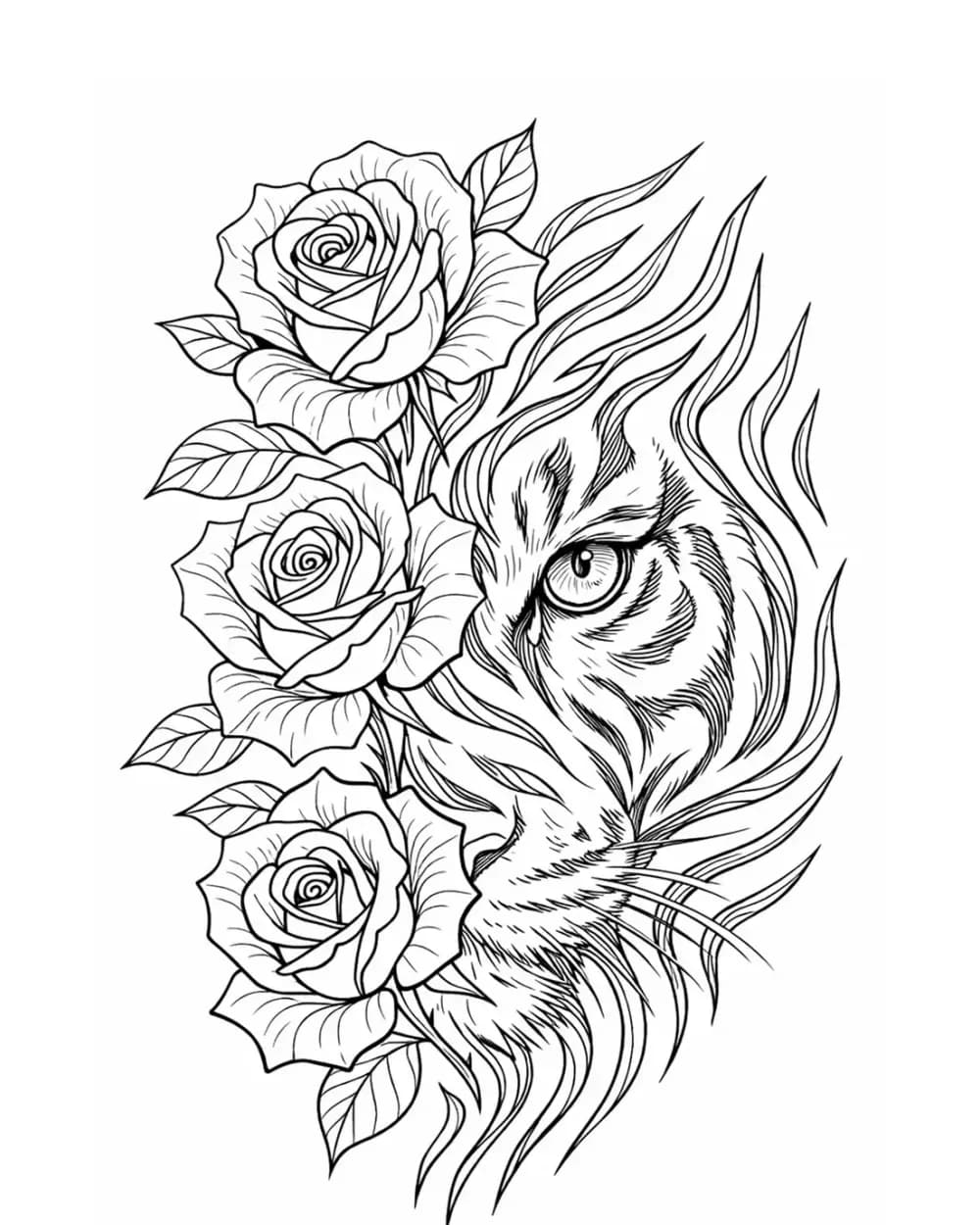
A tiger portrait framed by roses, useful for comparing how floral detail can support a dominant animal face without competing with its main landmarks.
Explore more animal tattoo stencil gallery stencils
- The roses stay mostly outside the tiger's eyes, nose, and muzzle, so the animal remains the first read while the flowers create a strong outer frame.
- Medium-to-large compositions that combine roses with a portrait subject and need a clear hierarchy between the focal face and floral support.
- Tiger fur, whiskers, rose centers, and leaf veins can all occupy the same visual frequency; keep the face landmarks and outer petal groups stronger than micro-texture.
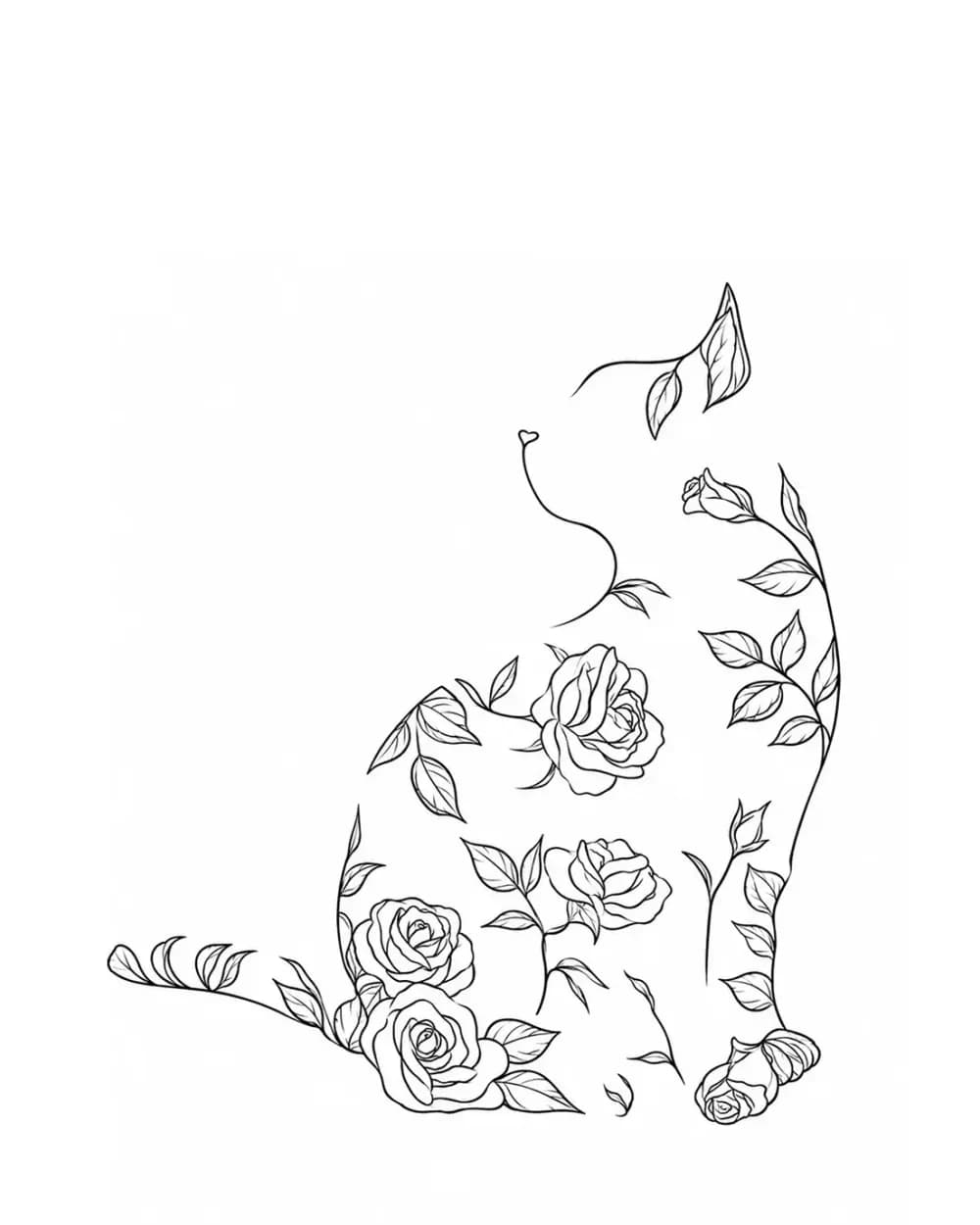
A cat silhouette built as a floral container, showing how rose shapes can carry interior detail while the outer animal contour remains the recognition anchor.
Explore more animal tattoo stencil gallery stencils
- The cat reads from the uninterrupted silhouette before the viewer resolves the roses inside it, which keeps the composition legible despite the dense floral interior.
- Graphic rose compositions where flowers are used inside a strong enclosing silhouette rather than as an external frame.
- If the interior flowers become too dark or crowded, they can erase the negative-space relationship that makes the cat silhouette work; simplify interior leaves before weakening the outer contour.
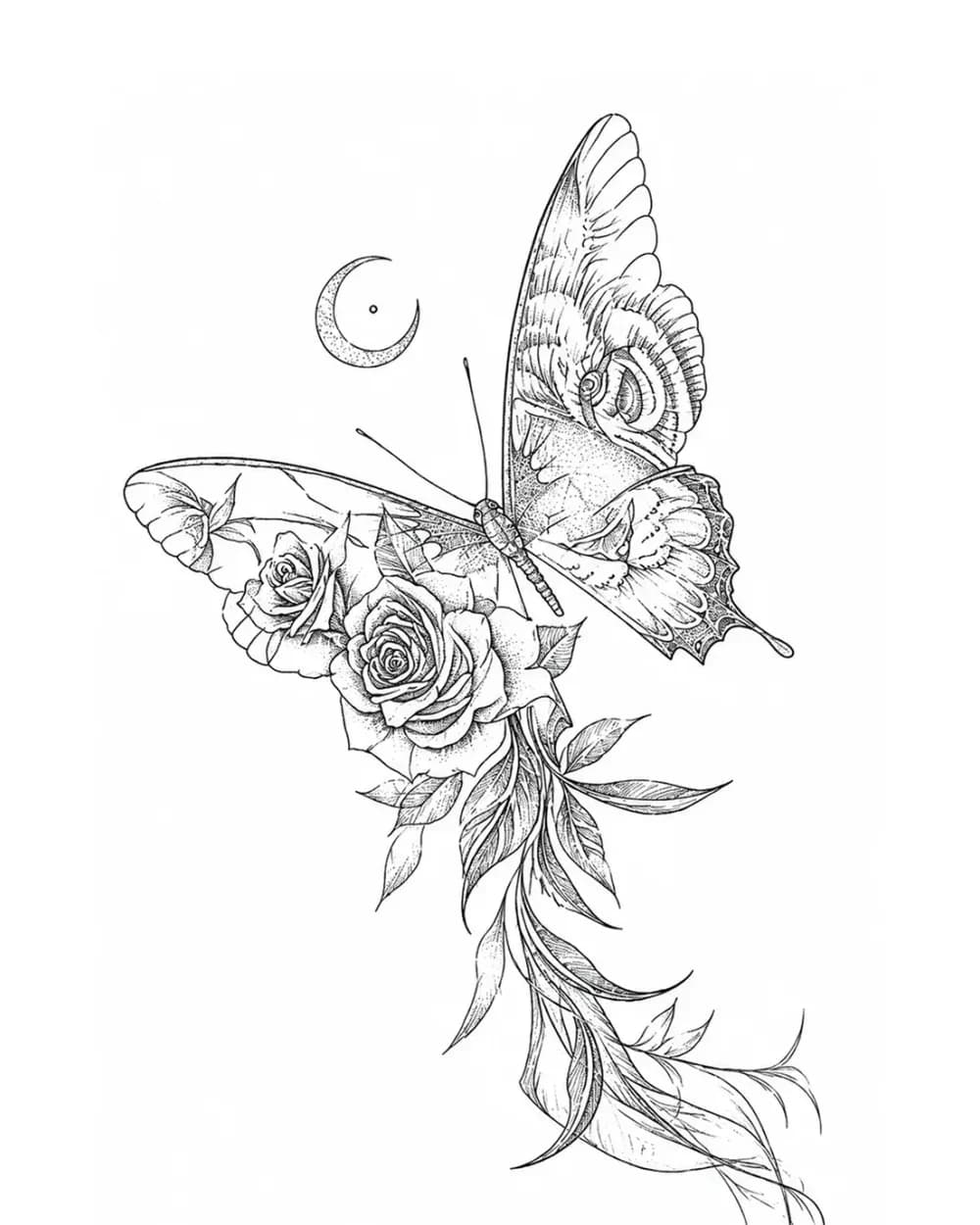
A vertical butterfly-and-roses composition where wing structure, rose clusters, crescent, and trailing foliage form separate readable layers.
Explore more floral tattoo stencil group stencils
- The butterfly wings and main rose cluster remain distinct shapes, so the composition has several focal layers without collapsing into one continuous field of linework.
- Decorative vertical rose designs that combine floral structure with a lighter symbolic or nature-led secondary subject.
- Wing pattern, petal folds, and small foliage can become equally dense at reduced size; preserve the wing edges and major rose contours before minor internal texture.
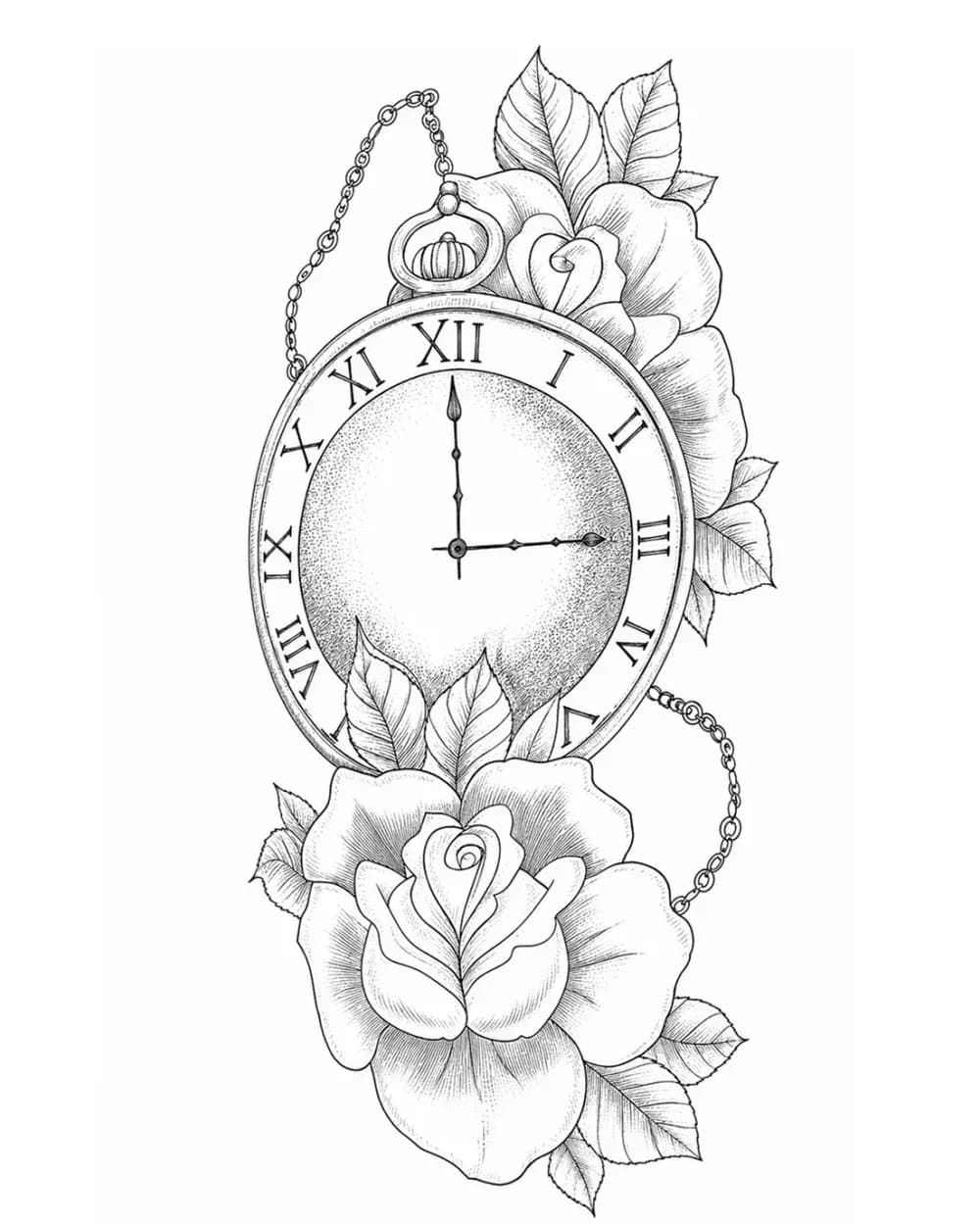
A pocket-watch composition using a large rose and leaves as structural support around the circular clock face.
Explore more floral tattoo stencil group stencils
- The clock circle creates a strong geometric anchor while the rose breaks the symmetry with a softer organic mass, giving each element its own visual job.
- Artists comparing a classic symbolic rose composition where floral detail needs to coexist with a hard-edged circular object.
- Roman numerals, chain links, petal folds, and leaf veins can overload the same area; at final size, simplify small clock and chain information before sacrificing the rose silhouette.
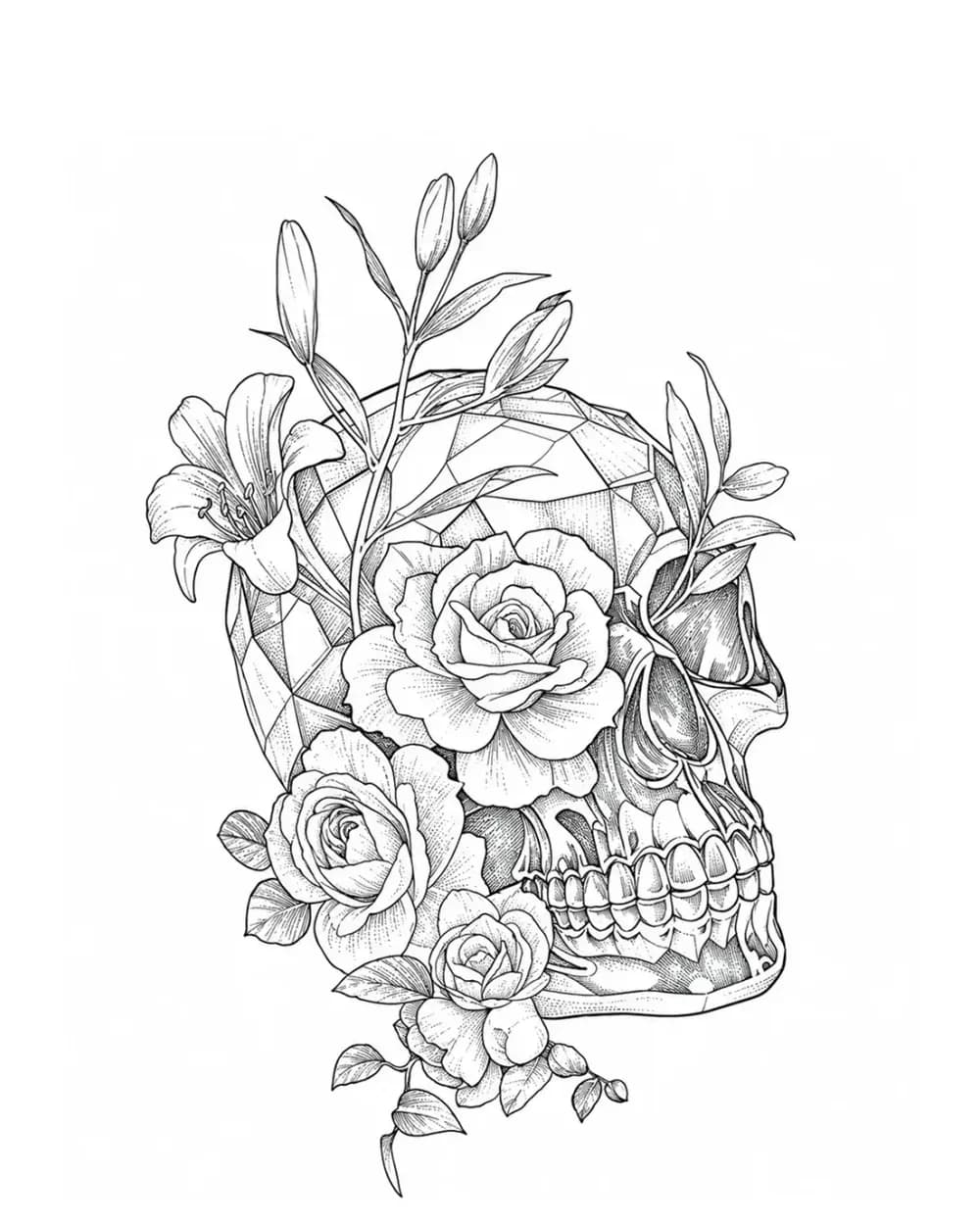
A skull-and-roses stencil where the skull remains the central mass while roses and leaves build a softer perimeter around the bone structure.
Explore more skull tattoo stencils stencils
- The skull has a strong central silhouette and large dark-light separations, allowing the roses to add detail around it without taking over the first read.
- Medium-to-large classic rose pairings where a dense central subject needs an organic floral frame and clear separation between hard and soft forms.
- Teeth, nasal cavity, petal centers, and leaf veins can all become small closed shapes; keep the skull openings and major rose petals readable before retaining secondary texture.
Related galleries
Keep browsing nearby stencil ideas.
Browse more floral tattoo stencil group stencil examples and compare different compositions.
Browse more animal tattoo stencil gallery stencil examples and compare different compositions.
Browse more skull tattoo stencils stencil examples and compare different compositions.
FAQ
Quick questions about rose stencils.
The outer petal silhouette, the direction of the flower center, the major petal separations, and the relationship between bloom, stem, and leaves should normally remain easier to read than tiny interior folds. In a mixed composition, the rose may be secondary, so preserve the dominant subject first and let floral micro-detail simplify before it competes with that first read.
Next step
Turn your own reference into a clean stencil draft.
Use what reads clearly here as direction, then start from your own reference.