

Placement Prep
March Birth Flower Tattoo Stencil: Daffodil vs Jonquil Prep
Choose between daffodil and jonquil for a March birth-flower tattoo stencil, frame the symbolism and inscription, and keep trumpet and cluster petals readable at birth-flower sizes.
march birth flower tattoo · daffodil vs jonquil tattoo · march flower tattoo stencil · small march birth flower tattoo placement
- November 28, 2026
- 12 min
March briefs arrive with a naming tangle built in. The widely documented March birth flower is the daffodil, with the jonquil listed as its close companion, a pairing confirmed by references such as the Old Farmer's Almanac. Both sit inside the Narcissus genus, and the rule florists repeat is simple: all jonquils are daffodils, but not every daffodil is a jonquil. Clients use the two words interchangeably, so the first job is to look at the actual reference and decide whether the stencil must carry one bold trumpet bloom or a small cluster of blooms on one stem. This guide settles that choice, frames the March meaning and inscription the client expects, and adapts the construction to the small placements birth-flower pieces usually get.
If the birthday falls in January or February instead, the parallel decisions live in the January birth-flower guide and the February birth-flower guide. When the month itself is still open, compare all twelve months in the birth-month flower hub. What follows stays on the March pair: recognition cues that change line choices, meaning and inscription framing, and small-size prep for trumpets and clusters.
For the deep trumpet pass once the March choice is a single daffodil, including corona openness and six-tepal separation at final size, use the dedicated daffodil stencil page after reading this page. What follows stays on the March decision: which bloom the reference shows, what it should mean, and how to keep it readable at birth-flower sizes.
Decide whether the reference shows a daffodil or a jonquil
The names overlap in everyday speech, but the stencil builds do not. Ask the client to point at a reference, then check the bloom against these contrasts before committing to linework.
| Signal | Daffodil (single trumpet form) | Jonquil (clustered Narcissus jonquilla form) |
|---|---|---|
| Bloom count per stem | One large bloom per stem, the classic March read | Two to five smaller blooms carried on one stem, a branched cluster |
| Trumpet and center | One prominent projecting trumpet with a frilled or rippled rim and an open mouth | Shorter cups on each small bloom, each with its own small mouth that must stay open |
| Petal build | Six broad flat tepals in a star behind the trumpet | Six narrower tepals per small bloom, repeated across the cluster |
| Leaves and stem | Upright stem with one or two flat strap leaves | Slender stem with narrow rush-like foliage hugging the stalk |
| Stencil consequence | Single-focus problem: one trumpet mouth plus six separations must hold | Counting problem: every small bloom needs its own center and separations or the cluster turns to noise |
Two mix-ups recur in March briefs. First, clients bring a paperwhite narcissus or a multi-bloom garden hybrid and call it a jonquil. Those are still Narcissus relatives, but a forced indoor paperwhite has a different leaf stance and a flatter cup, so confirm the rush-like leaves and the small fragrant cluster habit with the client rather than assuming any clustered white bloom is automatically a March jonquil. Second, clients bring a double garden daffodil with piled inner petals and no visible trumpet, then expect standard daffodil prep. That form hides the tube that carries the March read and needs the largest width in the family; at wrist sizes it usually needs a reselect to an open trumpet face or a bud. The full double-form safeguard lives on the daffodil stencil page.
Lock one reading and one focal bloom before touching width or placement. A daffodil-plus-jonquil pairing is legitimate when the brief spans siblings or partners born in March, but it is a two-structure composition, bold single trumpet beside fine cluster, and should be planned as one instead of discovered halfway through prep.
Frame the March meaning and the inscription the client expects
March symbolism is well documented, which helps: the client usually arrives with a meaning already in mind, and the stencil should protect it.
Daffodil meanings center on rebirth, new beginnings, hope, joy, and good fortune, with friendship and regard attached in the traditional language of flowers. The spring timing does much of the work: one of the first blooms after winter reads naturally as a fresh start after a hard season, which suits both celebratory and memorial briefs. Treat single-bloom folklore with care in consultation: gifting one stem alone carries an old misfortune association, while a bunch or cluster reads as happiness and luck, so confirm the client has chosen the stem count deliberately rather than copying a reference literally. Jonquil meanings share the renewal thread with an added note of devotion and affection, tied by several studio lists to its strong scent and clustered habit: many small blooms on one stem reads as closeness and return.
Turn that symbolism into stencil decisions with three pairings that suit March briefs:
- Name, date, or month numeral in script. Short inscriptions fit the renewal tone of both forms. Keep the lettering structurally separate from the bloom: set the wording on its own curve or baseline with open skin between text and petals, and run the lettering through its own size check with How Small Can Tattoo Lettering Be before locking the composition. Fine script beside a jonquil cluster needs extra clearance, since small cups and hairline letters merge first.
- A second bloom for a person. Partner, child, or memorial posies combine the March flower with another month's bloom. Rank the March flower as focal or secondary explicitly, and give a single daffodil its trumpet read or a jonquil cluster its repeated small mouths without letting the two structures interlock.
- A small companion mark with personal weight. Clients often request the March birthstone alongside the flower. Treat any hard geometric companion as a separate focal object with its own spacing budget, so it frames the bloom instead of crowding the trumpet mouth or the tightest cluster gap.
Agree on wording spelling, date format, numeral style, and stem-count intent with the client before prep. Lettering corrections after transfer are expensive, and a misspelled date ruins an otherwise clean birth-flower piece just as surely as an unintended single-stem reading does.
Keep trumpets and clusters readable at birth-flower sizes
Most March pieces land between 4 and 8 cm wide. At that scale the white space between marks matters more than the marks themselves. Work through these checks at the exact intended width, with scaling off on the print.
Hold one trumpet when the choice is daffodil. Below about 6 cm, carry a single bloom with at most one strap leaf or a short stem section. Keep the mouth opening as an open ring with visible skin inside, keep the throat where the tube meets the tepals clear of every tepal base, and number the six tepals around the bloom so no two neighbors share one merged edge. Shorten rim frill when the trumpet crowds instead of thinning tepal contours, since thinned contours drop out on transfer while a shorter frill keeps reading. The mass-versus-separation logic behind these calls is covered in the line-weight guide, and the single-gap diagnostic in Negative Space Too Tight takes over when one specific opening is the blocker.
Count small mouths when the choice is jonquil. The cluster fails differently: each small cup is drawn correctly on its own, but two neighboring blooms share edges and the group prints as one spotted mass. Rank one bloom as the focal flower, give every bloom its own cup opening held as skin, and keep open skin between every bloom edge to tip. When detail must go, drop a rear bloom entirely before thinning cup lines: a three-bloom cluster with open gaps reads as jonquil at 5 cm, while five blooms drawn edge to edge reads as noise. Draw the rush-like leaves as two or three spaced blades rather than fine texture, and never let a leaf cross a cup mouth. When the design holds too much information for its width, simplify bloom count before thinning lines, using the density framework in Too Detailed for Size.
Let stems follow the placement. Single daffodils nod on a short curved neck above a straight stem, and that neck-to-stem junction bridges first when it touches a tepal tip. Jonquil stems carry weight differently: the stalk must stay one clean line with a bloom cluster balanced at its head, so keep the branching point open with skin on both sides. On narrow placements, align the stalk with the limb axis and shorten cross-limb leaves while edits are still cheap.
Verify at true size on paper. Export a true-size PDF with no fit-to-page scaling, inspect the narrowest trumpet mouth or cluster gap and the thinnest stalk section on plain paper, and measure the print with a ruler. If the digital file passes and only paper fails, the problem belongs to the print stage: use How to Print a Large Tattoo Stencil for tiling and output setup, and the size calculator to regenerate exact dimensions.
Place the piece where a small trumpet or cluster survives
Birth-flower placements reward restraint. Match the construction to the field:
- Inner wrist and inner forearm. The most requested March fields. A single daffodil face with its stalk on the limb axis reads cleanly, while a jonquil cluster needs a strict bloom limit here: two or three small blooms with open gaps, never five. Keep inscription on a gentle curve parallel to the limb, never wrapped around it.
- Collarbone. Suits a single daffodil with one strap leaf or a compact three-bloom jonquil sprig. Lay the long axis along the bone and confirm every mouth opening and petal gap at 1:1 before print, since the gentle curve hides crowding on screen.
- Behind the ear and ankle. Tiny wrapped fields where only one simple read survives. This is single-trumpet territory with the mouth held open, or a cropped two-bloom jonquil tip at most. Enlarge slightly rather than forcing a full cluster that will merge.
- Shoulder, calf, and outer forearm. Room for a paired composition or a stem with a full small cluster. Rank a focal bloom, keep open skin between every bloom, and check side views for wrap compression with Fit a Tattoo Stencil to Body Placement.
- Thigh, upper back, and ribs. The only fields that earn a full multi-bloom jonquil spray or a family posy combining March blooms with other months. Vertical rib pieces should follow the body line with stalks running down, not across, the torso. Even here, every bloom keeps its own mouth and separations.
For visual direction once the construction is decided, browse the floral collection for reviewed stencil structure. When the brief is small size without a species question, the generic thresholds live on the small-flower stencil page. After placement settles, the transfer itself belongs to How to Apply a Tattoo Stencil to Skin, which starts from a passing physical stencil.
How March compares with neighboring decisions
Use this aid only to route the brief, not as a second tutorial:
- Choice is already a single daffodil and the remaining work is trumpet technique. The daffodil stencil page owns trumpet and corona openness, six-tepal separation with side versus front view choice, and stem and leaf flow at final size. Stay here while the job is choosing March's flower and framing the renewal meaning; move there when the brief is already a dedicated trumpet head.
- Brief is small size with no species question. The small-flower stencil page owns generic 2 to 5 cm readability thresholds. Stay here while the job is March mapping, daffodil versus jonquil counting, and inscription framing; move there when the remaining question is pure small-size vetting.
- Reference actually shows a paperwhite with flat cups. Reselect or reroute with the client rather than forcing it into jonquil prep, since cup depth and leaf stance change the construction.
- Birthday is a different month. The January birth-flower guide, the February birth-flower guide, and the April birth-flower guide own their own month pairs. Link outward only when the commission spans months, such as a family posy.
March prep checklist
Run these in order with the client brief, the intended width in millimeters, and the placement already named:
- Confirm the flower: single daffodil, jonquil cluster, or an explicitly agreed pairing, with the paperwhite and double-form checks passed for either choice.
- Confirm the meaning the client wants carried, including stem-count intent and the exact inscription wording, spelling, and date format.
- Confirm one focal bloom, ranked secondary blooms, and one removable bloom if gaps close.
- Confirm trumpet mouth and throat openness, or every small cup opening and cluster gap, plus stalk strength and every tepal gap open at true size on a measured print.
- Confirm the stem follows the placement axis and the composition was checked in a natural posture.
- Export the adjusted version at exact size, then hand off to print and transfer owners for execution.
FAQ
Is the March birth flower the daffodil or the jonquil?
Both, with a clear order. The daffodil is the March birth flower, and the jonquil is its close companion inside the same Narcissus genus. Some studio lists name the daffodil alone, so confirm with the client which bloom they picture: one bold trumpet bloom per stem points to daffodil, while a cluster of smaller blooms on one stem points to jonquil. This guide preps both March forms; a paperwhite or double garden form needs its own construction decision.
How do I choose between daffodil and jonquil for a tattoo?
Match the reference to the bloom count and the size. Choose the single daffodil for rebirth, new beginnings, joy, or a fresh-start brief where one trumpet mouth can carry the read, and protect the mouth ring and six tepal separations at small sizes. Choose jonquil for devotion and closeness where a small cluster suits the story, and protect every small cup opening plus the gaps between blooms. Confirm the reading with the client before prep, since the two forms share genus but almost no stencil counting.
What symbolism and pairings suit a March birth-flower tattoo?
Daffodil reads as rebirth, new beginnings, hope, joy, and good fortune, with friendship and regard attached. Jonquil shares the renewal thread with added devotion and affection. Both pair well with a short script name or date, a second bloom for a partner or child, or the March birthstone as a separate framed companion. Keep lettering and companion marks structurally separated from the bloom with open skin between them, and agree on stem count before prep since single-stem folklore still comes up in consultations.
What keeps a small March birth-flower stencil readable?
One focal bloom, open separations at the exact width, and simplified detail. Hold the daffodil mouth as an open ring with a clear throat, number six separable tepals, and shorten rather than thin crowded frill. Hold every jonquil cup as its own open mouth, keep skin between every bloom, and drop a rear bloom before thinning cup lines. Verify every gap on a measured true-size print, and recrop or enlarge rather than forcing a full cluster into a wrist or behind-ear field.
When should I use the daffodil species page instead of this guide?
Stay here while the decision is which March flower fits, what the piece means, and whether the size and placement hold. Move to the daffodil stencil page when the choice is already a single daffodil and the remaining work is trumpet hold, tepal separation with side versus front view choice, or transfer-ready stem flow at final size. That page covers the species technique in depth; this page links to it instead of repeating it.
Related Collections
Jump from the guide to reviewed stencil examples
Related Guides
Keep reading from here
January Birth Flower Tattoo Stencil: Carnation vs Snowdrop Prep
Decide between carnation and snowdrop for a January birth-flower tattoo stencil, frame the symbolism and inscription, and keep ruffled or bell petals readable at small birth-flower sizes.
january birth flower tattoo · carnation vs snowdrop tattoo
Read guideFebruary Birth Flower Tattoo Stencil: Violet vs Primrose Prep
Choose between violet and primrose for a February birth-flower tattoo stencil, frame the symbolism and inscription, and keep small petals readable at birth-flower sizes.
february birth flower tattoo · violet vs primrose tattoo
Read guide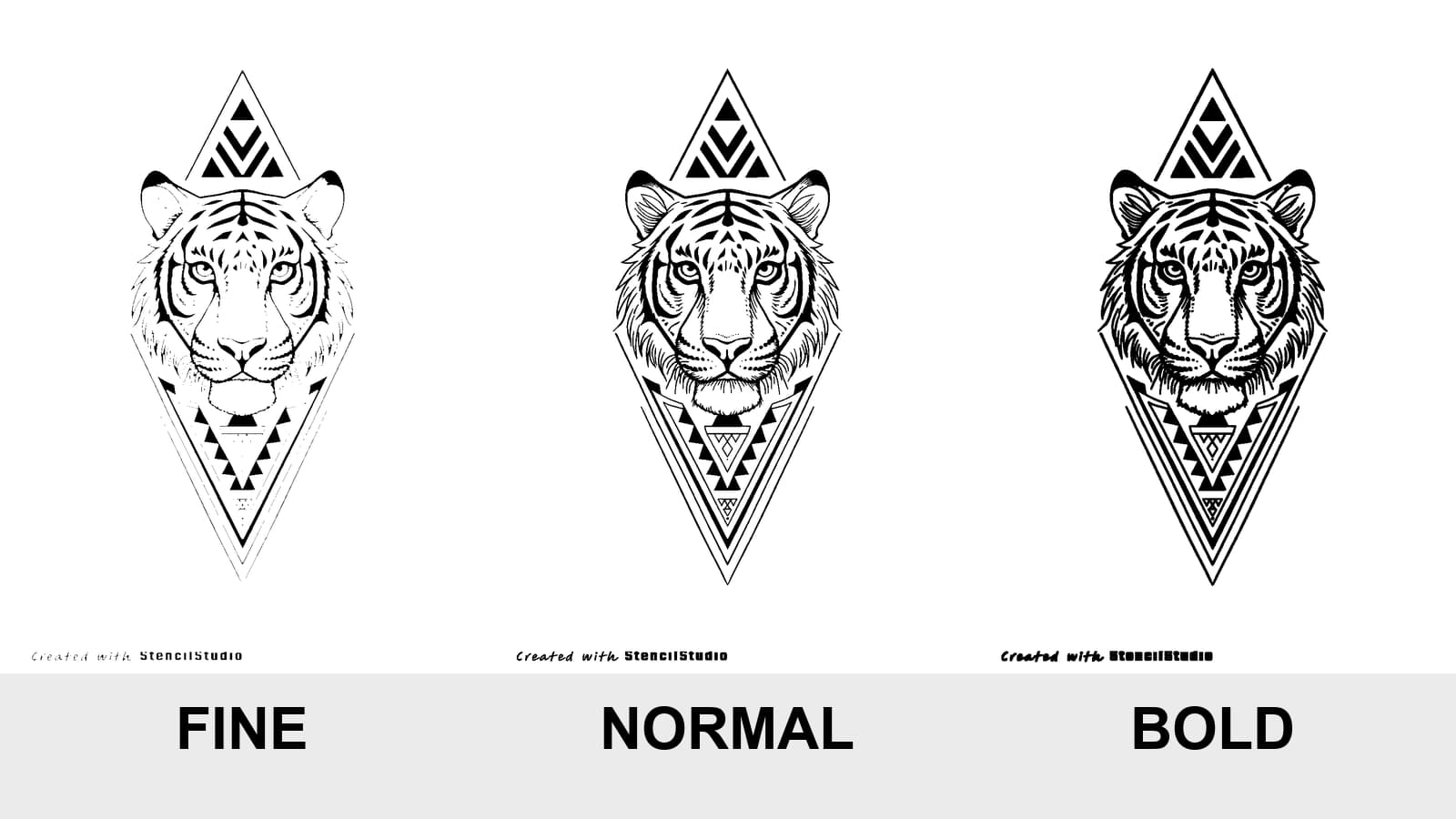
Tattoo Stencil Line Weight: Fine vs Normal vs Bold
Compare Fine, Normal, and Bold on the same tattoo stencil, see where lines disappear or merge, and test the result at the size you will actually print.
tattoo stencil line weight · fine normal bold stencil
Read guideAuthor
Andrea Mezzadra
Founder and product builder at StencilStudio
Andrea builds StencilStudio and tests how the tools fit into real stencil prep, using real references and outputs to document what works, what changes, and where artist judgment still matters.
In the App
Turn the March choice into a stencil draft
Start from the flower you picked below, then set exact width, preview body fit, and export a true-size stencil in StencilStudio.