Idea map for birth-flower requests

Every birth flower, mapped before you stencil

A client arrives with a month, a recipient, and a meaning. Find the month in the map below, confirm the right species plus its accepted alternates, frame the symbolism as an inscription choice, then check small-size readability and placement fit before following one link to the vetted stencil guide.

Built for working artists resolving a birth-flower request in session. This hub owns the idea-stage job: identification, meaning, size and placement routing. Construction vetting and transfer prep stay in the linked month and species owners.

12-month idea map

Find the month, confirm the bloom, frame the meaning.

Each row names the canonical flowers plus the alternates clients sometimes bring, gives a one-line identification cue so the wrong species never reaches linework, and hands off to the single vetted owner for that month. Mappings follow the widely documented Old Farmer's Almanac list used by the month guides on this site.

Birth month to species idea map with symbolism and vetted routing
MonthBirth flowersIdentify itSymbolism and inscriptionVetted next step
JanuaryCarnation + snowdropCarnation is a ruffled layered ball on a straight stem; snowdrop is one small nodding bell on a slender stalk. Confirm which one the client pictures before drawing.Carnation: love and distinction, strongly color-led. Snowdrop: hope and new beginnings. Script with a name or date suits both; keep lettering on its own curve.January guide: carnation vs snowdrop
FebruaryViolet + primrose (some lists: iris)Violet is a small five-petal face with heart-shaped leaves; primrose is a flat open rosette cluster. Iris appears on some studio lists, so confirm the bloom by reference photo.Violet: modesty, loyalty, remembrance. Primrose: youth and new love. Short script or a tiny companion mark (star, numeral) fits the small scale.February guide: violet vs primrose
MarchDaffodil (jonquil type)One trumpet cup ringed by six flat petals. Single-flower month, so the idea decision is style and placement, not which bloom.Rebirth, hope, new beginnings. Pairs naturally with a short date or a new-chapter word; keep the trumpet center restrained so script stays legible beside it.Daffodil species depth
AprilDaisy + sweet pea (some lists: peony)Daisy is one flat ray ring around a textured disk; sweet pea is a ruffled cluster climbing a vine. Peony appears on some lists, so confirm by reference photo.Daisy: innocence and loyal love. Sweet pea: gratitude and fond farewell. Memorial and gratitude briefs favor sweet pea; clean open briefs favor daisy.April guide: daisy vs sweet pea vetting
MayLily of the valley + hawthornLily of the valley is a strand of tiny bells along one stem; hawthorn is a small blossom spray on a woody twig. At idea stage, pick the strand or the spray, not both.Lily of the valley: sweetness and return of happiness. Hawthorn: hope. Both suit delicate wrist or collarbone placements with a short name in script.Line-weight guide for fine bell detail
JuneRose + honeysuckleRose is a layered spiral bloom; honeysuckle is paired tubular trumpets on a vine. Confirm color intent for the rose, since color carries much of its message.Rose: love and beauty, color-led. Honeysuckle: devotion and fond memory. Devotion briefs with a vine feel favor honeysuckle; classic love briefs favor rose.Rose construction depth
JulyLarkspur + water lilyLarkspur is a tall spurred spike that wants vertical room; water lily is a layered bloom over broad pads. Match the flower to the placement shape early.Larkspur: positivity and dedication. Water lily: purity, calm, rebirth. Tall placements (spine, forearm, calf) suit larkspur; wider fields suit water lily.Water-lily species depth
AugustGladiolus + poppyGladiolus is a stacked vertical spike for slim placements; poppy is an open cup with a dark center that must stay open, not filled.Gladiolus: strength and remembrance. Poppy: peaceful remembrance and comfort. Both carry memorial weight; let the placement width decide between spike and cup.Gladiolus species depth
SeptemberAster + morning gloryAster is a narrow-ray composite, denser than a daisy; morning glory is one open trumpet face on a trailing vine. Denser rays need more width than the vine face.Aster: patient, wise love. Morning glory: affection, fleeting and playful love. Keep ray count modest at small widths; the vine face tolerates smaller sizes.Aster species depth
OctoberMarigold + cosmosMarigold is a dense tiered head where tier rows decide survival; cosmos is an open broad-petal face where petal gaps decide it. Different structures, different minimum widths.Marigold: warmth and remembrance, joyful or sorrowful. Cosmos: harmony and peace. Remembrance briefs usually resolve to marigold once width allows the tiers.October guide: marigold vs cosmos
NovemberChrysanthemumLong loose layered tiers with a distinct center build. Single-flower month: do not substitute a compact marigold head, the tier rhythm is visibly different.Loyalty, friendship, joy. Suits friendship and gratitude pieces; a short word or date in script balances the busy tier structure.Chrysanthemum species depth
DecemberHolly + narcissus, paperwhite type (some lists: poinsettia)Holly is spiked leaves plus berries, a geometric companion problem; narcissus is a trumpet cluster with several blooms per stem. Poinsettia appears on some lists, so confirm by reference.Holly: protection and goodwill. Narcissus: purity and renewal. Winter memorial and new-beginning briefs split along this pair; confirm which message the client wants.Set exact width for fine winter detail

Still choosing between two blooms for one month? The companion stencil hub at Birth Month Flower Tattoo Stencil owns the construction-level comparison across all twelve months, while the plural companion at Birth Month Flowers Tattoo Stencil covers the same comparison under the plural spelling. Start here to pick the flower and meaning, then use those guides to turn the choice into a stencil.

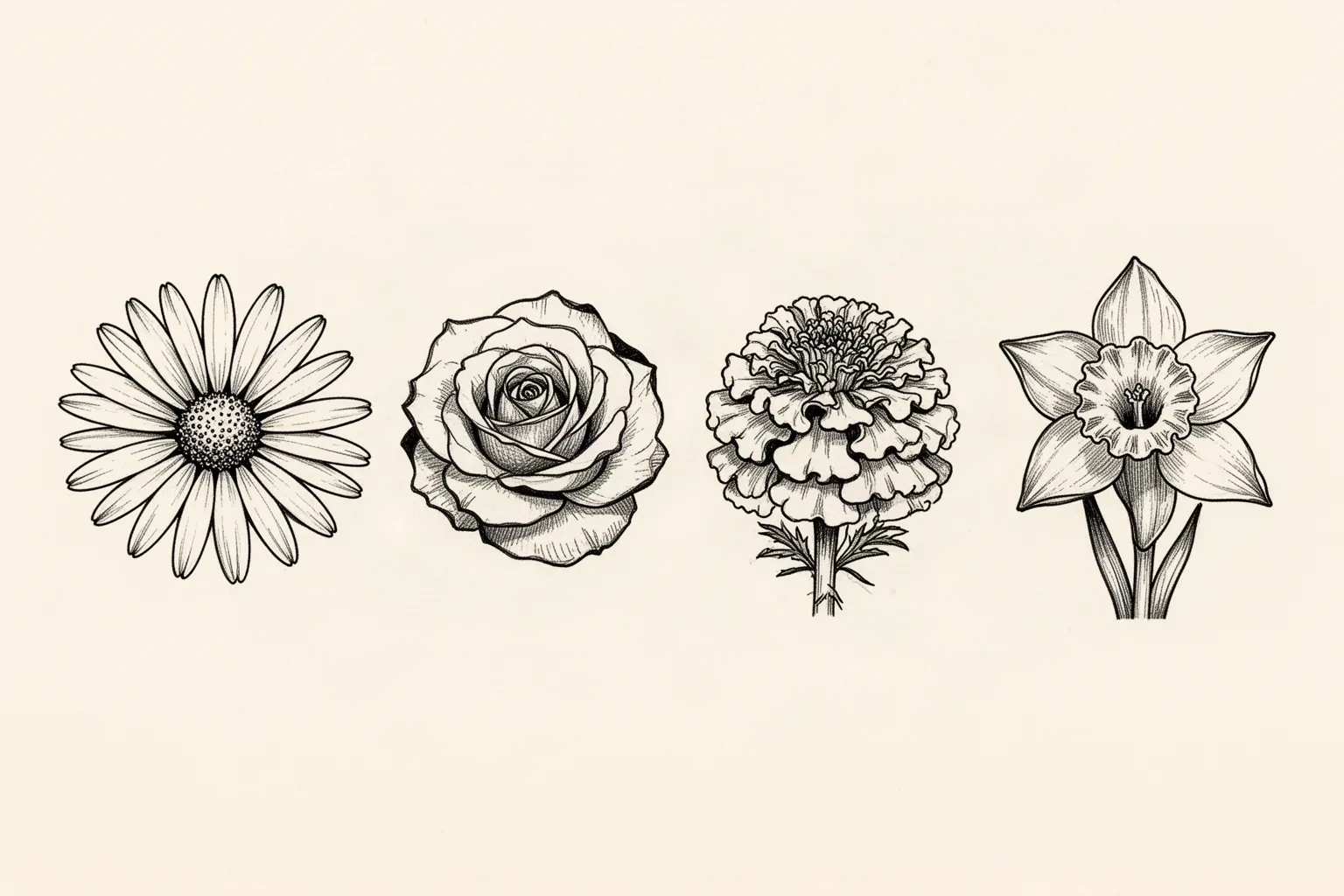
Monochrome line study of four stencil-scale flower constructions on white: a daisy with ray petals around a disk, a rose with layered spiral petals, a marigold with stacked ruffled tiers, and a daffodil with a trumpet center ringed by petals.
Four construction families behind the idea map, left to right: daisy ray ring around a disk, rose spiral bloom, marigold tiered head, daffodil trumpet with petal ring. Use the identification column above to land on the right family, then follow the linked owner for that flower's full vetting. Original synthetic illustration made for the birth-flower guides; it is not StencilStudio app output.

Symbolism and inscription framing

Meanings clients expect, turned into lettering choices.

Comparison depth only. Full symbolism framing with client-wording examples stays in the month guides; this section sets the four threads so the inscription decision is made before stencil work starts.

Remembrance and comfort

February (violet), April (sweet pea), August (gladiolus, poppy), October (marigold)

Lead with the person's name or date in script on its own curve, sized independently of the bloom. Dense heads (marigold) need extra clearance between petals and lettering; open faces (violet, poppy) leave more lettering room.

New beginnings and hope

January (snowdrop), February (primrose), March (daffodil), December (narcissus)

A short date, a new-chapter word, or Roman numerals carry this thread well. Keep trumpet centers restrained and bell strands uncluttered so the inscription reads as intentional, not squeezed in.

Love, devotion, and gratitude

January (carnation), April (daisy, sweet pea), June (rose, honeysuckle), September (aster), November (chrysanthemum)

Lock color intent for carnation and rose before prep, since color changes the message. A second bloom for a partner, child, or friend turns this thread into a two-flower posy with a ranked focal bloom.

Strength, calm, and protection

July (larkspur, water lily), August (gladiolus), October (cosmos), December (holly)

Tall spikes suit vertical placements with a short stacked inscription; calm open faces suit wider fields with a small companion mark (birthstone, tiny star) given its own spacing budget.

Small-size readability and placement fit

Thresholds that decide the idea before vetting starts

Read the intended width first, then route. These thresholds summarize what the month and species owners vet in full; each tier links the owner holding the detailed checks.

Under about 3 cm

Rule: One single simplified bloom only. No pairings, no buds, no tendrils, no script locked to petal edges.

Placement fit: Behind the ear and finger-adjacent spots take only the smallest open faces (violet, primrose single, snowdrop accent). Tiered heads (marigold, chrysanthemum, carnation) do not belong here; reselect or enlarge.

About 3 to 4 cm

Rule: One bloom with verified gaps at true size, scaling off. Thin-petal species (violet, primrose, daisy, sweet pea) live or die on petal separation at this width.

Placement fit: Wrist and ankle suit slim single blooms or short vertical sprigs (sweet-pea pair, daffodil, larkspur tip). If two neighboring petals share one merged edge at 1:1, remove detail or widen before transfer.

About 4 to 7 cm

Rule: One well-spaced flower, a two-bloom sprig, or a short inscription pairing can hold when every gap is verified with a ruler on the physical print.

Placement fit: Collarbone and forearm carry stepped sprigs and separated pairings. Trumpet centers (daffodil, narcissus, morning glory) must stay compact with visible skin between marks, never one filled pocket.

Above about 7 cm

Rule: Pairings and small posies become viable with a ranked focal bloom and a clear skin channel between structures at true size.

Placement fit: Dense tiered heads earn their detail here (marigold, chrysanthemum, carnation tiers). Larger width never rescues stacked tiers, packed ruffles, crossed stems, or touching bud contacts, so verify before blaming the printer.

Delicate-petal callouts: violet and primrose spacing checks live in the February guide; daisy ray-disk and sweet-pea ruffle gap retention live in the April vetting with species depth at daisy and sweet pea; trumpet and bell restraint for daffodil, narcissus, and morning glory lives in daffodil and morning glory; tiered-head density for marigold, chrysanthemum, and carnation lives in marigold and chrysanthemum. Set the physical width with the size calculator before any of those checks.

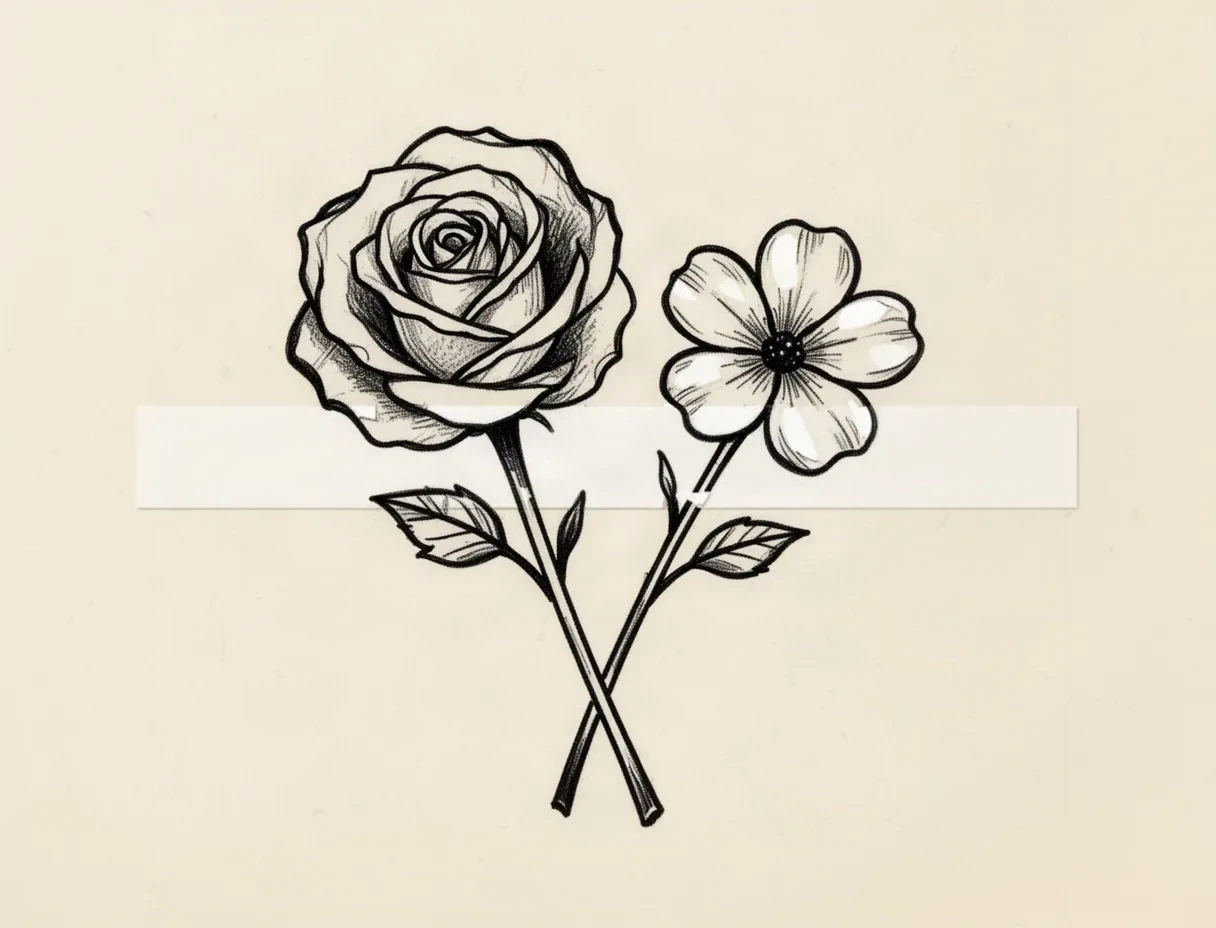
Monochrome line study of a two-flower posy with a larger layered rose bloom and a smaller open five-petal bloom, with open space kept between the two petal masses.
A two-bloom idea resolved, then separated: one layered focal bloom, one smaller open bloom, and a visible band of open space held between the two petal masses. At idea stage this is the inscription-plus-second-bloom pattern from the symbolism threads; the linked month guides own the spacing budgets that make it stencil-ready. Original synthetic illustration made for the birth-flower guides; it is not StencilStudio app output.
12-month idea map with alternates Symbolism plus inscription framing Size thresholds with placement routing Summarize, then link to owners

FAQ

Birth-flower idea choices, answered

Short answers for the month, alternate, symbolism, size, and placement questions that recur before a birth-flower idea becomes a stencil.

January: carnation and snowdrop. February: violet and primrose. March: daffodil. April: daisy and sweet pea. May: lily of the valley and hawthorn. June: rose and honeysuckle. July: larkspur and water lily. August: gladiolus and poppy. September: aster and morning glory. October: marigold and cosmos. November: chrysanthemum. December: holly and narcissus. The idea map above adds identification cues, symbolism, and the vetted next link for each month.

Routing map

Use the vetted owners for everything past the idea.

This hub owns the 12-month idea map, symbolism and inscription framing, size thresholds, and placement routing. Use the links below for month vetting, species construction, sizing, print, and body fit.

February month depth

Violet vs primrose choice with symbolism and inscription framing.

Continue

January month depth

Carnation vs snowdrop choice with symbolism and inscription framing.

Continue

April month vetting

Daisy vs sweet-pea identification, gap vetting, and delicate placement fit.

Continue

October month depth

Marigold vs cosmos choice with layered-head and open-face prep.

Continue

Stencil comparison hub

Construction-level comparison across all twelve months once the idea narrows to two blooms.

Continue

Sweet-pea species depth

Ruffle hierarchy, keel reads, and vine flow for dedicated sweet-pea work.

Continue

Daisy species depth

Ray-disk construction and gap retention for dedicated daisy work.

Continue

Violet species depth

Small-face petal construction for dedicated violet work.

Continue

Daffodil species depth

Trumpet and tepal construction for dedicated daffodil work.

Continue

Rose construction depth

Layered spiral construction for dedicated June rose work.

Continue

Water-lily species depth

Layered bloom construction for dedicated July water-lily work.

Continue

Larkspur species depth

Spurred spike construction for dedicated July larkspur work.

Continue

Gladiolus species depth

Stacked spike construction for dedicated August gladiolus work.

Continue

Poppy species depth

Open-cup construction with dark-center restraint for August poppy work.

Continue

Aster species depth

Narrow-ray composite construction for dedicated September aster work.

Continue

Morning-glory species depth

Open trumpet-face construction for dedicated September vine work.

Continue

Marigold species depth

Tiered-head density construction for dedicated October marigold work.

Continue

Chrysanthemum species depth

Loose-tier construction for dedicated November work.

Continue

Exact size and true-size PDF

Set physical width and calibration for the chosen birth flower.

Continue

Finished-file preflight

Check fine petals and tight gaps at the intended width.

Continue

Body-fit preview

Check flower placement and stem direction on curved placements while edits are still cheap.

Continue

Month-specific cultivar detail, species-level petal and gap workflows, bouquet bunching, sizing math, print manufacturing, and transfer mechanics stay in their specialist owners. The links above hand off instead of repeating that detail.

From decided idea to working stencil

Turn the chosen birth flower into a stencil draft.

Start from the month and flower resolved above, then continue on iPhone for body fit, exact-size print, mirror and professional export.