01
The silhouette arrives before the fur.
Ear angle, skull shape, cheek width, muzzle length, and the outer coat mass tell you which animal you are looking at before individual hair strands do. Protect that read first.

Pet portrait tattoo stencil maker
For dogs and cats, likeness often lives in the ear set, eye line, muzzle or nose shape, head silhouette, coat markings, and a few directional fur breaks. Build the stencil around those relationships first, then add texture only where it still helps at tattoo size.
One free web generation per account, no card required. The generated stencil is a starting point for artist review. Pet likeness, placement, transfer, and execution still need a human check.
Pet likeness
A useful pet stencil is not the one with the highest hair count. It is the one that keeps the individual animal readable after a photo becomes a transfer map.
01
Ear angle, skull shape, cheek width, muzzle length, and the outer coat mass tell you which animal you are looking at before individual hair strands do. Protect that read first.
02
Spacing, angle, gaze, lid shape, and the relationship to the nose carry expression. A stencil can keep both eyes and still lose the pet if those relationships drift.
03
Nose width, muzzle length, whisker-pad volume, mouth corners, and jowl shape change the face quickly. Treat them as structural landmarks rather than decorative contours.
04
A blaze, mask, tabby break, white chest edge, cowlick, or strong fur-direction change can be more recognisable than fifty generic hair strokes. Keep what is specific.
Interactive identity map
Use the workbench to switch species and inspect what to keep, what to reduce, and what to verify before coat texture takes over the stencil.
This is a preparation aid, not an automated likeness score. It makes the review order explicit so the artist can compare the generated stencil against the original pet photo with less noise.
Switch species, then inspect the landmarks that deserve priority before fur texture.
Boxer portrait study - use the head, ears, eyes, muzzle and jowl relationships before chasing coat texture.
Dog likeness can shift quickly when ear set, muzzle length or cheek width changes. Treat those relationships as the map; fur is supporting information.
Ear angle, top-of-skull shape, cheek width, jaw taper and any asymmetric ear feature that makes the dog immediately recognisable.
Loose fringe and repeated outer fur ticks that make the silhouette noisy without changing the actual head shape.
Squint at the stencil. The head should still read as the same dog before you inspect a single interior fur mark.
Published stencil examples
These are curated StencilStudio stencil outputs, not matched photo-to-result case studies. Use them to compare how soft fur, short coats, profiles, breed-specific silhouettes, coat patterns, props, and whisker collisions change the stencil decision.
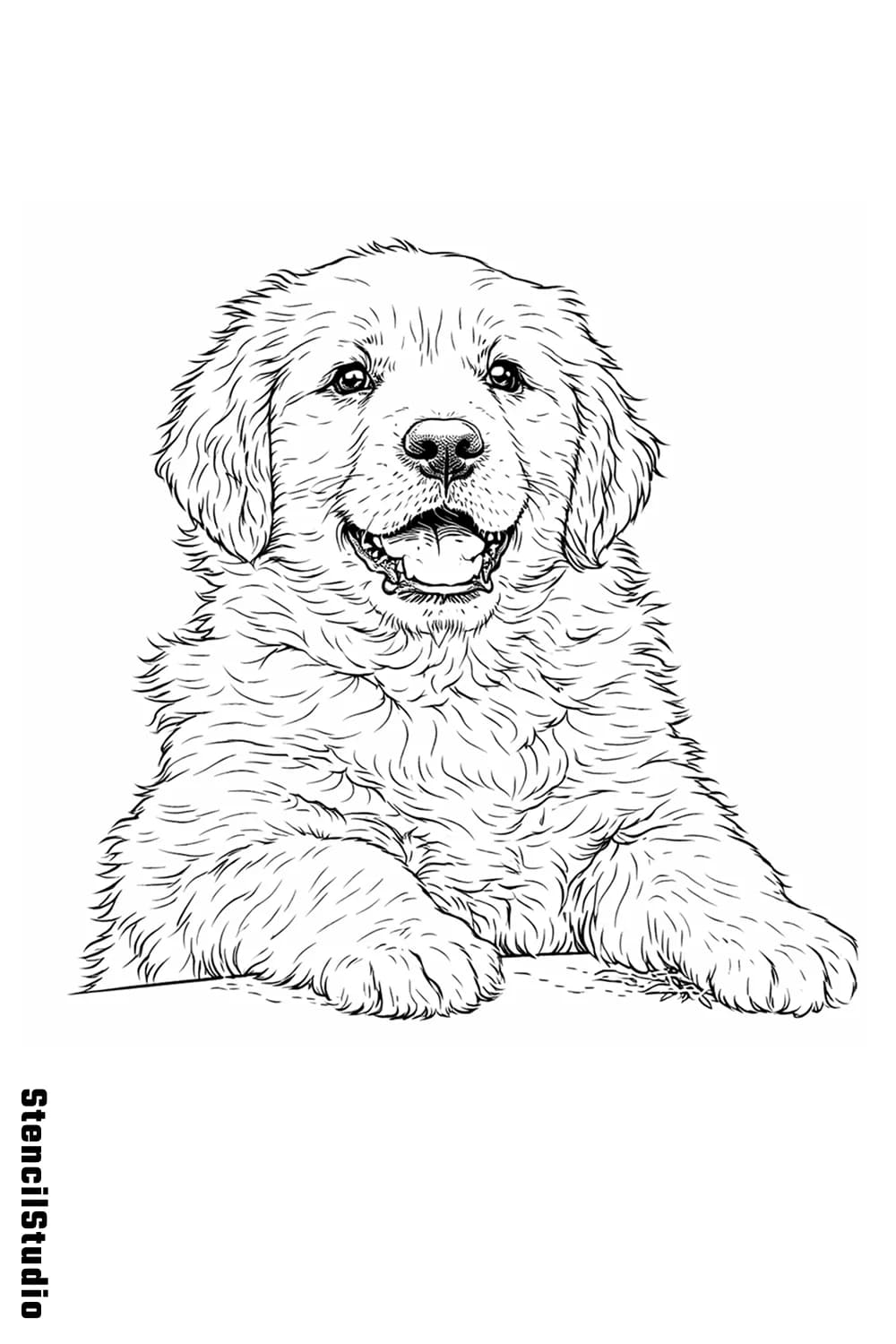
A puppy study where soft fur has to stay secondary to the eyes, muzzle, and overall head shape.
A cleaner face-forward dog portrait where jowl and muzzle geometry carry more identity than coat texture.
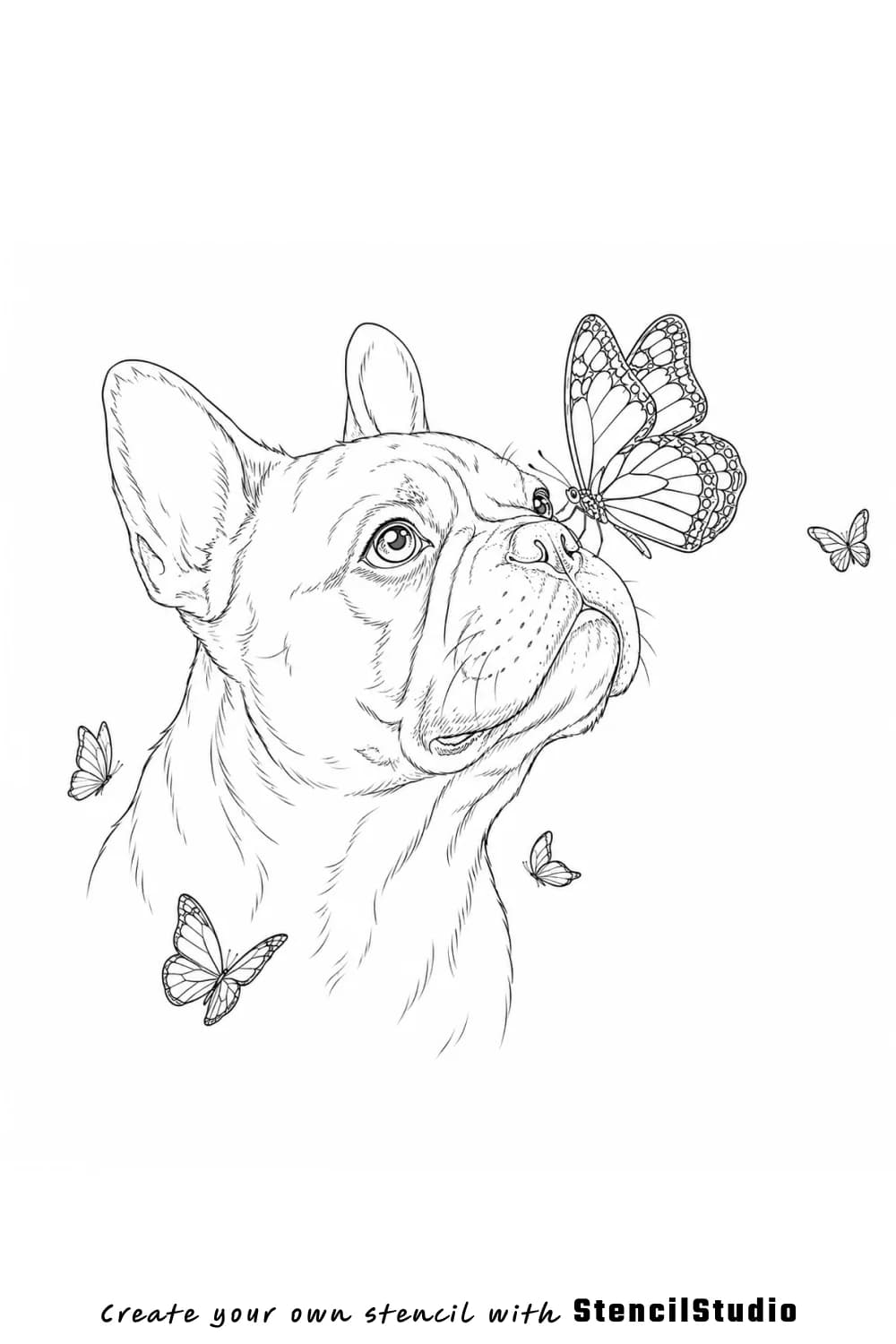
A French bulldog direction where ear geometry and the compact muzzle must survive before the butterfly detail matters.
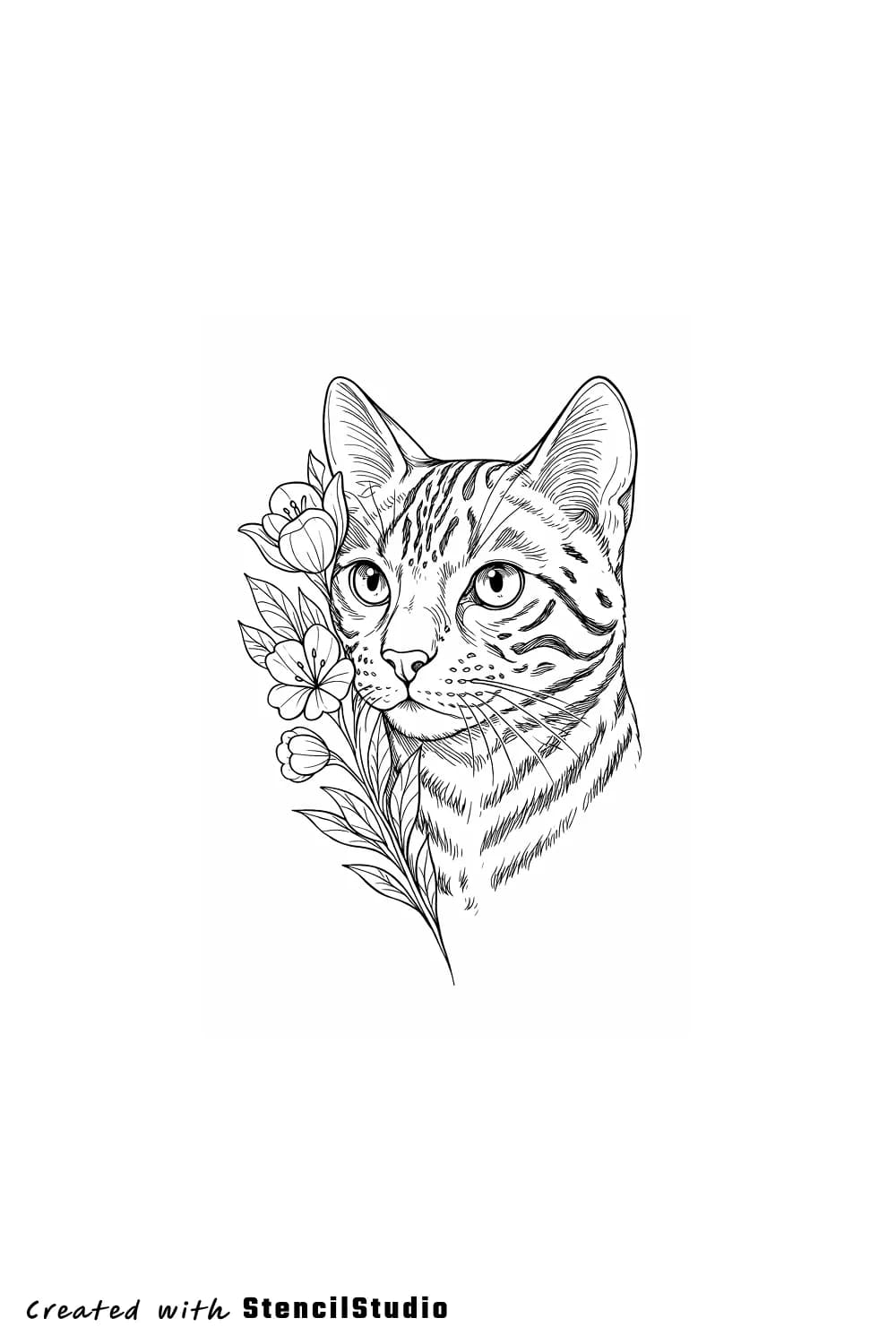
A cat portrait that keeps the face readable before the botanical support begins to matter.
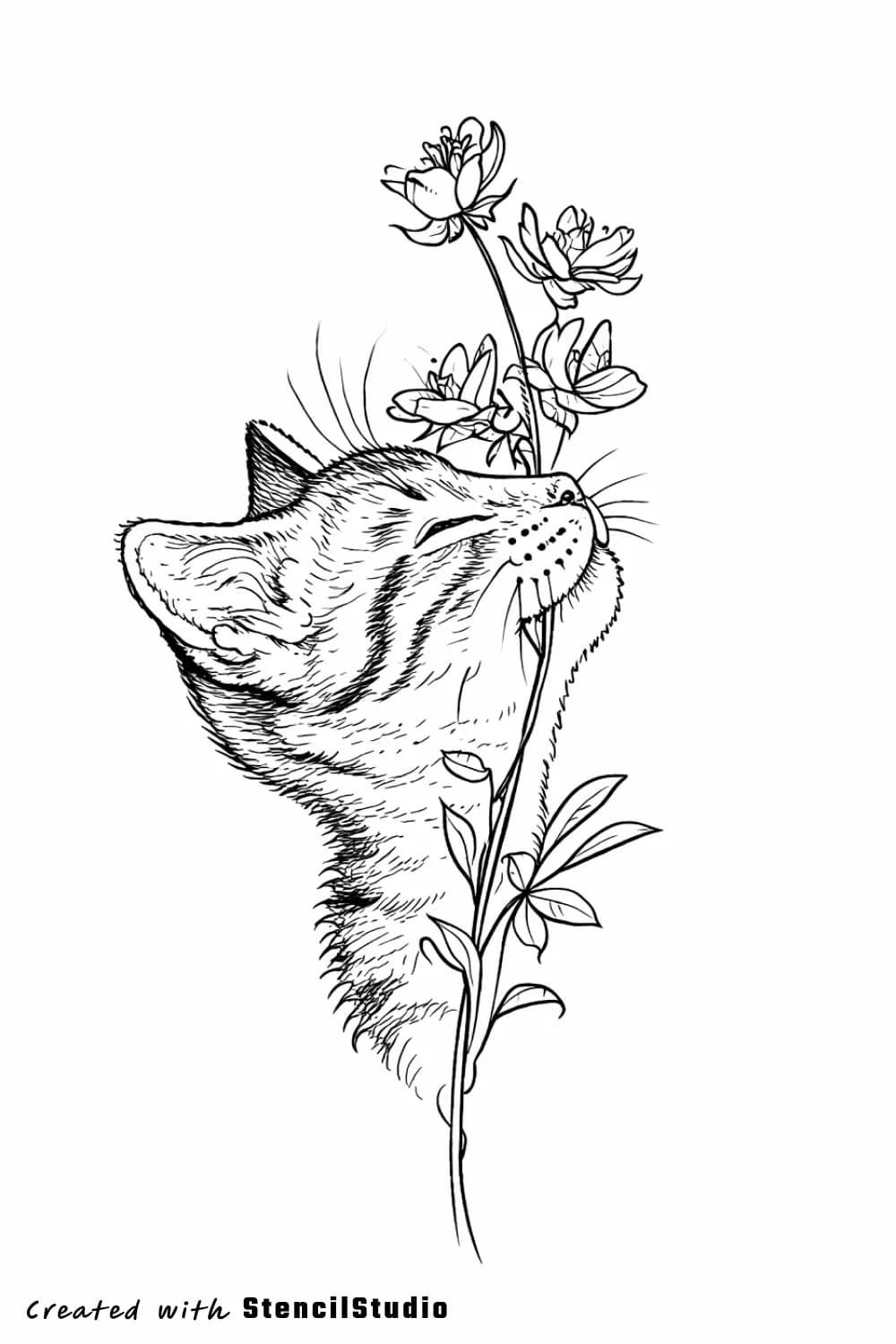
A side-profile study that shows how much cat identity can live in one clean ear-to-nose silhouette.
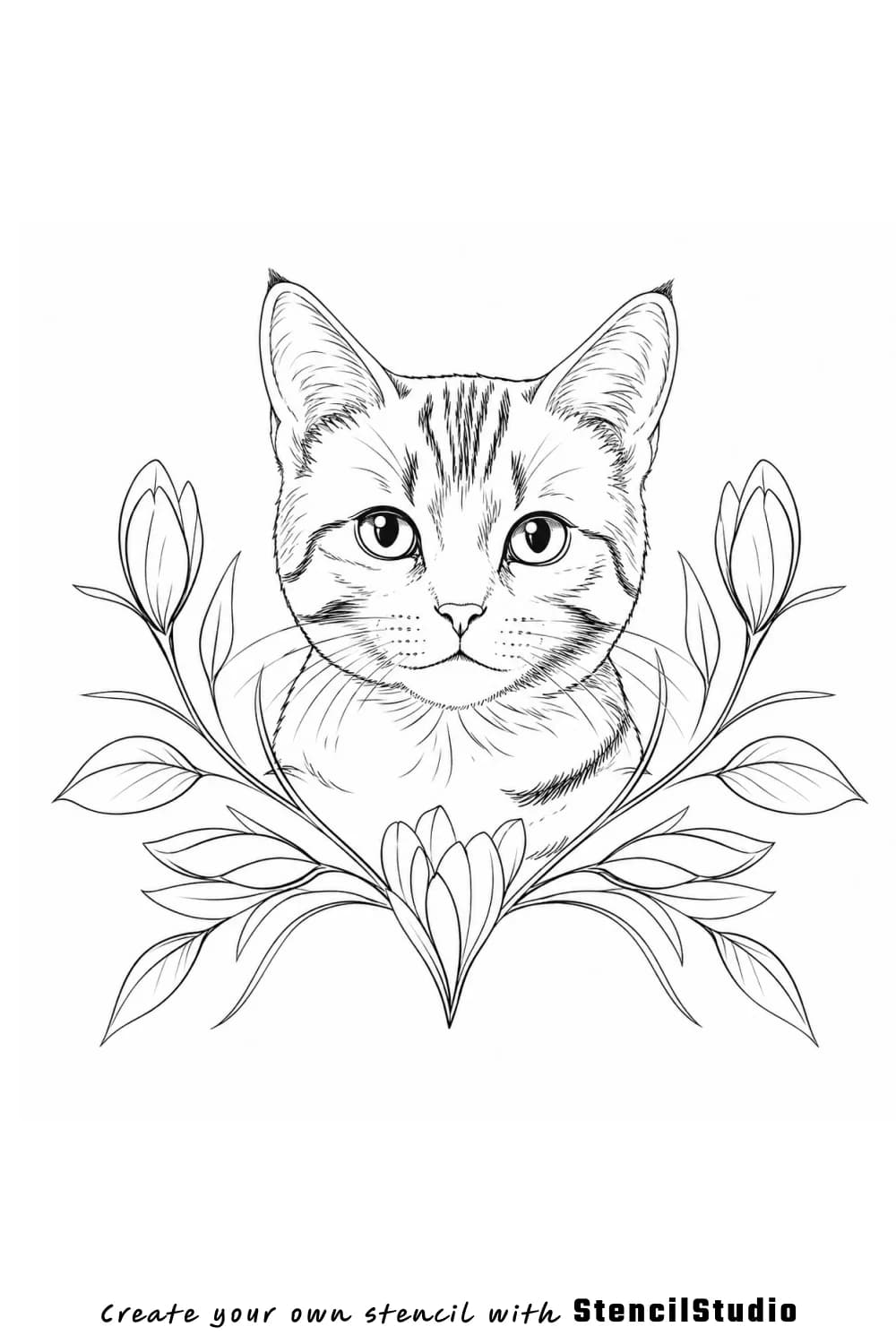
A denser tabby example where coat pattern and eye detail need to stay organised inside a symmetrical frame.
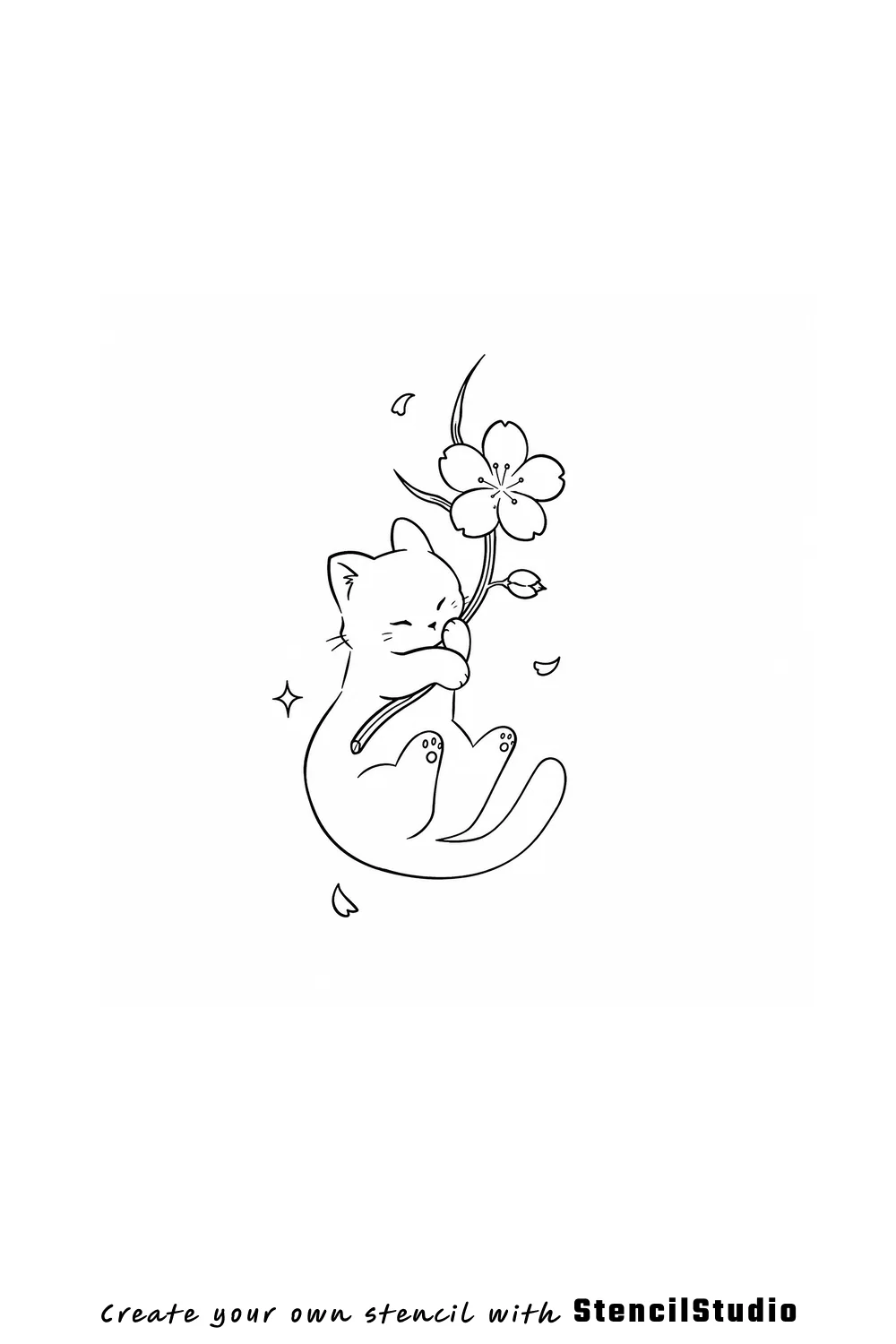
A sleeping kitten where whiskers, branch edges, and petals all compete for the same small line budget.
Each example was selected from the published Animals catalog because it exposes a different pet-portrait preparation decision. The page does not present these gallery files as source-to-result likeness proof.
See how StencilStudio separates examples from matched evidenceBefore generation
Do the manual preflight before you ask the generator to simplify anything. It is faster to replace a weak source than to repair identity decisions the photo never showed clearly.
This is a manual prep checklist, not automated image analysis. It helps you decide whether the source exposes enough pet-specific structure to be worth generating from.
0/5
Find a stronger source if you have one
You can still work from this photo, but too many identity decisions would depend on reconstruction rather than visible reference information.
Passing every check does not guarantee likeness. It only tells you the reference itself is giving the artist and generator less to infer.
Use this reference in the generatorIf you have several photos of the same pet and cannot tell which one should control the pose, use How to Choose a Pet Photo for a Tattoo Stencil before you generate. Settle the geometry source first, then convert the source into a stencil.
Coat map
The goal is not to erase texture. It is to keep the texture that explains form, direction, or identity and stop spending line density on information that disappears at transfer size.
Head planes, muzzle transitions, ear edges, key folds, directional breaks, and markings that sit directly on the face structure
Evenly distributed micro-strokes across areas that already read clearly from silhouette and value
Small folds around eyes, lips, jowls, or nose still separate instead of becoming one dark contour cluster
Outer fur mass, major direction changes, ear fringe that affects silhouette, chest flow, and a few characteristic clumps
Hair-by-hair tracing through every soft transition, especially where the coat has no identity-critical pattern
The face still wins over the fur cloud and the longest texture strokes do not merge when the stencil is reduced
Light breaks, eye and nose anchors, silhouette edges, reflected-value boundaries, and selected separations inside the dark mass
One continuous black field or dozens of near-identical dark contours that remove the navigation space
Eyes, nose, muzzle, ears, and cheek direction remain readable without relying on a screen's brightness or zoom
Tabby stripes, masks, blazes, merle or patch boundaries, and asymmetries that are specific to the individual pet
Low-priority tonal mottling that looks different in every lighting condition and does not help recognition
The main markings land in the same relationship to eyes, nose, ears, and silhouette as they do in the source
A black or very dark pet still needs internal navigation. Preserve the value breaks that reveal the eyes, nose, muzzle, ear edges, cheek direction, and coat boundaries instead of collapsing the whole animal into one dark shape.
The opposite failure is just as common: converting every subtle dark-to-dark transition into another contour. Keep enough information to rebuild the form, then leave room for the artist to render the coat from the source photo rather than from a crowded transfer.
Workflow
The generator can remove repetitive first-pass work. The portrait still needs checkpoints where the artist decides whether the individual pet survived the simplification.
01
Run the reference preflight first. A slightly less dramatic photo can be a better stencil source when the eyes, ears, muzzle, coat landmarks, and perspective are easier to compare.
02
Keep the head silhouette and any identity-critical ears, collar, markings, or expression cue. Remove background information that only consumes line density without helping the portrait.
03
Compare Simple, Standard, and Detailed. Audit the pet's structure first, then decide whether extra fur, whiskers, and small value boundaries improve navigation or only add noise.
04
Check the eye line, muzzle, ear edges, coat landmarks, and finest texture at the size the client will actually wear. Then move into placement, mirror, print, and export.
Final-size check
At physical size, the smallest marks reveal whether the stencil is still a map or has become texture noise. Judge the face from normal working distance before transfer.
Check the ear-to-eye-to-nose relationships first. If the core face changed, extra fur will not repair the likeness.
Look at coat-pattern boundaries where they meet the eyes, muzzle, forehead, and outer silhouette. Those landmarks should still land in the right places.
Inspect whiskers, eye reflections, nostrils, lip edges, jowl folds, and the densest fur cluster. If adjacent marks merge, decide which one actually helps recognition.
Keep the original pet photo available during the session. The stencil should navigate the portrait; it should not replace the reference for every rendering decision.
FAQ
Short answers to the reference, likeness, coat, detail, and sizing decisions that determine whether a dog or cat stencil remains useful off-screen.
A pet portrait has to preserve the individual animal, not only the species. Ear set, eye spacing and gaze, muzzle or nose proportions, head silhouette, coat markings, and a few expression cues usually carry more identity than tracing every strand of fur
Try your own reference
Preflight the photo, generate one source-faithful stencil free on the web, then decide which structural, coat, and expression landmarks deserve to survive before placement and print.