Bill-built rose vetting

Vet the money rose before it hits skin

A money rose is a folded-bill construction, not a botanical rose with money texture. Prove the bud roll, the V-fold petal channels, and the simplified currency interiors at your exact width before transfer.

Built for working artists preparing client-requested money roses. This page covers bill-built petal vetting, currency simplification inside petals, and final-size proof only, not tattoo application or healing advice. General money element choice, generic rose composition, conversion mechanics, and board workflows stay with the neighboring owners linked below.

Money rose versus neighboring jobs

A bill-built rose is a different job from money or rose alone.

A money rose fails when it is judged as a generic money emblem or a generic botanical rose. These boundaries keep bill-fold construction, the job no other owner holds, separate from catalog and composition depth.

Covered here

Folded-bill petal layering with petal-edge gap floors, currency simplification inside petals for portraits, numerals, borders, and seals with open-skin breaks, fold-shadow checks, and final-size proof with a transfer-ready print checklist.

Neighboring owners keep

General bill, stack, bag, and coin choice stays with the money owner, generic rose composition and fill hierarchy stay with the rose hub and its realistic and black-rose pages, conversion mechanics stay with the photo path, and multi-reference organization stays with the board maker.

Money owner for element choice, rose hub for composition depth, photo path for conversion, and board maker for reference boards.

Bill-built construction framework

Pick the bloom build first, then act on the weakest check.

Three bill-built constructions at labeled widths. Each one names the protected fold structure, the fix, the placement fit, and the go or no-go verdict at that exact size. Confirm with a measured 1:1 print.

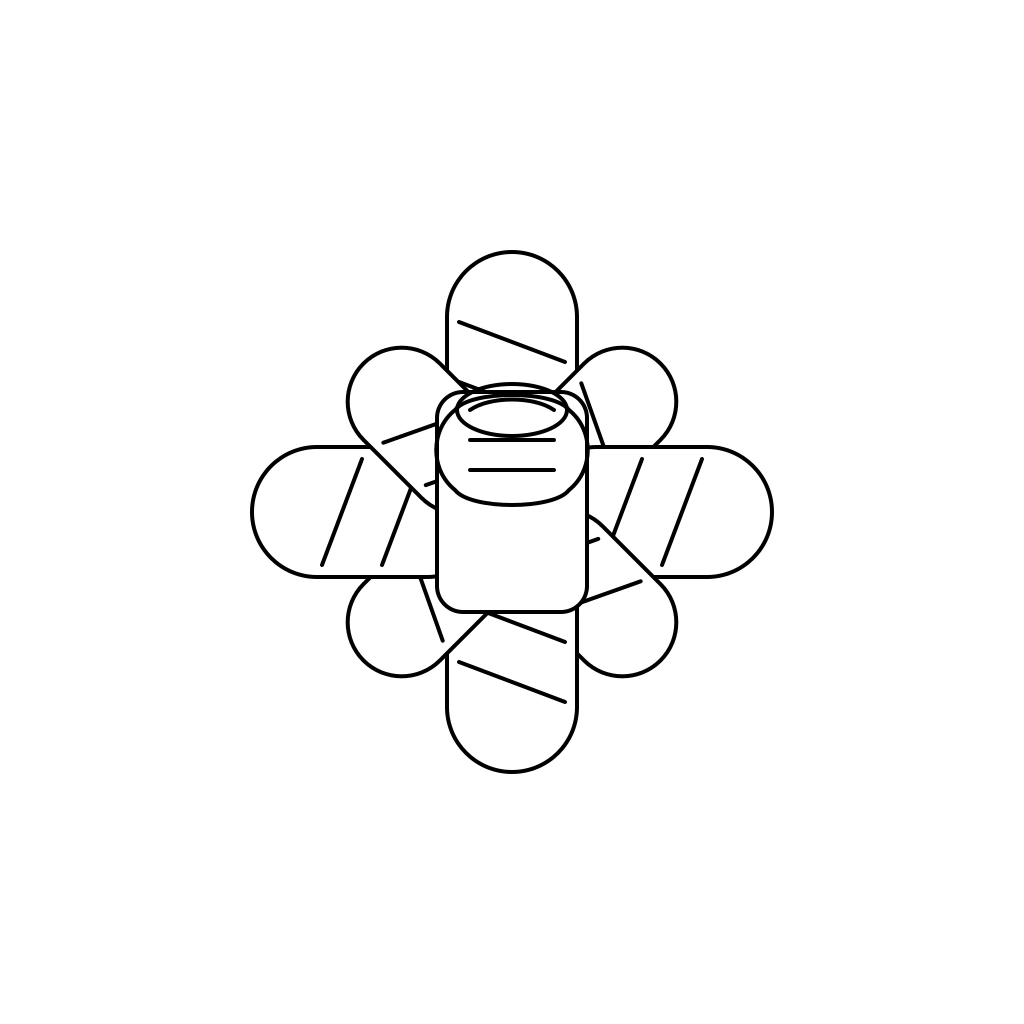
Original schematic illustration of a money rose built from folded paper bills: a rolled spiral bud at the center, V-folded pointed petals layered around it, pointed bill-corner tips, and open channels between every neighboring petal.
Original schematic illustration, not app output and not a to-scale stencil. Use it as a layering map: rolled bud center, V-folded bill petals, pointed bill-corner tips, and an open skin channel between every neighboring petal. Each build below is still judged by a measured 1:1 print, not by this drawing.

HOLDS AT STATED SIZE

Full bill-built bloom at 10 cm

Intended width 100 mm

Source
Rose bloom assembled entirely from folded bills: one rolled bill forms the inner bud, three to five V-folded bills layer around it as outer petals with pointed bill-corner tips, and a twisted bill or drawn stem anchors the base. Reads as a money rose through the spiral bud plus the stepped V petal rhythm, not through any single portrait or numeral.
Protect
The spiral bud position with open skin around its roll edge, the V-fold apex of each outer petal with open skin between neighboring petals, and the bill-corner tip rhythm that carries the bloom silhouette.
Fix
Limit the bloom to one bud plus three countable outer petals at this width. Convert inner portrait, numeral, and guilloche fragments to open skin or one light tone, and keep each V-fold apex clear of the bud roll edge.
Candidate stencil
Same bill-built bloom with ranked currency detail, single border contours, cleared petal and bud channels, and protected fold edges kept at transferable mass.
Placement fit
Best for: forearm, outer calf, thigh, and shoulder cap panels with a flat run for the full bloom span.
Trade-off
Avoid when: the field narrows below about 8 cm, because outer bill corners crowd and V channels pinch shut. Recrop to the bud build below or switch to a botanical rose with one money accent.
Final-size verdict
Holds at 10 cm once the bud roll reads as its own center and every petal-to-petal V channel traces open at 1:1. Extra folded petals never rescue a closed petal channel.


CHECK FOLD SHADOWS

Hybrid bill petals with botanical stem at 8 cm

Intended width 80 mm

Source
Upper bloom built from two to three folded bills around a rolled bud, with a drawn leafy stem and one botanical leaf below instead of twisted currency. Common client request because it keeps the money read in the bloom while the stem stays quiet and transferable.
Protect
The bill-built bud plus two countable bill petals as the money anchor, the stem as one continuous contour, and the single leaf with open skin on all sides of its vein.
Fix
Rank the bloom above the stem: simplify bill interiors first, keep one leaf maximum, and hold an open skin break where the lowest bill corner meets the stem. Never let a pointed bill tip touch the leaf vein at transfer size.
Candidate stencil
Same bill-built bloom with ranked currency detail, single border contours, cleared petal and bud channels, and protected fold edges kept at transferable mass.
Placement fit
Best for: forearm, wrist-to-forearm transitions, calf, and chest panels where a vertical composition fits the limb or torso line.
Trade-off
Avoid when: the brief needs a full currency story with bands, sacks, or coin piles, because this build carries bloom identity only. Use the money owner for multi-element wealth scenes.
Final-size verdict
Holds at 8 cm once the bloom reads as money and the stem reads as support with a clear break between them at true size. A second leaf or extra bill petal is the first removal candidate when the junction crowds.

RECROP FOR SMALL FIELDS

Single-bill bud recrop at 5 cm

Intended width 50 mm

Source
One bill rolled and V-folded into a compact closed bud with one short outer wrap, no full petal spread, and an optional short stem stub. The small-field answer when a full money rose cannot keep its petal channels open.
Protect
The bud roll contour, the single outer wrap with one open channel, and the bill-edge tip kept as one plain mark with no interior detail.
Fix
Carry no portrait, no numeral, and no border pattern at this width. If the wrap channel closes at 1:1, widen local spacing or shorten the wrap rather than thinning the bud contour.
Candidate stencil
Same bill-built bloom with ranked currency detail, single border contours, cleared petal and bud channels, and protected fold edges kept at transferable mass.
Placement fit
Best for: wrist, ankle, behind-ear accents, finger-adjacent spots, and small gap fillers where only one compact mass survives.
Trade-off
Avoid when: the client expects readable denomination or portrait detail, because a 5 cm bud carries fold identity only. Enlarge past 8 cm or choose a different money element.
Final-size verdict
Stencil-ready at 5 cm when the bud reads as folded currency with one open wrap channel at true size. Full petal layering forced into this width merges into one pocket.

Generic money catalogs, generic rose petal theory, conversion steps, and board workflows stay in their owners. This framework exists to judge folded-bill layering, petal-edge gaps, and bloom readability at a stated width, not to replace those guides.

Currency simplification inside petals

Dense bill interiors survive only with open skin.

Bill-built petals fail on six contacts first: filled portraits, broken numerals, merged borders, crowded seals, heavy fold shadows, and shared overlap edges. Run each row below at true size.

Portrait fragments inside petals

Fails as: A sliced portrait eye, nose, or collar lands mid-petal and fills into a dark pocket because hair and collar lines share edges with the petal contour at transfer size.

Fix: Reduce each petal interior to plain bill tone with open skin around the V-fold apex. Keep at most one small portrait hint per bloom, placed fully inside one petal with open skin on every side, and remove it entirely below about 8 cm.

Numerals and small text inside petals

Fails as: Corner numerals, serial numbers, and motto words split across fold lines print as broken scratches because their counters cannot stay open on a curved petal at final size.

Fix: Keep one numeral family maximum per bloom, each numeral fully inside one flat petal zone with every counter open at 1:1. Move dates, names, and mottos out of the bloom or enlarge past the point where each letter holds separation.

Border lines and guilloche pattern

Fails as: Doubled bill borders and interlaced lathework run along petal edges and merge into one thick bar, so neighboring petals share what looks like a single edge.

Fix: Carry one border contour per petal with level V edges. Convert guilloche and lathework fields to open skin with at most one light tone, and never keep two competing pattern families in the same petal.

Seals, serials, and micro marks

Fails as: Small circular seals and micro marks cluster near petal tips and V-fold apexes and close the channels the bloom needs to read as layered.

Fix: Keep one seal or mark maximum per bloom, held as a separate mark with open skin on every side, and remove the rest. If a seal touches a petal edge or fold apex at 1:1, the fix is removal or enlargement, never thinner lines.

Fold shadows and crease lines

Fails as: Shaded fold valleys drawn as heavy stencil lines read as extra petal edges, splitting one petal into two accidental halves at transfer size.

Fix: Draw each intentional fold as one light line with open skin on both sides, kept clear of numerals and portrait hints. Check shaded reference photos against the stencil: shadow gradients are not stencil contours.

Bill-edge overlaps between petals

Fails as: Stacked bill corners share one line where petals overlap, so the fan of petals merges into a single pointed mass with no countable layering.

Fix: Hold an open skin channel along every petal overlap with no shared edge. Merge the smallest hidden bill corner before touching the bud, the V apexes, or the outer tip rhythm.

About 5 cm and below

Wrist edge, ankle, behind-ear accents, and small gap fillers.

Carry the single-bill bud recrop only, with one roll contour plus one wrap channel and no portrait, numeral, or pattern interior. If the wrap channel closes at 1:1, enlarge or reselect rather than forcing petal layering.

About 6 to 10 cm

Common forearm, calf, shoulder, and chest money-rose pieces.

The most flexible band. A full bill-built bloom or hybrid stem build can work when the bud, every V-fold apex, and every petal channel are verified at true size. Check fold-shadow lines and ink-bridging risk before approving a second detail family.

About 12 cm and above

Large thigh, back, chest, and sleeve panels with room for fuller petal layering.

Room for an extra outer petal or modeled fold shading, but only when open skin separates every petal edge, bud roll, seal, and numeral at true size. Extra width does not rescue petals fused at the V apex or portrait pockets merged with petal contours.

Reference to clean stencil

Work in this order so one change can be judged at size.

Money-rose preparation is sequencing work. Lock the bloom build, map the folds, simplify interiors at true size, then prove the print.

  1. 01

    Lock bloom build, width, and placement first

    Set the intended physical width in millimeters, name the body area, and choose full bill bloom, hybrid stem build, or bud recrop before judging the reference. A 10 cm bloom that holds on a flat forearm can fail at 5 cm on a wrist with no line being wrong on its own. Use the size calculator when target dimensions are still open.

  2. 02

    Map petals as folded bills, not botanical petals

    Trace each V-fold apex, each bill-corner tip, and the bud roll as separate currency edges. Confirm an open skin channel runs between every neighboring petal along its full length before touching portrait, numeral, or pattern detail.

  3. 03

    Simplify currency detail inside petals at 1:1

    Rank one numeral family and one portrait hint maximum, convert guilloche fields to open skin, and isolate seals as separate marks. Run a squint check: step back until fine texture disappears and confirm the bloom still reads as folded bills around a spiral bud.

  4. 04

    Run the fold-shadow and bridging check at true size

    Export a true-size PDF with no fit-to-page scaling, inspect the narrowest petal channel, the tightest V apex, the bud roll clearance, and the smallest surviving numeral or seal on plain paper, then measure the physical print with a ruler. Confirm fold lines sit clear of protected detail and no two petals share one edge.

  5. 05

    Verify print and transfer path

    If the digital file passes and only the paper print fails, move to print-stage evidence: the print checker and the paper guide linked below. Do not simplify the money rose further to compensate for a scaling or printer setting error.

Placement and fold decisions

Bill-built blooms want flat skin and folds kept clear

A money rose is a pointed-tip, layered-edge bloom with small protected interiors. Placements with a clear flat span preserve bill edges and numerals, while joints and flex lines demand recrops and planned folds.

Forearm and outer calf

Long straight fields where a full bill-built bloom sits level along the limb axis. Stepped V petal edges read cleanly here with little compensation.

Check: Align the bud center and bloom base with the limb axis, keep all petal channels inside the flat run, and confirm tip rhythm at 1:1 before print.

Thigh, back, and chest

Broad flat panels with room for fuller petal layering, but the body midline becomes part of the design on chest pieces and asymmetry shows fast.

Check: Center the bloom on the flattest span, hold open skin between every petal and the bud roll, and preview on a body photo before locking petal count.

Wrist, ankle, and behind ear

Small curved fields where only the bud recrop survives. Full petal spreads and hybrid stems forced into these bands merge first.

Check: Carry the single-bill bud with one open wrap channel, keep the full motif inside the exact millimeter width, and confirm the channel at 1:1.

Joints, knuckles, and flex lines

Fold zones where bill-corner tips and V apexes distort when skin moves. Drawn currency folds compete with real skin folds after transfer.

Check: Keep the bud roll and V apexes clear of every flex line, plan intentional fold lines away from numerals and portrait hints, and confirm with a dry wrap before print.

Transfer-ready checklist

Approve the money rose only when every line passes

Run this sequence with scaling off and a ruler in hand. One failed line means fix, enlarge, remove a detail family, or reselect before transfer.

  • Confirm the bloom build, intended millimeter width, and named placement with the reason for the choice.
  • Confirm every petal-to-petal V channel and the bud roll clearance hold open at 1:1 with scaling off.
  • Confirm each surviving numeral, portrait hint, and seal holds open separation with no shared edge.
  • Confirm fold and crease lines sit clear of numerals, portrait hints, and petal contours.
  • Confirm orientation and mirroring: the bloom reads upright on the body and any text is checked for mirroring before transfer.
  • Export a true-size PDF with scaling off and measure the physical print with a ruler.
Folded bills, not soft petals Hold every petal channel open Prove folds at 1:1

FAQ

Money-rose decisions, answered

Short answers for the build, simplification, gap, proof, and tooling checks that recur when a money rose moves toward transfer-ready output.

Judge by width and petal count. Near 10 cm a full bill-built bloom with one rolled bud plus three countable V-folded petals can hold when every petal channel and the bud clearance stay open at 1:1. Near 8 cm a hybrid bloom with a botanical stem fits vertical fields when the lowest bill corner keeps a skin break from the stem. Near 5 cm carry the single-bill bud recrop only, with no full petal spread. When a channel closes, the fix is fewer petals, an opened gap, or a larger size, never thinner neighbors.

Next steps

Use the neighboring owners for adjacent jobs.

This guide covers bill-built rose vetting, currency simplification inside petals, and final-size proof with transfer-ready prep. Use the links below for related jobs held elsewhere.

General money catalogs, generic rose composition, photo conversion mechanics, board organization, paper manufacturing detail, and placement mechanics stay in their specialist owners. The links above hand off instead of repeating that detail.

Reference ideas

Money-led folded-strip construction

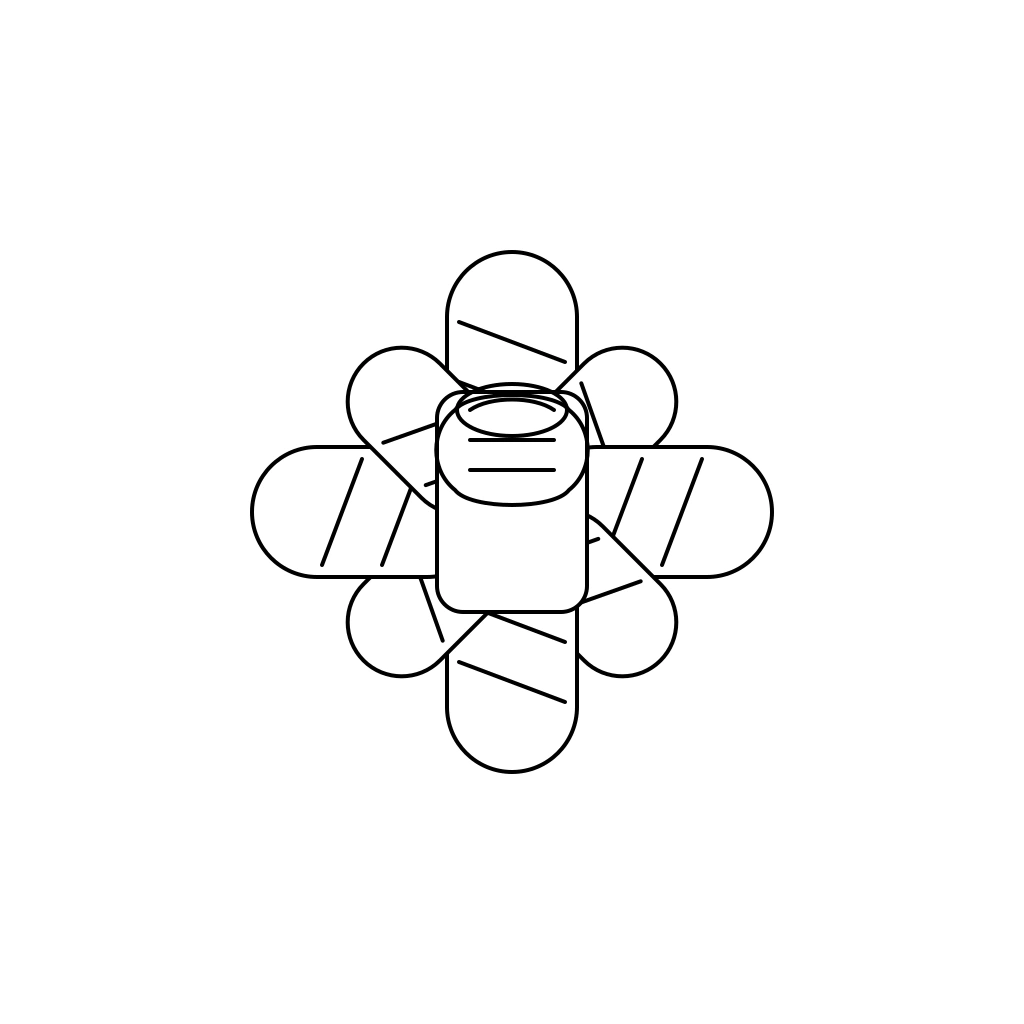
The page already shows one bill-petal layering study. This deterministic construction uses blank folded paper strips to isolate the money-led fold pattern without currency symbols, portraits or text.

Money-rose construction made from blank folded paper strips, with a central rolled strip and layered bill-like petals, no currency symbols or text.

Blank folded-strip money rose

Use the blank strip construction to compare fold order and petal overlap. It is a shape study, not a currency reproduction or a print-ready money design.

Download reference image (WebP)

Deterministic illustrative reference artwork (typography or vector geometry), not verified app output, healed tattoos, measured print templates or transfer proofs. Review and size any design before use.

From evaluated reference to working stencil

Turn the approved money rose into a stencil draft.

Start from the bloom that passed the fold, gap, simplification, and size checks, then continue on iPhone for body fit, exact-size print, mirror and professional export.