

Tool Selection
"Best Apps for Tattoo Artists in 2026: Build a Working Stack"
"Choose tattoo artist apps by job: drawing, stencil prep, photos, intake, booking, payments, and studio operations."
apps for tattoo artists · tattoo artist software · tattoo artist apps
- September 14, 2026
- September 15, 2026
- 10 min
The best app for a tattoo artist depends on what is slowing you down. Drawing a design, preparing a stencil, collecting references, booking clients, taking deposits, running a studio, and preparing portfolio photos are different jobs. One app rarely does all of them equally well.
For most artists, the useful goal is not to collect more software. It is to build the smallest set of tools that removes repeated admin or production work without creating more handoffs.
Disclosure: StencilStudio publishes this guide and is one of the products discussed. We checked the product capabilities below against current official product pages on September 15, 2026. StencilStudio is not ranked as a universal winner, and this is not a hands-on benchmark of every app on the market.
Best apps for tattoo artists by task
| What you need | App to consider | Why it fits | Check before choosing | |---|---|---|---| | Draw and edit artwork manually | Procreate | Strong iPad drawing environment with brushes, layers, selections, Transform, Warp and drawing aids | It is an illustration app, not a booking or studio-management system | | Turn a chosen reference into a stencil | StencilStudio | Reference-to-stencil conversion, detail controls, Fit to Body, mirror, upscale, size/print workflow and export | It does not replace manual drawing, booking, payments or artist judgment | | Prepare portfolio photographs | Adobe Lightroom | Photo organization plus crop, exposure, color, masking and export tools | Keep editing restrained when the photo is meant to represent finished tattoo work honestly | | Collect structured tattoo requests | Jotform | Custom forms, uploads, appointment fields, calendar integrations, reminders and payments | It is a general form and scheduling platform, not tattoo-specific studio software | | Let clients discover and book you | Booksy | Online booking, calendar, payments, reminders, marketing and marketplace discovery | Check whether its service-business booking model fits long tattoo sessions and your intake process | | Run tattoo-specific booking and payments | Linework | Tattoo-focused appointments, payments, rent settlement and financial reporting | Best fit depends on whether you need the business layer as well as a calendar | | Run a broader tattoo studio system | Tattoo Studio Pro | Booking, forms, deposits, payments, client records, portfolios, reports and cross-device access | A full studio suite may be more than a solo artist needs |
The right answer can be fewer apps. If your current calendar, one form, and one creative tool already work reliably, replacing them with overlapping subscriptions may add more work than it removes.
Procreate: best fit when drawing is the problem
Procreate is a strong option for tattoo artists who draw or rebuild artwork manually on iPad. Its current product documentation includes hundreds of brushes plus Layers, Selections, Transform, Warp, Drawing Assist and other illustration tools.
Consider it when:
- you draw tattoo concepts from scratch;
- line placement needs direct hand control;
- layers and masks are part of your design process;
- you already work comfortably on iPad.
Look elsewhere when the problem is client intake, scheduling, payments, studio administration, or repetitive reference-to-stencil conversion.
A drawing app can be excellent without needing to manage every later step of the tattoo workflow.
StencilStudio: best fit when stencil preparation is repetitive
StencilStudio starts after you already have a photo, sketch, or artwork you want to use as the reference.
It is designed for moving from chosen reference to stencil preparation: generate a stencil draft, choose the detail level, review the result, mirror it, check Fit to Body, upscale when needed, and prepare output for size and print workflows.
Consider it when:
- you already have a reference;
- manual tracing is taking repetitive time;
- you want to compare Simple, Standard, and Detailed stencil outputs;
- you want to preview a design on a body photo;
- mirror, size, export, and print preparation are part of the same workflow.
It is not a substitute for:
- manual illustration when the artwork still needs to be designed;
- booking and payments;
- studio CRM;
- legal or medical forms;
- the artist's final decision about readability, placement, transfer, or execution.
For a dedicated stencil-software comparison, use the Tattoo Stencil App guide.
Adobe Lightroom: best fit for portfolio photo preparation
Adobe Lightroom on mobile supports photo capture, organization and sharing, with editing tools for light, color, crop and additional premium features including masking, geometry, raw editing and batch editing.
For tattoo work, the important distinction is between preparing the photograph and changing the tattoo inside the photograph.
Useful jobs include:
- crop and straightening;
- exposure correction;
- white-balance correction;
- consistent exports for a portfolio;
- organizing finished-work photos;
- restrained adjustments that do not redraw or materially alter the tattoo.
Keep the original file. If the photo has glare, bad focus, distortion, or another capture problem, the Tattoo Photography guide explains what is better fixed before editing.
Jotform: best fit when tattoo requests arrive incomplete
Jotform Appointments combines customizable forms with scheduling, calendar synchronization, reminders, payments and follow-up workflows.
That can be useful when the main problem is simple:
Every new tattoo request arrives in a different format, and I keep asking for the same missing information.
A structured request can collect the idea, placement, approximate size, reference images and contact details before you decide what happens next.
Consider Jotform when:
- you need custom intake fields;
- clients need to upload references;
- you want a form to connect to an existing calendar process;
- you do not need a full tattoo-studio management system.
If you specifically want to turn a client's idea and references into a clean creative brief before quoting, use the Tattoo Consultation Brief Builder. It does not schedule appointments or store a CRM.
Booksy: best fit when self-booking and discovery matter
Booksy Biz currently combines scheduling, payments, client marketing and a marketplace where local clients can discover businesses. Its current site also promotes direct booking from channels such as Google, Instagram and Facebook, plus deposits and cancellation-fee tools.
Consider it when:
- clients should be able to book defined services online;
- you want calendar, payments and reminders together;
- local marketplace discovery matters;
- you want booking and marketing functions in the same system.
Booksy serves a broad beauty and service market, not only tattoo studios. Before moving your calendar, test whether it fits the way you handle custom requests, references, deposits, long sessions and multi-session projects.
Linework: best fit for tattoo-specific studio operations
Linework is built specifically for tattoo businesses. Its current product pages cover appointments, online booking, payments, studio and artist scheduling, rent settlement and financial reporting.
Consider it when:
- artists or managers need a shared scheduling system;
- booking and payment status should stay connected;
- studio rent settlement matters;
- you want business software designed around tattoo studios rather than adapting a general salon system.
Before committing, test the parts that are specific to your shop: multi-session projects, artist-specific rules, rescheduling, deposits, manager access and how references move from request to appointment.
Tattoo Studio Pro: best fit when you want more studio functions together
Tattoo Studio Pro currently combines booking requests, appointments, digital forms, deposits and payments, client profiles, reports, portfolios and team features. It is available across web and major mobile/desktop platforms.
Consider it when you want more of the studio's client and admin workflow inside one system instead of connecting several separate tools.
That does not automatically make an all-in-one product the right answer. A solo artist with a reliable calendar, payment setup and simple intake process may prefer fewer moving parts.
Three realistic tattoo artist app stacks
Solo artist who already handles booking well
A small creative stack could be:
Procreate -> StencilStudio -> Lightroom -> current calendar/payment method
There is no reason to replace a booking process that is already working simply because another app exists.
Solo artist drowning in DMs and incomplete requests
A more structured flow could be:
Request form -> calendar/deposit -> Procreate -> StencilStudio -> Lightroom
Jotform is worth considering when flexible intake is the main problem. Booksy becomes more relevant when self-booking, payments and discovery also need improvement.
Multi-artist tattoo studio
A studio may prefer:
tattoo-specific management system -> drawing app -> stencil app -> photo workflow
Linework and Tattoo Studio Pro are both worth evaluating for the management part. Your drawing and stencil tools do not need to come from the same company as your booking system.
What to test before switching apps
Do not move your studio because a comparison table has more checkmarks. Run one real project through the candidate first.
Ask:
- What problem does this app actually replace? If you cannot name it clearly, the subscription may be redundant.
- How does information get in? Test references, notes, artwork, forms and client details rather than only the demo screen.
- Can the next step use the result easily? Watch for repeated copy/paste, re-entry and awkward file exports.
- What happens when a project changes? Check revisions, rescheduling and previous states where they matter.
- Does the mobile flow work? Run the real process on the phone you or your clients will actually use.
- What client or payment information is stored? Review the current privacy and security terms before moving sensitive business data.
- Can you leave later? Check exports and data portability before one service becomes the only copy of important information.
The useful app is the one that removes a repeated problem without creating two new ones around it.
Why this list does not name one universal #1
The search term best apps for tattoo artists mixes products that solve completely different problems. Comparing Procreate and Booksy as though one should beat the other makes little sense: one is primarily an illustration tool, while the other is centered on booking and business operations.
A more useful way to choose is:
- identify the task that is actually costing time or creating mistakes;
- choose the tool that handles that task well;
- make sure the output or information moves cleanly into the next step;
- avoid adding a second app that merely duplicates something already working.
This also makes future changes easier. If your booking software stops fitting the studio, you can replace it without rebuilding the way you draw or prepare stencils.
Related tattoo software decisions
If your question is narrower, these guides go deeper:
- tattoo stencil app / tattoo stencil software: Tattoo Stencil App comparison
- how to make a stencil in Procreate: Procreate to Tattoo Stencil workflow
- tattoo photography: Tattoo Photography guide
- tattoo artist website: Tattoo Artist Website guide
- tattoo consultation form / tattoo brief: Consultation Brief Builder
For tattoo booking software specifically, compare scheduling, deposits, request handling, forms, rescheduling, multi-session work and studio/team needs rather than treating it as a creative-app decision.
Product information checked for this guide
Current capabilities were checked against official product pages on September 15, 2026:
Features and plans change. Before moving client, payment or studio data, verify the current documentation and terms for the product, plan and region you intend to use.
FAQ
What is the best app for tattoo artists?
There is no single best app for every tattoo artist. Procreate is a strong option for manual drawing, StencilStudio focuses on reference-to-stencil preparation, Lightroom handles photo preparation, and products such as Jotform, Booksy, Linework and Tattoo Studio Pro cover different parts of intake, booking and studio operations. Choose based on the task you actually need to improve.
What app do tattoo artists use to draw?
Procreate is a common iPad drawing option and includes brushes, layers, selections, Transform, Warp and drawing aids. Other illustration software can also work. The important question is whether you need manual drawing, vector work, or a later stencil-preparation step.
What app should a tattoo artist use for booking?
Choose based on the booking process. Jotform is flexible for custom request forms and scheduling connections. Booksy combines self-booking with payments and marketplace discovery. Tattoo-specific systems such as Linework and Tattoo Studio Pro are worth evaluating when appointments need to connect with broader studio operations.
Is StencilStudio a booking or drawing app?
No. StencilStudio focuses on turning an existing reference into a stencil and supporting related stencil-preparation steps. Use an illustration app when you need to draw manually and a booking or studio system for client operations.
Should a tattoo artist use one all-in-one app?
Only when the combined system genuinely makes the studio simpler. An all-in-one product can reduce switching between tools, but it can also add features, migration work and cost that a solo artist does not need. Test one real project before moving the whole workflow.
Related Guides
Keep reading from here
"Best Tattoo Stencil App? A 2026 Professional Workflow Comparison"
"Compare current tattoo stencil apps and Procreate by workflow: source conversion, editing, body fit, exact-size print, export, platform, cost, and evidence."
tattoo stencil app · tattoo stencil software
Read guide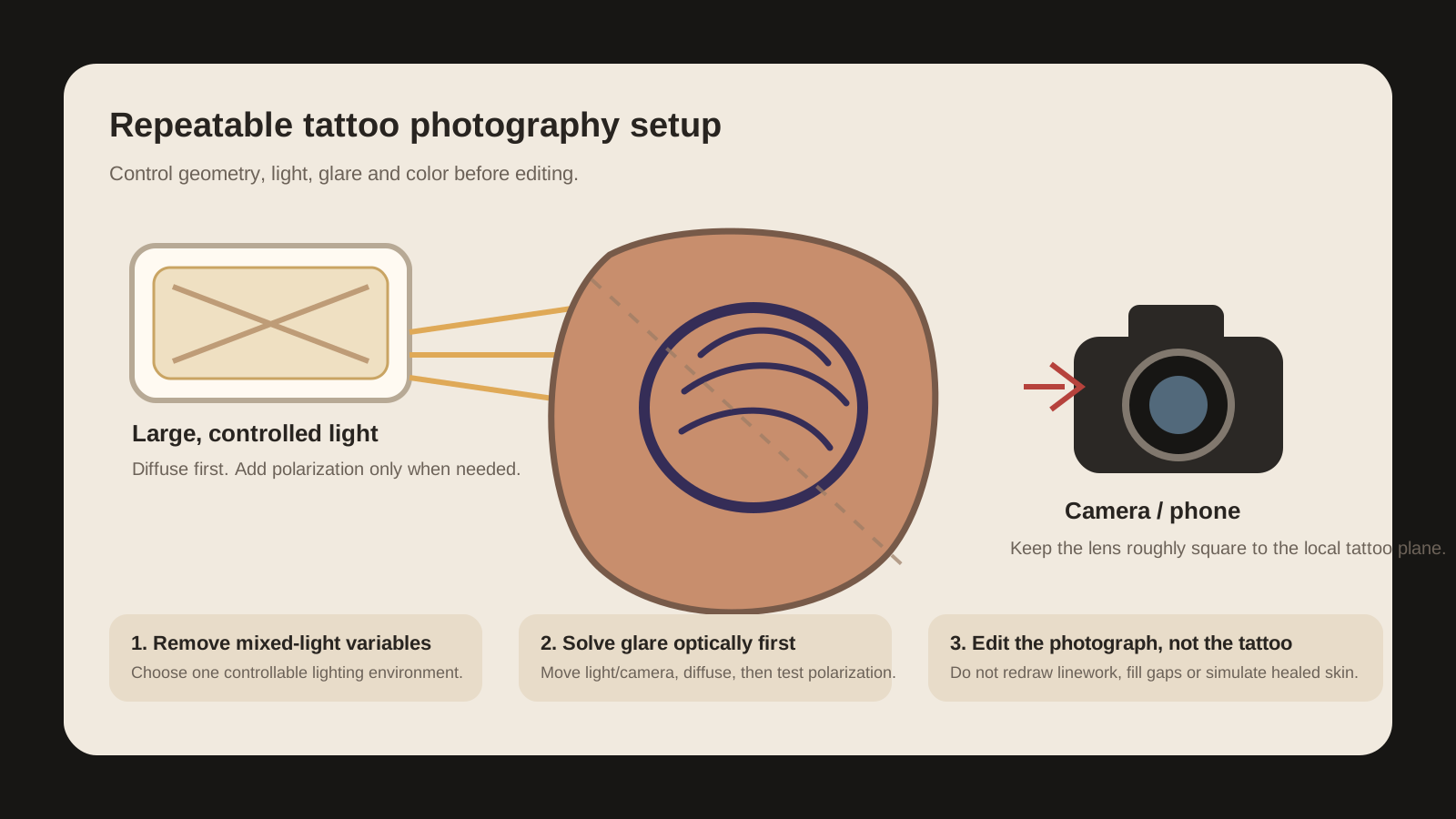
Tattoo Photography for Artists: A Repeatable Portfolio Workflow
Photograph finished tattoo work with controlled lighting, glare reduction, faithful geometry, consistent color, and honest editing boundaries.
tattoo photography · how to photograph tattoos
Read guide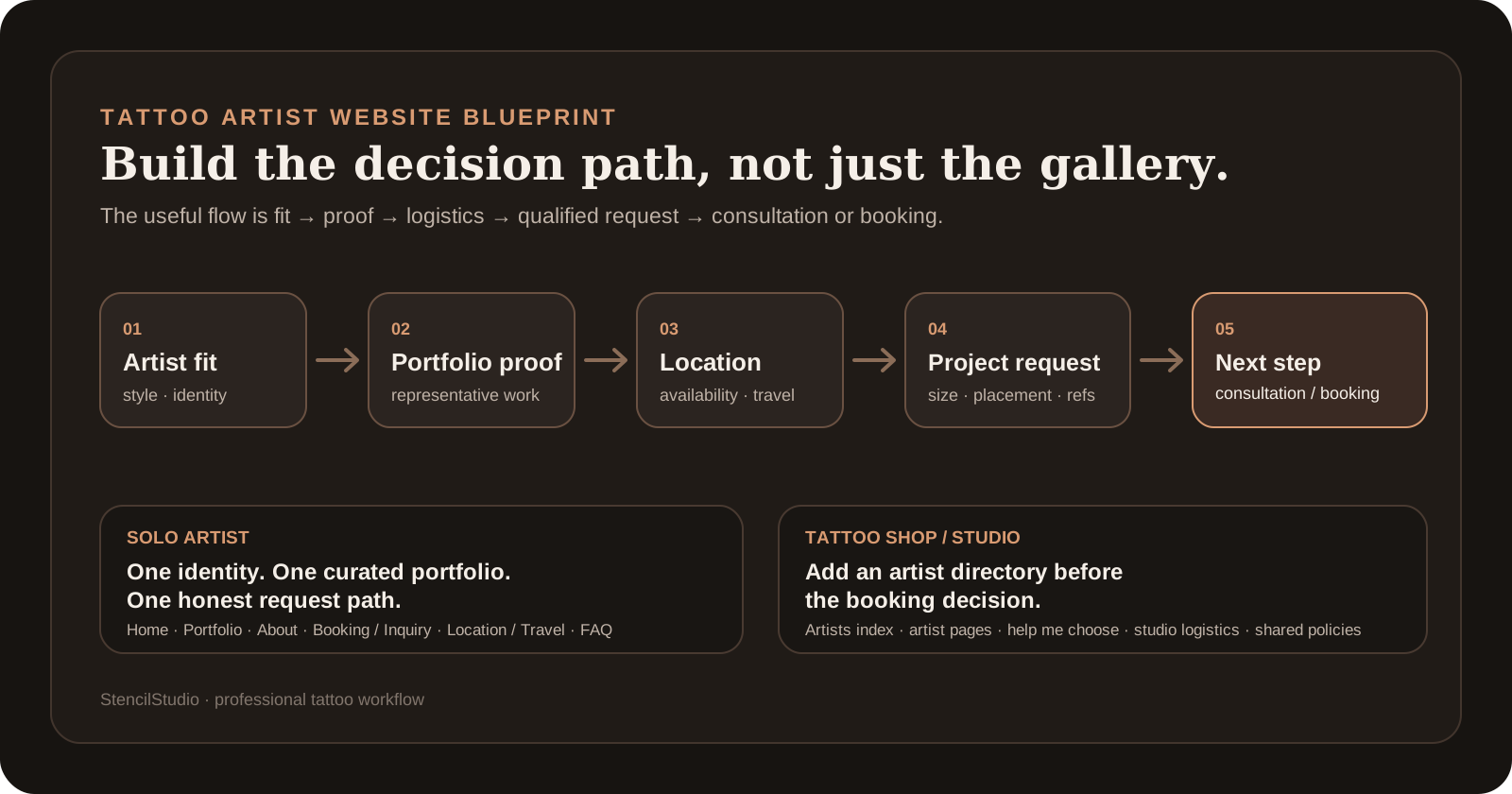
Tattoo Artist Website Blueprint: Pages, Portfolio, Booking and SEO
Plan a tattoo artist or tattoo shop website that makes style, location, portfolio and booking clear. Use this page-by-page blueprint for artists and studios.
tattoo artist website · tattoo shop website
Read guideAuthor
Andrea Mezzadra
Founder and product builder at StencilStudio
Andrea builds StencilStudio and tests how the tools fit into real stencil prep, using real references and outputs to document what works, what changes, and where artist judgment still matters.
In the App
Test the stencil-prep part of your stack
Use StencilStudio when the job is turning a reference into stencil guidance, checking body fit, and preparing output for print.