

Studio Workflow
Tattoo Artist Website Blueprint: Pages, Portfolio, Booking and SEO
Plan a tattoo artist or tattoo shop website that makes style, location, portfolio and booking clear. Use this page-by-page blueprint for artists and studios.
tattoo artist website · tattoo shop website · tattoo studio website · tattoo booking website · tattoo portfolio website
- September 14, 2026
- 17 min
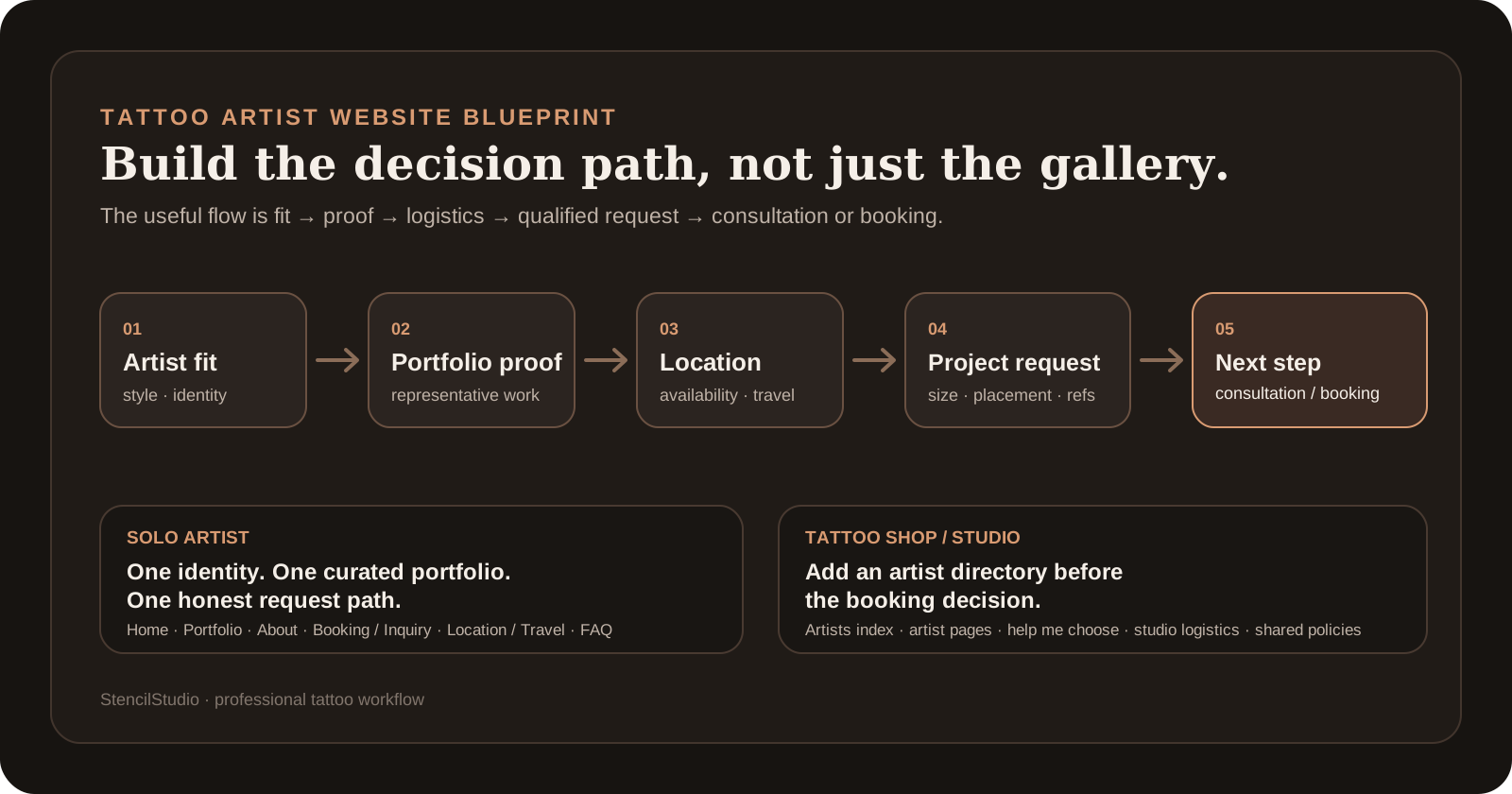
A tattoo artist website should do more than prove that you exist. It should help the right client understand your work, decide whether the project fits, know where and how you work, and send an inquiry that contains enough information for you to respond usefully.
That means the core website job is not “look professional.” It is this:
QUALIFIED VISITOR
    -> understands your style
    -> sees enough representative work
    -> trusts who and where you are
    -> understands availability and fit
    -> follows the correct inquiry or booking path
A solo artist, a private studio and a multi-artist tattoo shop can use the same logic, but they should not use the same site structure blindly. The blueprint below separates those cases and keeps portfolio curation, photography and booking infrastructure in their proper lanes.
Start with the smallest tattoo website that can answer the job
For a solo tattoo artist, the minimum useful architecture is usually six public jobs. They can be separate pages or combined when the site is small, but each job must remain easy to find.
- Home: who you are, what kind of work you do, where you work, current booking state and the next action.
- Portfolio: enough representative work for a visitor to judge fit without scrolling through your entire archive.
- About / Artist: identity, approach, studio relationship and information that helps a client understand who they will work with.
- Booking / Inquiry: the actual path for submitting a project, requesting a consultation or booking an appropriate service.
- Location / Travel: home studio, city, relevant access information, and current guest-spot or travel dates if travel is part of your practice.
- FAQ / Policies: the recurring questions that materially affect whether a project can move forward.
A separate Contact page is optional. If every tattoo request should go through the inquiry form, a generic contact form can create a second inbox and a less clear workflow. Keep a separate contact route only when there is a real non-booking job for it.
For a multi-artist tattoo shop, the critical addition is an Artists layer:
HOME
  -> ARTISTS
       -> ARTIST A: style + work + booking path
       -> ARTIST B: style + work + booking path
       -> ARTIST C: style + work + booking path
  -> BOOK / REQUEST HELP CHOOSING
  -> STUDIO / LOCATION
  -> FAQ / POLICIES
That structure is more useful than forcing every visitor through one generic gallery and one generic contact form.
Homepage anatomy: answer fit before biography
A visitor should not need to hunt through a menu to learn what kind of tattoo work you do, where you are, or how to proceed. A practical homepage order is:
- Identity + specialty + location. Put the artist or studio name, the work you want to be known for, and the real city or studio context near the top.
- Current action. Make the relevant state obvious: inquiries open, books opening on a date, consultations available, walk-ins available, flash available, or another accurate workflow.
- Representative work. Show a tight selection that proves the promise made above. Do not make the homepage the full archive.
- Fit statement. Explain the kinds of projects you actively want, and any major boundary a client needs before inquiring.
- Clear route to more work. Link to the full curated portfolio or to individual artist pages for a shop.
- Trust and logistics. Studio, location, real contact route, policies that affect booking, and links to current official social profiles.
- Primary CTA again. After a visitor has seen enough to decide fit, give them the correct next step without making them scroll back to the hero.
The exact order can change, but the homepage should answer the decision sequence. A cinematic hero that hides the city, artist identity and booking state is not doing the job.
Keep the portfolio curated, then connect it to the next step
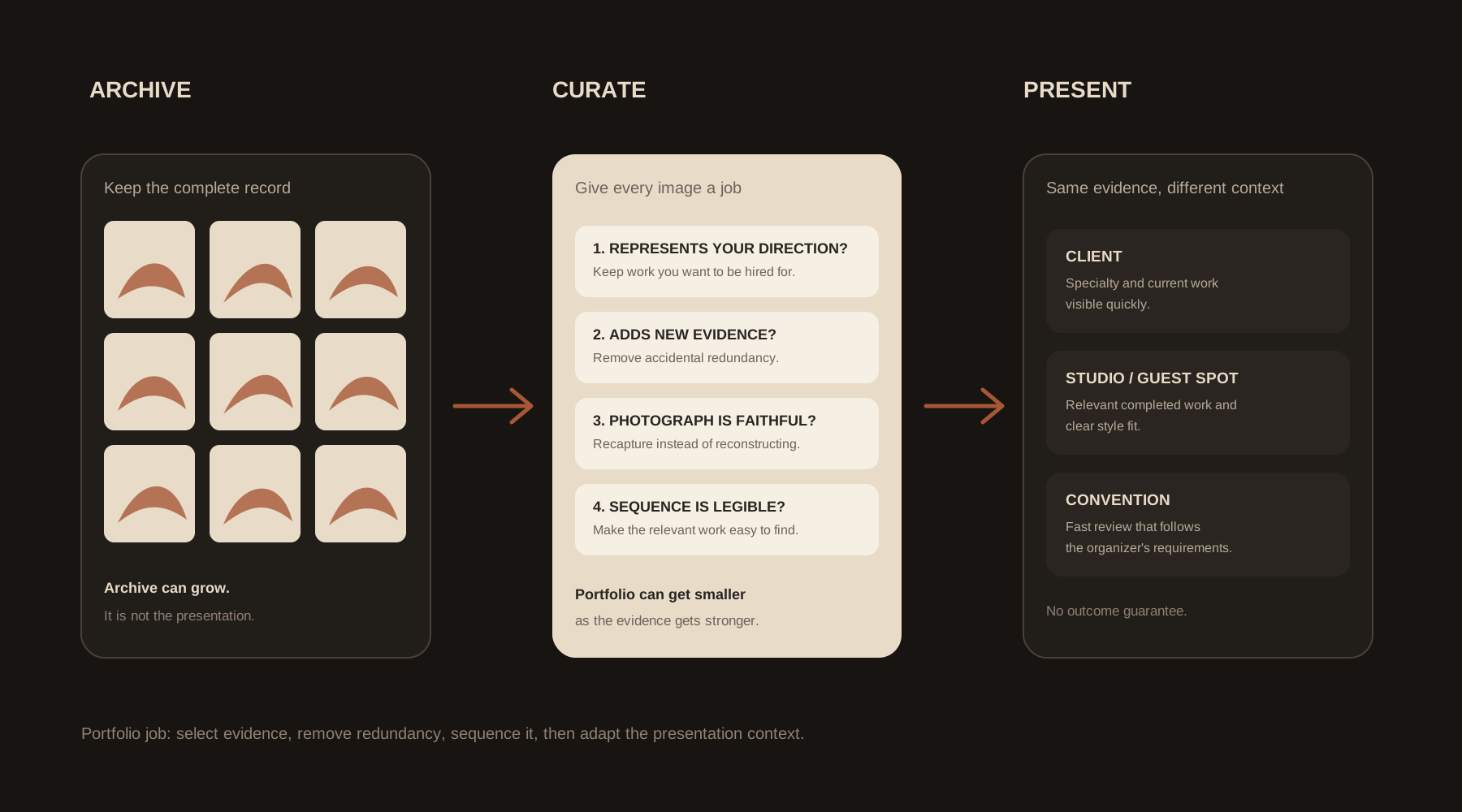
The website owner should not duplicate the job of a full portfolio-curation guide. The site only needs to decide where the portfolio lives, how visitors enter it, and what happens after they see enough work.
A useful website portfolio should:
- lead with the work you want more of rather than an exhaustive career archive;
- make specialties easy to recognize without requiring a visitor to decode every image;
- separate artists clearly in a multi-artist shop;
- use labels such as healed/fresh only when they are accurate and useful to the viewer;
- let images work on a phone without hover-only controls;
- avoid forcing every image to load at full camera resolution;
- provide a visible next action after a visitor has judged fit.
For the selection and sequencing job, use the Tattoo Artist Portfolio guide. For capture quality, lighting and faithful documentation, use the Tattoo Photography guide. If individual portfolio photos need faithful crop, exposure or presentation cleanup, the Tattoo Portfolio Photo Editor owns that task.
A website gallery is the delivery surface. It should not become an excuse to keep 300 weak or unrelated images because storage is cheap.
Booking architecture: decide whether the visitor is requesting or actually booking
This is the part many tattoo websites label too loosely.
“Book now” can mean at least three different things:
- Project request first. The artist reviews idea, placement, size, references and fit before offering a consultation or appointment.
- Direct scheduling. The visitor can legitimately choose an available service and time without project review first.
- Hybrid. Custom work uses a project request, while specific flash, consultations, touch-ups, walk-ins or other defined services can use direct scheduling.
Do not call a project-request form a confirmed booking if the artist still has to accept the project. Ink & Dagger, for example, explicitly tells clients that its detailed tattoo form is a request, not a confirmed booking, then routes the submission to consultation, booking or artist matching as appropriate.
A strong tattoo inquiry form asks only for information that changes the next decision
Commonly useful fields include:
- preferred artist, or “help me choose” for a multi-artist studio;
- tattoo idea or subject;
- placement on the body;
- approximate size;
- style or visual direction when the studio needs it for artist matching;
- reference images or inspiration;
- a photo of the body area when placement, cover-up or existing work materially changes the review;
- whether the project is a cover-up when relevant;
- general timing or travel constraints;
- city or travel context when the artist works in multiple places;
- budget range only if the artist genuinely uses it to qualify scope;
- reliable contact details.
Do not collect information merely because a form builder offers a field. Medical intake, consent and appointment-day paperwork are separate workflows from early project fit unless your own process genuinely requires something sooner.
The confirmation screen matters
After submission, tell the client what happened and what happens next:
- whether the request has been received;
- typical response window if you can maintain one;
- whether the artist still needs to accept the project;
- whether a deposit comes later;
- whether the client should avoid sending duplicate DMs or forms;
- what to do if the request is time-sensitive because of travel.
A structured form is useful only if it reduces ambiguity for both sides. Tattoo-artist community discussions show no single universal method: some artists deliberately keep DMs, some use forms and email, and some split project intake from calendar scheduling. Build the site around the method you can actually maintain.
Once project fit and scope are understood, the Tattoo Project Quote Builder can handle the separate estimate job. It is not a booking system and should not replace the inquiry decision.
Solo artist vs tattoo shop website
The phrase “tattoo shop website” often points to a structurally different problem from a solo portfolio site even when both belong under the same owner.
Solo artist
A solo artist usually needs:
- one clear personal identity;
- one primary portfolio organized around current direction;
- one booking or inquiry decision;
- one home base plus travel/guest information when relevant;
- policies written around that artist's actual process;
- a simple path from social profile or search result to inquiry.
The site should not pretend to be a studio directory if the client is choosing one artist.
Multi-artist shop or studio
A tattoo shop website usually needs:
- an artist directory before the booking form;
- an individual page for each active artist with specialty, representative work and the correct booking route;
- a way to ask for help choosing an artist when the client knows the style/project but not the person;
- studio address, hours or appointment model, parking/access information when useful, and a clear distinction between appointments and walk-ins;
- shop-wide policies only where they are truly shared;
- artist-specific policies or booking state when they differ;
- prompt removal or redirection of former-artist pages rather than stale profiles that still accept inquiries.
Ink & Dagger is a useful live example because its site lets a visitor browse artists by style and then its request flow asks for a preferred artist or offers help matching the project. That is a real shop-specific information architecture problem, not merely a larger solo portfolio.
Traveling artists need a living location layer
If guest spots or travel are a material part of your work, “Based in X” is not enough.
Give visitors one current place to verify:
- home city / studio;
- upcoming guest city and date range;
- whether that stop is accepting requests;
- the correct request link for that stop;
- any deadline the artist actually uses;
- what happens after the date passes.
Do not leave expired guest dates in the primary navigation for months. Either remove them, archive them clearly, or replace them with the next confirmed dates.
A convention appearance is also a location/time commitment, but it is not automatically a booking page. If convention travel is part of your public schedule, distinguish “I will be there” from “I am accepting convention appointments.” The U.S. Tattoo Conventions directory can support planning, but your website should publish only the availability you control.
Local discovery: make the real location easy to verify
Local SEO for a tattoo artist is mostly about making a real business easy for people and search engines to understand, not manufacturing dozens of city pages.
For a studio or eligible local business:
- keep the real studio/business name, address or service-area information and contact details accurate;
- link the website from the verified Google Business Profile;
- keep the website's location and contact information consistent with the real business;
- give each real studio location a useful page when the locations genuinely differ;
- use individual artist pages when clients search by artist name and those artists actively work there;
- put meaningful text around galleries so the page is not only a wall of unlabeled images;
- avoid fake location pages for cities where the artist has no real location or current service relationship.
Google Business Profile documentation says verified businesses can manage the website shown on their profile, and eligible profiles can also expose booking or appointment links. Treat those as distribution paths into the same accurate website flow, not as a substitute for keeping the website itself current.
If you publish licensing or permit claims as trust information, verify the exact jurisdiction first. U.S. tattoo regulation can be state-level, local, or mixed, so use the U.S. Tattoo Licensing guide rather than making a generic “licensed everywhere” claim.
Mobile-first design is operational, not cosmetic
A client who discovers an artist through Instagram, Maps or mobile search may move straight into the portfolio and inquiry form on a phone. Test the actual path on a phone, not just the homepage screenshot.
Check that:
- artist name, style, city and booking state are readable without zooming;
- galleries do not require hover to reveal essential information;
- tap targets do not overlap;
- portfolio images are large enough to judge but not shipped as unnecessarily huge originals;
- image grids do not jump around while loading;
- the booking form is comfortable to complete with one hand;
- file-upload fields work from a phone's photo library or camera workflow;
- the submit state is obvious;
- sticky CTAs do not cover form fields or artwork;
- the same important text and links exist on mobile as on desktop.
Google uses the mobile version of content for indexing and ranking and recommends responsive design as the easiest pattern to implement and maintain. Google also warns against requiring a click, swipe or typing action before primary content can load for crawling. That makes “desktop first, fix mobile later” a bad launch strategy for both usability and search visibility.
Trust: show enough reality to reduce uncertainty
Tattoo clients are not evaluating only visual taste. They are also trying to understand whether the artist or shop is real, active, reachable and clear about the process.
Useful trust signals can include:
- the artist's real identity and current work;
- real studio name and location;
- current official social profiles;
- representative healed work when the artist chooses to publish it and labels it accurately;
- a clear booking state and response process;
- policies that materially affect booking, deposits, rescheduling or project fit;
- genuine reviews or links to a real review profile rather than invented testimonials;
- current team pages for a shop;
- accurate license/permit information only where the jurisdiction and credential make the claim meaningful.
A generic paragraph about “passion for ink” is not a trust signal. Specific, verifiable information is.
Choose a platform by workflow, not by a tattoo-specific ranking
There is no defensible universal “best website builder for tattoo artists.” The right platform depends on the site you need to maintain.
Evaluate a builder or custom stack against these questions:
- Can you update the portfolio without rebuilding the site? If updating work is painful, the portfolio will go stale.
- Can the inquiry form collect the fields and image uploads your process needs? Test it on mobile before committing.
- Can it embed or link the scheduler you actually use? Do not require native scheduling if the best workflow is a separate accepted-project scheduler.
- Can a shop maintain artist profiles cleanly? Multi-artist studios benefit from reusable structured artist pages rather than hand-copying every layout.
- Can you control page titles, descriptions, canonical URLs, redirects and indexability? These are basic maintenance needs, not advanced SEO tricks.
- Can you use a custom domain and preserve it if you change providers? The domain should be the durable public address.
- Does the site stay fast enough on a real phone with your actual portfolio images? Test the content you will publish, not the empty template demo.
- Can you measure visits and completed inquiry actions? Choose analytics you can actually maintain.
- What happens if you leave? Check export, content ownership, image access and domain transfer before the site becomes business-critical.
- For a shop, who can edit what? A multi-artist site may need repeatable CMS entries or controlled editing access.
Current platform capabilities worth checking, not rankings
- Squarespace: current documentation supports customizable form blocks, file-upload fields, and Acuity scheduling blocks. It can also link or embed an external booking flow. This can fit a solo artist who wants portfolio + inquiry + a separate scheduling layer, but verify current plan limits and costs before choosing it.
- Wix: Wix Forms supports file uploads, while Wix Bookings supports customizable booking forms and service-specific fields. That can be useful when direct scheduling is genuinely part of the workflow.
- Webflow: Webflow supports custom forms and file uploads on eligible plans, and its CMS can model repeatable items such as team members. That can be useful for a studio with structured artist profiles, but it does not make the workflow decisions for you.
Do not choose a platform because a “best tattoo website builder” article gives it a numeric score. Choose the stack that can reproduce your actual portfolio, artist and inquiry model with the least maintenance friction.
Three live tattoo websites worth studying for specific reasons
Examples are useful only when you extract a principle instead of copying a visual style.
Ink & Dagger: artist matching before booking
Ink & Dagger makes the shop structure clear: visitors can browse artists and styles, then the booking flow asks for artist fit, idea, placement, size, budget/timing context and reference images. Most importantly, it distinguishes a project request from a confirmed appointment. Study the decision flow, not the site's visual skin.
Atelier Eva: individual artist information plus detailed booking inputs
Atelier Eva operates as a multi-artist studio with individual artist presentation and clear location context. Its booking FAQ asks for preferred artist, color or black-and-grey direction, size, body location, body-area photo, references, style preference and travel origin. The lesson is that a shop website can reduce ambiguity before email by publishing the intake expectations clearly.
Your own travel page should teach one current thing
For a traveling artist, the useful example is the pattern rather than a template: current city + date + availability + correct request route. Do not build a permanent “guest spots” page full of expired dates merely because another artist has one.
What not to put on the website
Remove anything that makes the decision harder without adding useful proof or workflow information.
Common failure modes include:
- hundreds of uncurated images with no visible specialty;
- a homepage that never states the city or studio;
- a “Book now” button that is really an unreviewed contact request;
- a direct calendar for custom projects that still need artist fit/scope review;
- booking instructions scattered differently across Instagram, website and email;
- stale “books open” or guest-spot dates;
- a multi-artist gallery with no way to tell who made which tattoo;
- hover-only navigation or gallery controls;
- giant image files and autoplay video that make the portfolio painful on mobile;
- a vague “tell me more” contact form that forces the artist to ask size, placement and references again;
- generic artist bios that could describe any creative business;
- fake testimonials, fake awards or unsupported performance claims;
- licensing, hygiene or medical claims copied from another jurisdiction;
- fake city landing pages for places where the artist does not actually work.
Copy this page blueprint
Use this as a build checklist, not as a requirement to create exactly six URLs.
SOLO ARTIST

HOME
  Purpose: style + identity + city + booking state + strongest proof
  CTA: view work / start project request

PORTFOLIO
  Purpose: prove current specialty and fit
  CTA: start project request

ABOUT
  Purpose: artist identity, approach, studio relationship
  CTA: view work / inquire

BOOKING OR INQUIRY
  Purpose: explain process and collect decision-changing project info
  CTA: submit request OR schedule an eligible service

LOCATION / TRAVEL
  Purpose: home base + current guest/travel availability
  CTA: request the correct location/date

FAQ / POLICIES
  Purpose: remove recurring blockers before inquiry
  CTA: start the correct booking path
MULTI-ARTIST SHOP
HOME
-> ARTISTS INDEX
-> ARTIST PAGE: specialty + portfolio + booking state
-> ARTIST PAGE: specialty + portfolio + booking state
-> HELP ME CHOOSE: project details used for artist matching
-> BOOK / REQUEST
-> STUDIO / LOCATION
-> FAQ / SHARED POLICIESRun this 30-minute website audit before redesigning anything
Open the site on your phone and answer these in order:
- Can a new visitor name your tattoo specialty after the first screen and first few portfolio images?
- Can they see your real city or studio without opening the footer?
- Can they tell whether you are accepting the kind of request they have?
- Can they reach the correct artist in two or three decisions if you are a shop?
- Does the portfolio prove the work you want more of?
- Is the primary CTA an honest label for what happens next?
- Does the inquiry form collect size, placement and references when those change your decision?
- Can the visitor upload those references comfortably on mobile?
- Does the confirmation state explain what happens after submit?
- Are guest dates, booking state, policies and artist roster current?
- Does every public location page correspond to a real place you work?
- Can you update the portfolio and booking state without calling a developer every time?
Any “no” is a more useful redesign target than changing fonts or adding another animation.
If you are moving from Instagram-only, build in this order
Do not start by perfecting every page. Start with the decision path.
- Secure the domain you intend to keep.
- Publish the home page with identity, specialty, city and one correct CTA.
- Publish the curated portfolio or artist profiles.
- Build the real inquiry/booking path and test it on a phone.
- Add location/travel and the policies that repeatedly affect inquiries.
- Connect the site from current social profiles and Google Business Profile where eligible.
- Add analytics for visits and completed inquiry actions.
- Only then spend time on secondary pages, animation and visual polish.
The finished website should make the right project easier to start and the wrong-fit project easier to recognize. If it does that, it is doing useful business work even before you redesign it again.
Sources and current examples
The page above uses current first-party product documentation for technical capabilities and live tattoo websites/community discussions for workflow evidence. Community examples are anecdotal and show variation, not universal rules.
- Google: mobile-first indexing best practices
- Google Business Profile: edit your profile and website
- Google Business Profile: manage local business and booking links
- Squarespace: form blocks
- Squarespace: scheduling blocks
- Wix: booking forms
- Wix: file uploads in forms
- Webflow: forms
- Webflow: CMS collections
- Ink & Dagger: artists
- Ink & Dagger: booking
- Atelier Eva: booking FAQ
- TattooArtists community discussion: booking systems
- TattooArtists community discussion: Instagram DMs vs forms
Related Guides
Keep reading from here
Tattoo Artist Portfolio: Curate Work for Clients, Studios and Conventions
Curate completed tattoo work into a professional portfolio by selecting stronger evidence, removing redundancy, showing a coherent specialty, sequencing projects, and adapting presentation for clients, guest spots, studios, or conventions.
tattoo artist portfolio · tattoo portfolio
Read guide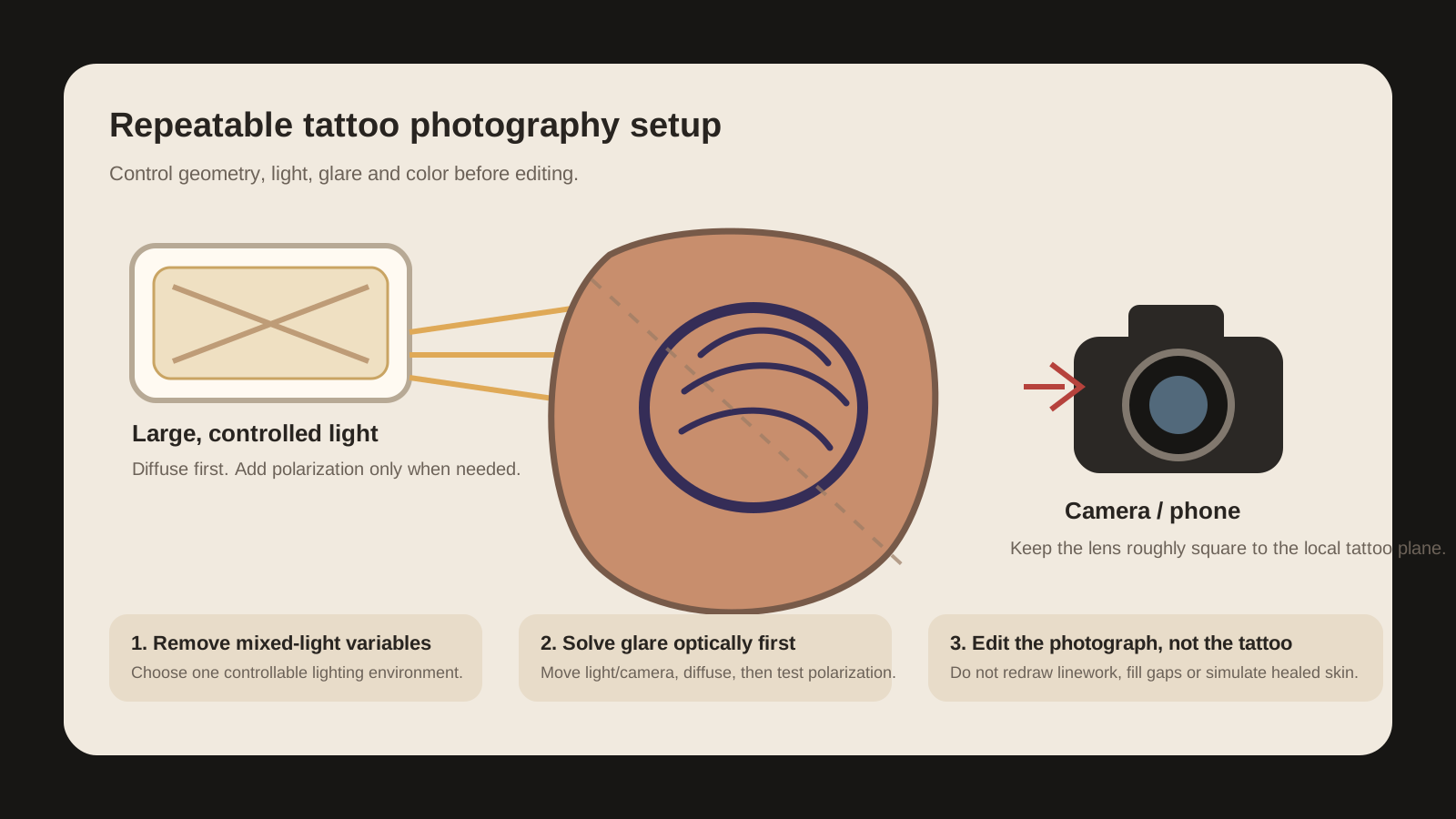
Tattoo Photography for Artists: A Repeatable Portfolio Workflow
Photograph finished tattoo work with controlled lighting, glare reduction, faithful geometry, consistent color, and honest editing boundaries.
tattoo photography · how to photograph tattoos
Read guideAuthor
Andrea Mezzadra
Founder and product builder at StencilStudio
Andrea builds StencilStudio and documents the source-to-stencil workflow by checking product behavior, real transformations, readability and the limits of the web and iPhone tools.
In the App
Turn a qualified inquiry into a clear estimate
Once the project scope is clear, build an artist-controlled estimate with session assumptions, deposit, discount and client-facing notes.