Silhouette
Check whether the cranium, jaw, or antlered outline reads before small cracks and texture. A strong outer read gives you room to simplify later.


Curated skull stencil references for tattoo preparation, selected to compare silhouette, angle, negative space, tooth and cavity detail, and how supporting elements compete with the skull. Use the examples to choose a structural direction, then adapt the detail to the physical size and composition you actually need.
Curated skull references
Seven reviewed examples show different angle, cavity, tooth, ornament, and composition problems. Use the notes to decide what must stay dominant before you prepare your own reference.
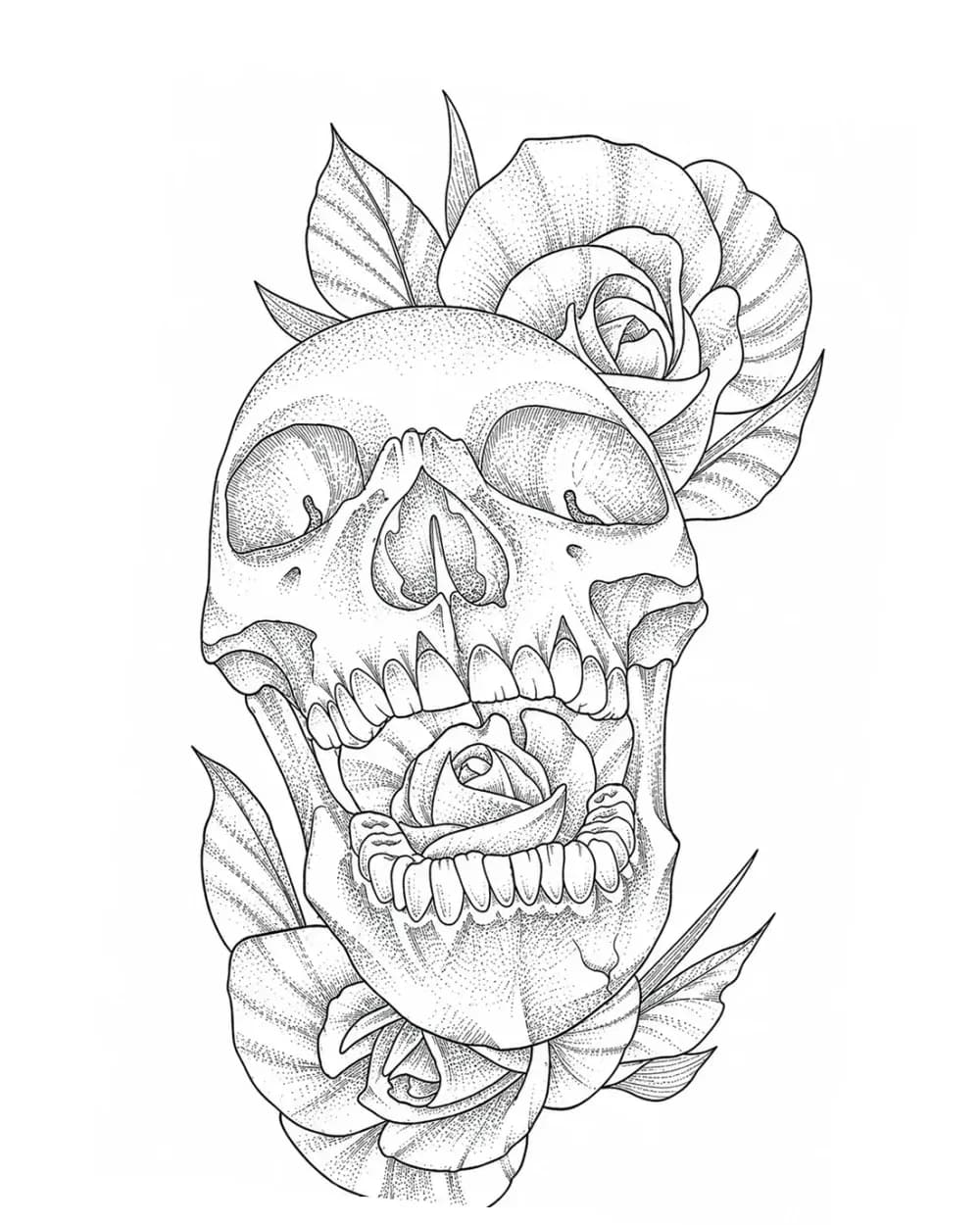
Open-jaw skull and rose composition with the teeth, eye socket, nasal opening, petals, and leaves competing for limited space.
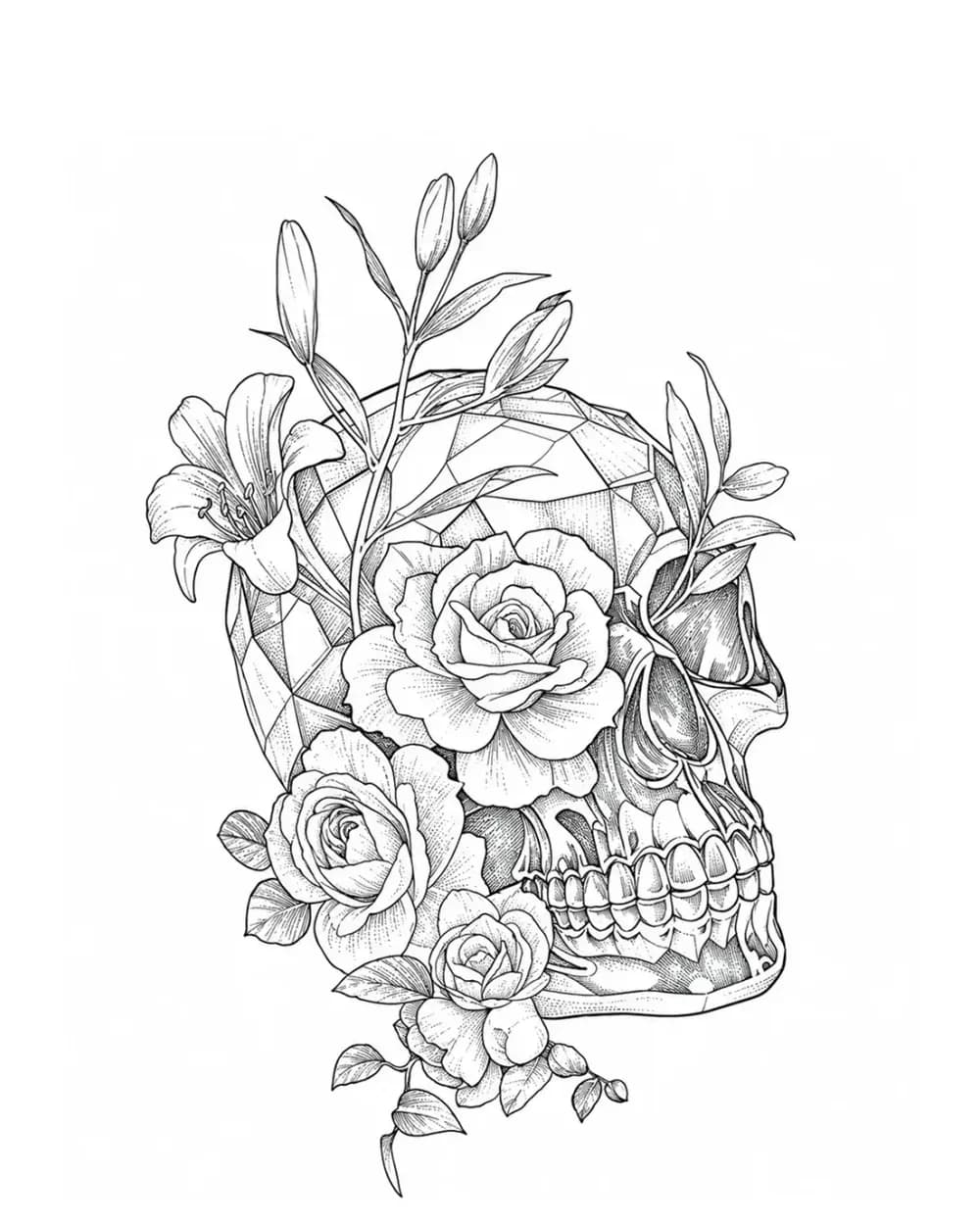
Profile skull with faceted cranial planes and floral framing, useful for comparing directional silhouette against internal ornament.
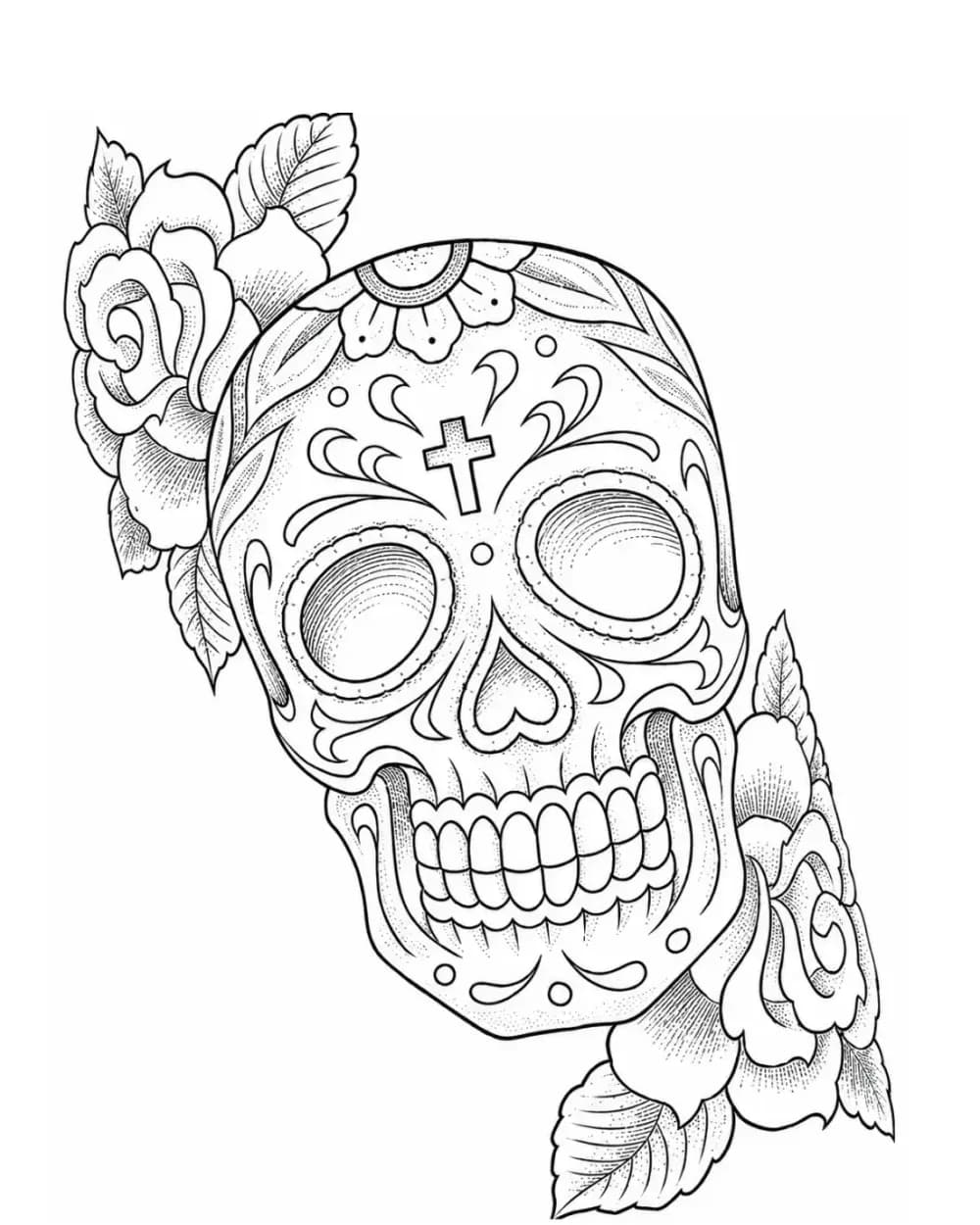
Decorated calavera-style face with floral accents and strong bilateral structure around the eye and nasal cavities.
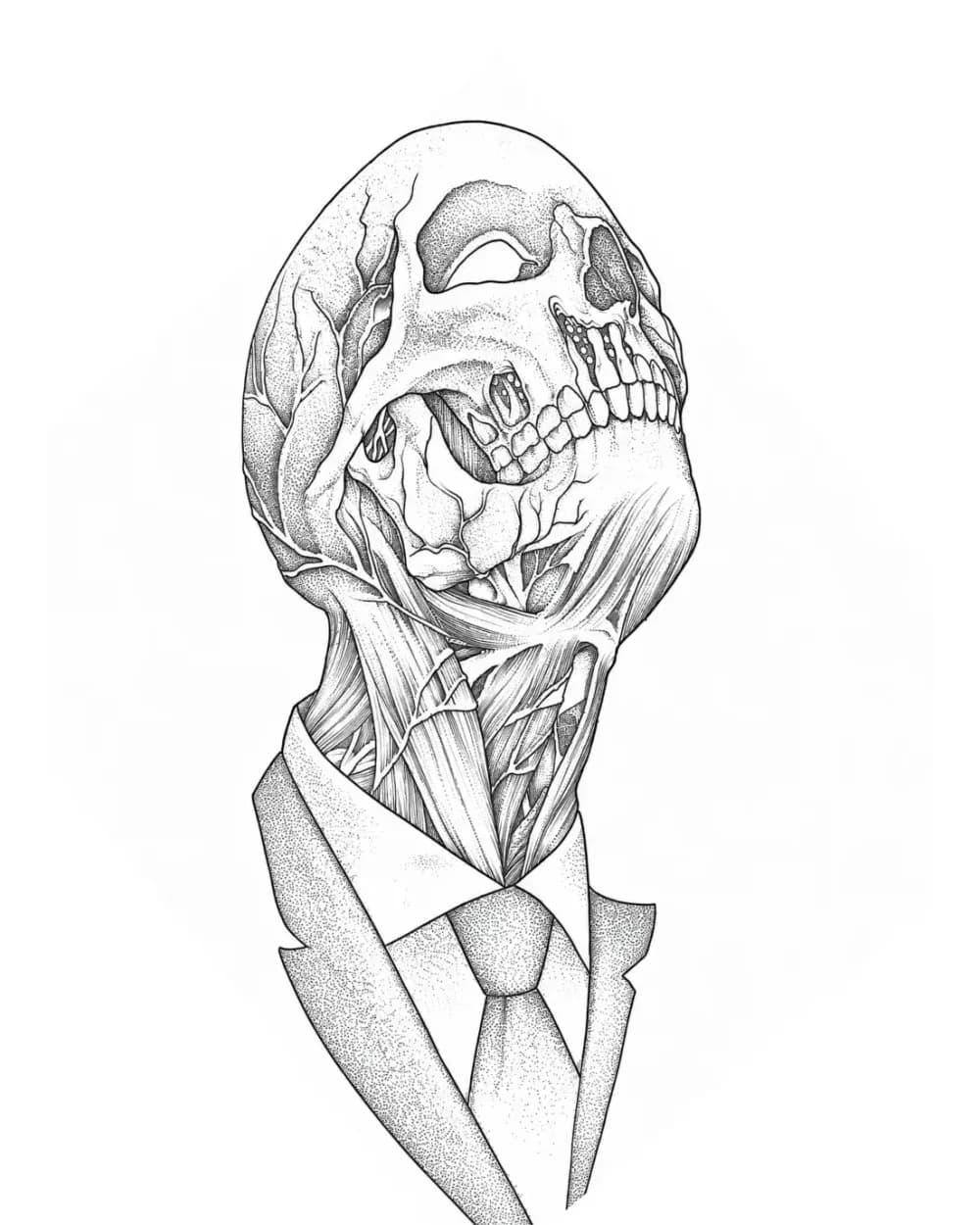
Upward skull angle with exposed neck anatomy, creating a clear test of cranial landmarks versus dense supporting linework.
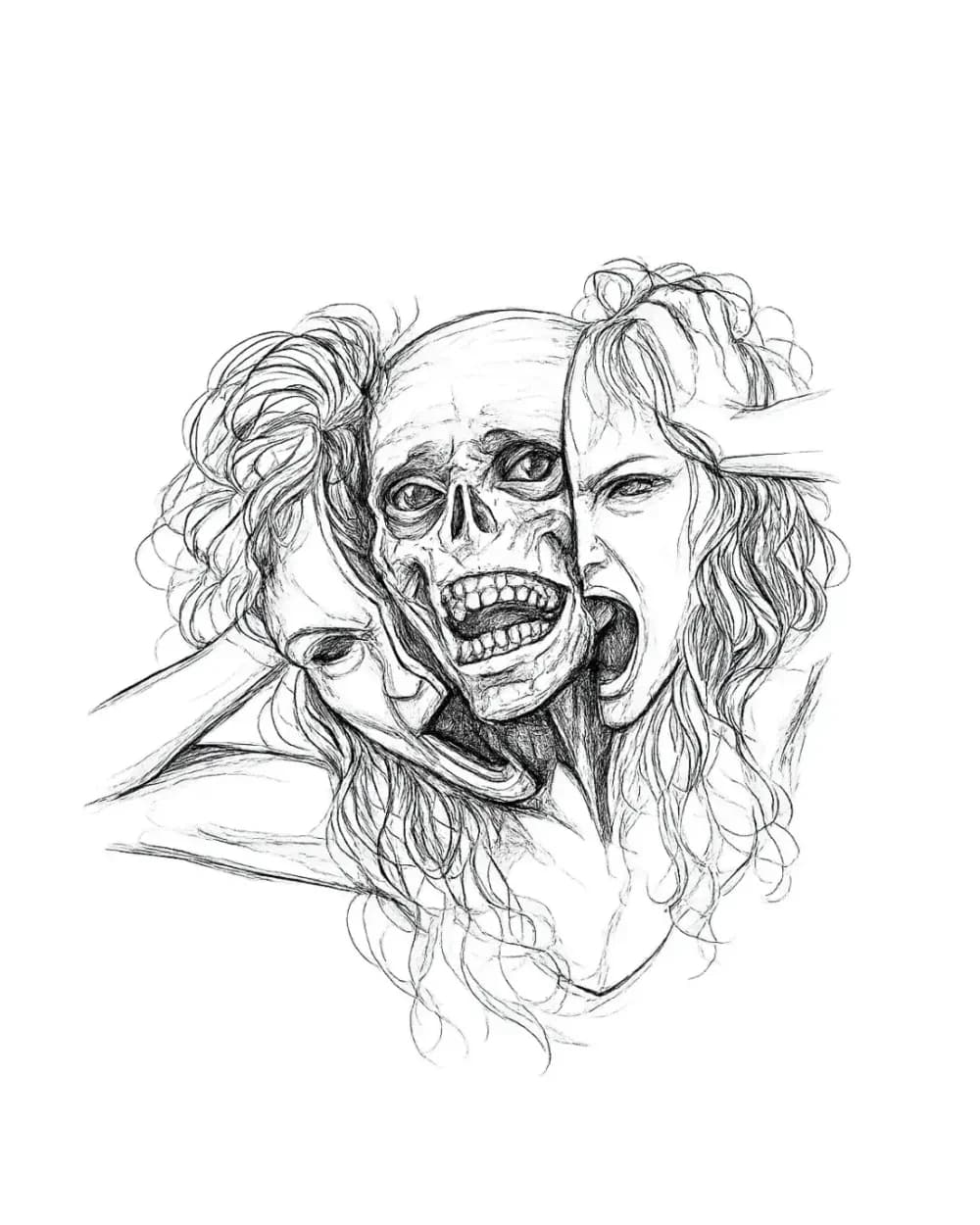
Central skull composition with two surrounding faces, useful for testing whether the skull remains the first read.
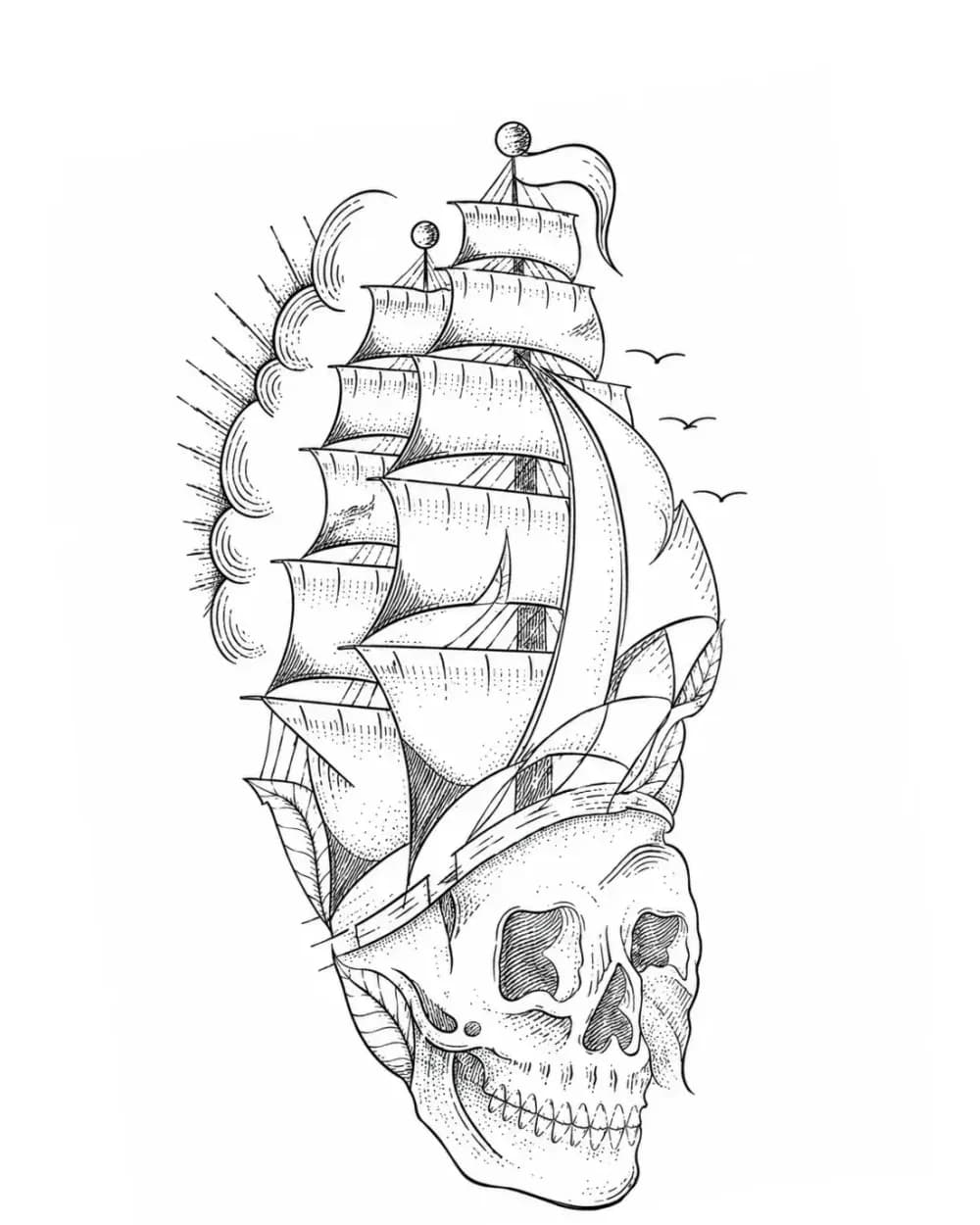
Skull and sailing-ship composition that tests a large secondary subject against tooth, cavity, mast, and rigging detail.
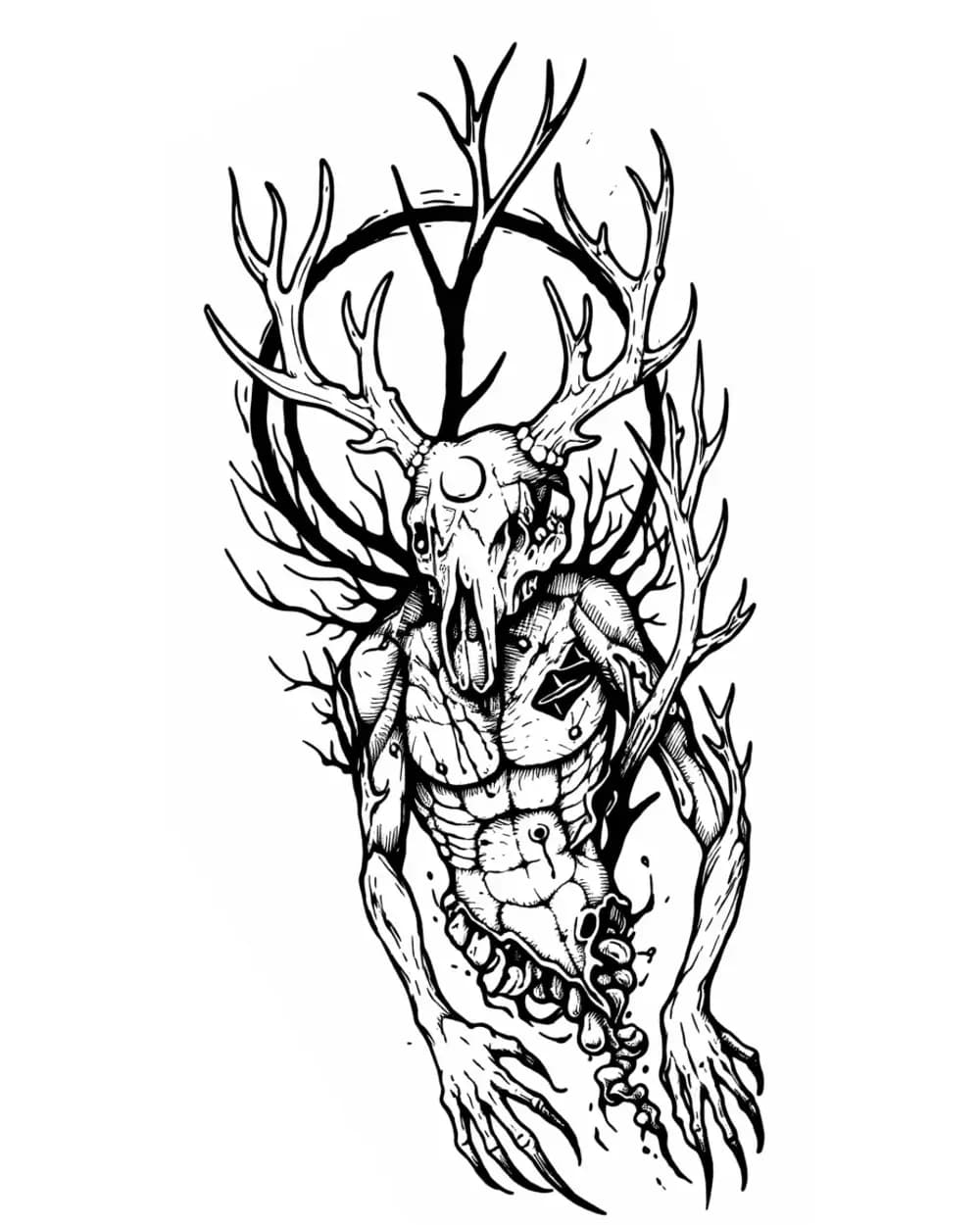
Antlered skull reference where the long silhouette and open gaps matter more than small internal turns.
Professional selection guide
A reference can look strong at screen size and still become crowded when it is reduced. Compare the large structure first, then test the smallest cluster that still has to remain legible.
Check whether the cranium, jaw, or antlered outline reads before small cracks and texture. A strong outer read gives you room to simplify later.
Front, profile, upward, and elongated views change which landmarks carry the form. Pick the direction before polishing small internal marks.
Protect eye sockets, the nasal opening, jaw gaps, tooth separation, and antler openings. Closed space can damage readability even when the outline survives.
Teeth, cracks, petals, rigging, stippling, and anatomy often fail before the overall skull does. Judge the densest cluster at final size.
Roses, faces, ships, or anatomy should have a clear relationship to the skull. Decide which subject is dominant before preserving every supporting line.
Final-size stress test
Do not use a universal centimetre rule. View the candidate at the intended physical dimensions and inspect teeth, cavities, ornament, and supporting linework. If one cluster closes while the main silhouette still works, simplify that cluster before changing the whole design.
Diagnose final-size detail densityFrom reference to working stencil
Skull preparation notes
Use the gallery as a comparison set: protect cavities, jaw relationships, tooth spacing, and the dominant direction before cracks, petals, hair, rigging, or anatomy become the first read.
Start with the cranium, jaw relationship, eye sockets, nasal cavity, and major silhouette. Cracks, stippling, floral veins, hair, rigging, or decorative patterning are secondary unless the design specifically depends on them. A skull reference stays useful when those supporting marks can be simplified without losing the bone structure.
Eye sockets, the nasal opening, the jaw gap, spaces between tooth groups, and openings inside antlers are not empty leftovers. They separate major forms. When a reference is reduced, watch these gaps before adding more line weight or preserving more texture. If an opening closes, the stencil can become harder to read even when every original line is technically still present.
A broad cranial outline may survive reduction while teeth, small cracks, petal folds, rigging, neck anatomy, or repeated decoration become crowded. There is no universal minimum skull size that fixes every composition. Compare the candidate at the intended physical dimensions and simplify the first cluster that loses separation.
Front-facing designs emphasize balance and cavity symmetry. Profiles create a strong directional read. Upward angles change the jaw and cranial relationships. Roses, faces, ships, antlers, and anatomy should support that main direction rather than becoming equal focal points. Decide the dominant axis and subject hierarchy before refining small marks.
Go more specific
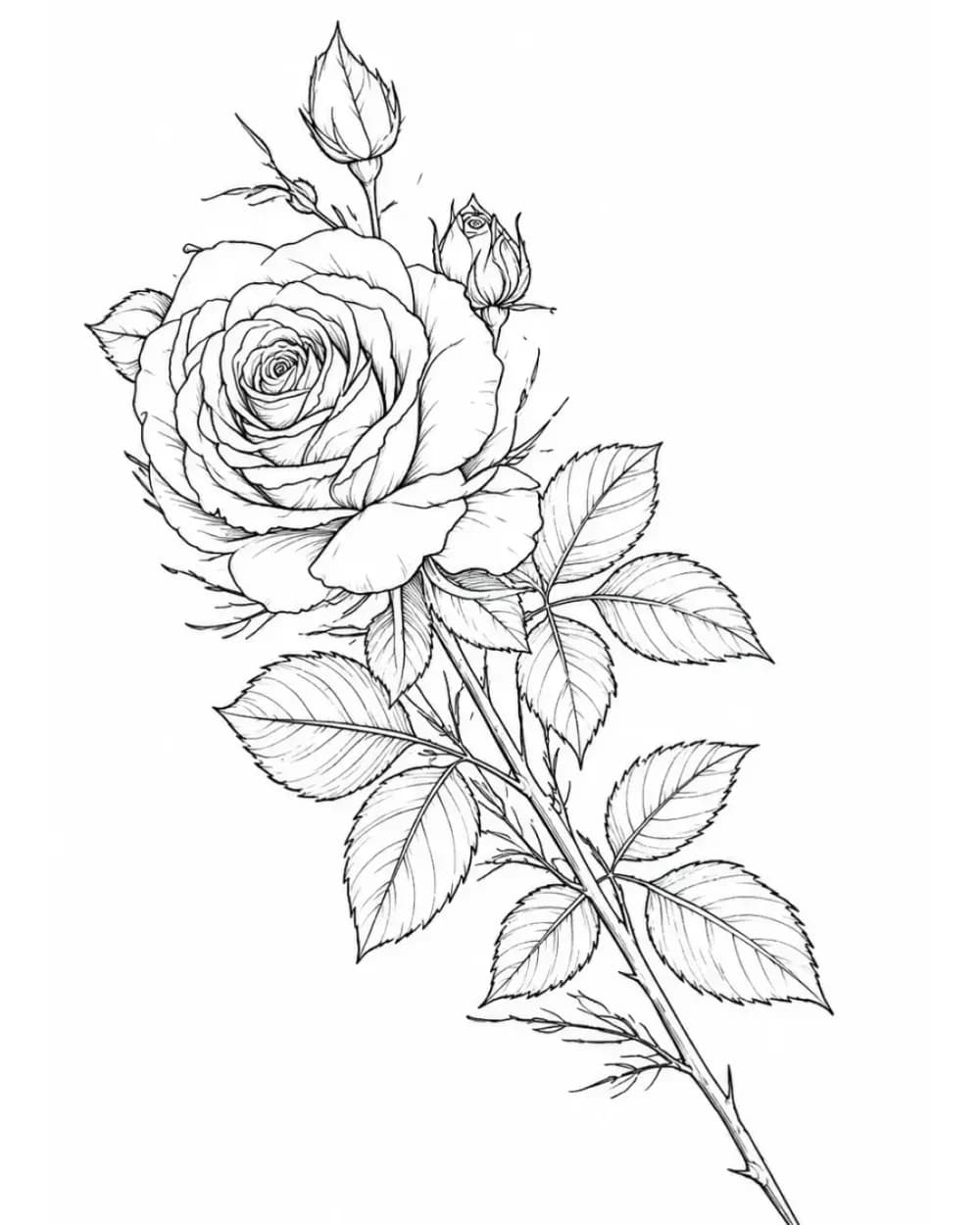
This collection compares six rose stencil directions: a standalone long-stem rose, roses framing a tiger, roses contained inside a cat silhouette, a butterfly-and-rose c…
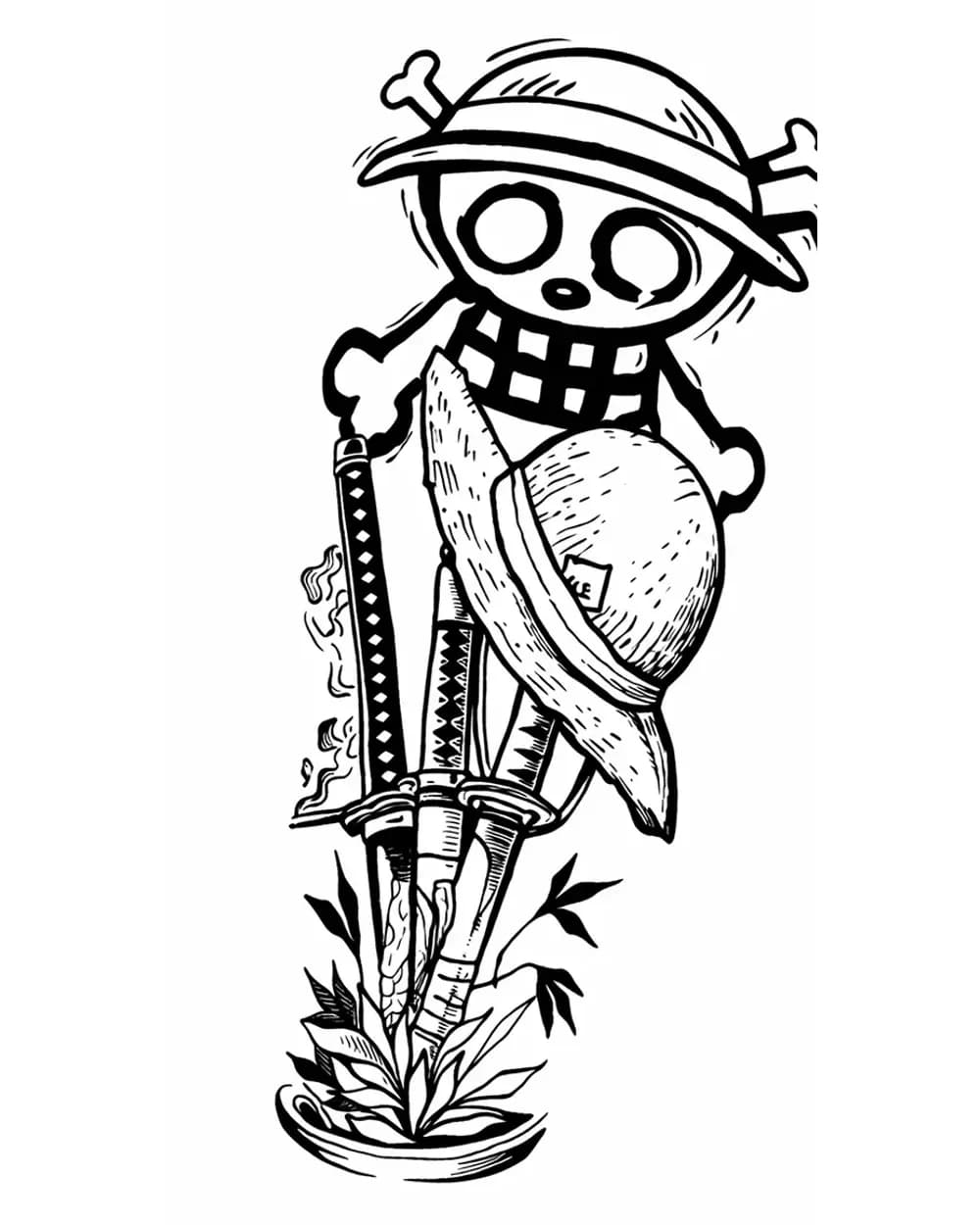
These three skull references already justify a focused skull page because they are not repeating the same job. One is a bold emblematic skull, one is a deer-skull struct…
Related stencils
Return to the full gallery when the subject family is still open.
Compare rose and petal structure when flowers are a major supporting element in the skull composition.
Compare skull-forward compositions with portrait and figure references when human faces are supporting elements.
Compare compact emblem-like structure when the skull needs a simpler graphic read.
FAQ
Start with a readable cranial and jaw silhouette, clear eye and nasal cavities, intentional tooth spacing, and a composition whose supporting elements do not overpower the skull. Then judge the same structure at the physical size you plan to use.
Next step
Use these examples to decide what needs to stay dominant, then generate a draft from the photo, drawing, or artwork you actually plan to use and review it again at final size.