

Studio Workflow
Tattoo Artist Portfolio: Curate Work for Clients, Studios and Conventions
Build a professional tattoo artist portfolio from completed work. Learn what to include, what to cut, how to order photos, and how to tailor it for clients, guest spots, studios, and conventions.
tattoo artist portfolio · tattoo portfolio · portfolio curation · guest spot · tattoo convention
- September 9, 2026
- September 14, 2026
- 15 min
A strong tattoo artist portfolio is not the biggest folder of work you can assemble. It is a clear selection of completed tattoos that shows what you do well, what you want to do more of, and how consistently you can deliver it.
The right selection depends on who is looking. A client wants to know whether your style fits the tattoo they have in mind. A host studio wants to understand your work quickly and decide whether you fit its guest program. A convention organizer may review your tattoos alongside your experience, style, dates, booth application, and other requirements.
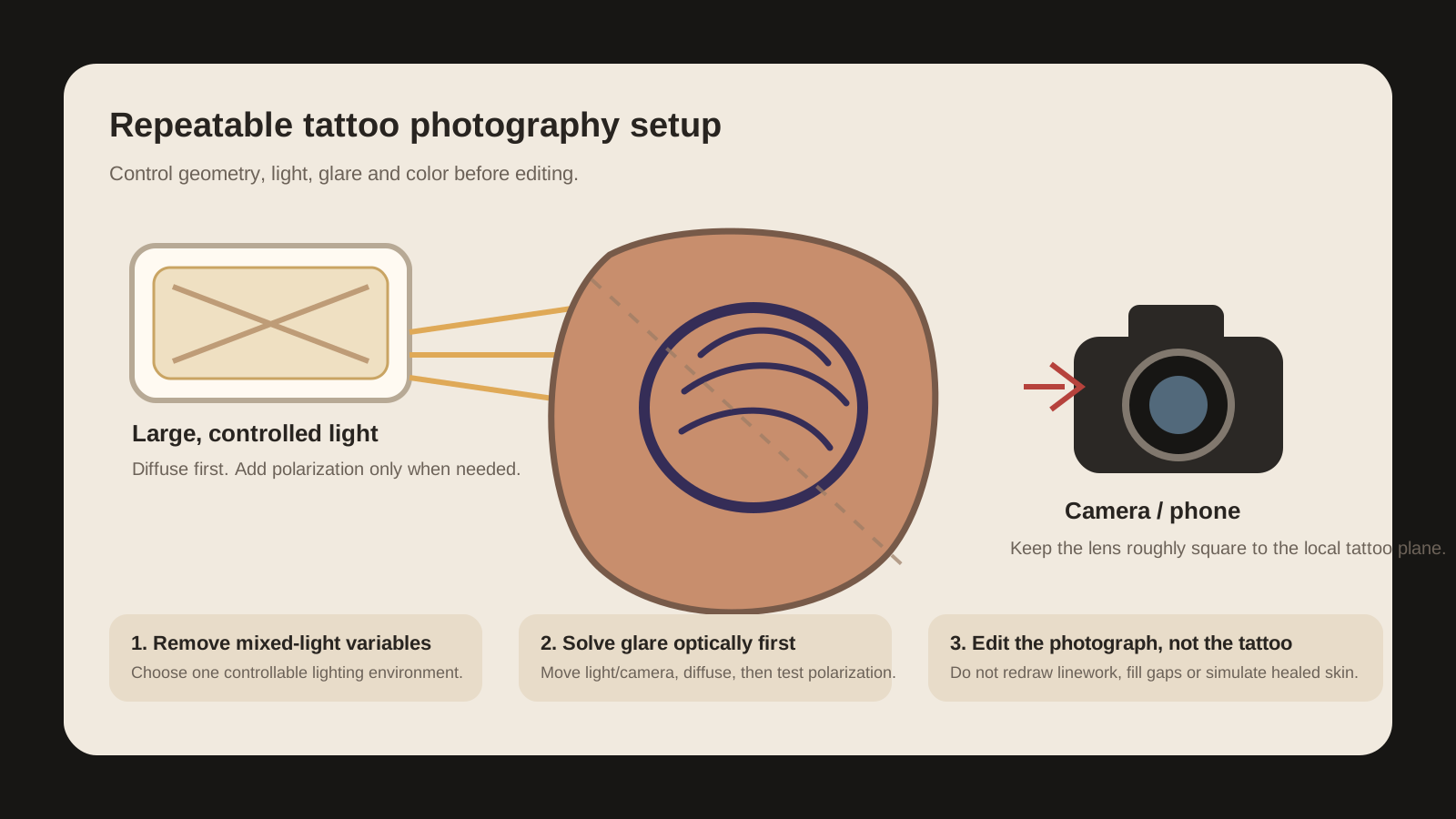
Start with strong tattoo photographs. If an otherwise usable image only needs a restrained crop, straighten, exposure, white-balance, or whole-photo tonal adjustment, use the Tattoo Portfolio Photo Editor. If glare, blur, poor focus, or a bad angle makes the tattoo hard to judge, return to the tattoo photography workflow or recapture it. A portfolio cannot rescue a photograph that does not show the work clearly.
This guide is for working tattoo artists presenting completed tattoo work. An apprenticeship portfolio is a different job because studios may evaluate drawings, flash, and other pre-tattoo artwork rather than a body of completed client tattoos.
What should a tattoo artist portfolio include?
Start with the work you would genuinely like to be hired to do again.
A useful portfolio usually shows:
- your strongest current completed tattoos;
- the styles or subjects you actually want more bookings for;
- enough related pieces to show consistency, not just one exceptional tattoo;
- useful variation in scale, body area, color or black-and-grey when it supports your positioning;
- multiple views only when one image cannot explain the project properly;
- known healed work when you have a trustworthy photo and it adds something useful;
- clean, faithful photography that does not hide the tattoo behind glare, blur, filters, or aggressive retouching.
Do not add a piece simply because it is good in isolation. Ask whether it helps the viewer understand your work better.
For every candidate photo, ask:
- Would I want to be hired for work like this again?
- Does this show something the current selection does not already show?
- Is the tattoo easy to inspect in the photo?
- Does it still represent how I work now?
- Does it fit the client, studio, guest spot, or convention I am preparing this version for?
If the answer is no, the image can stay in your archive without staying in the portfolio.
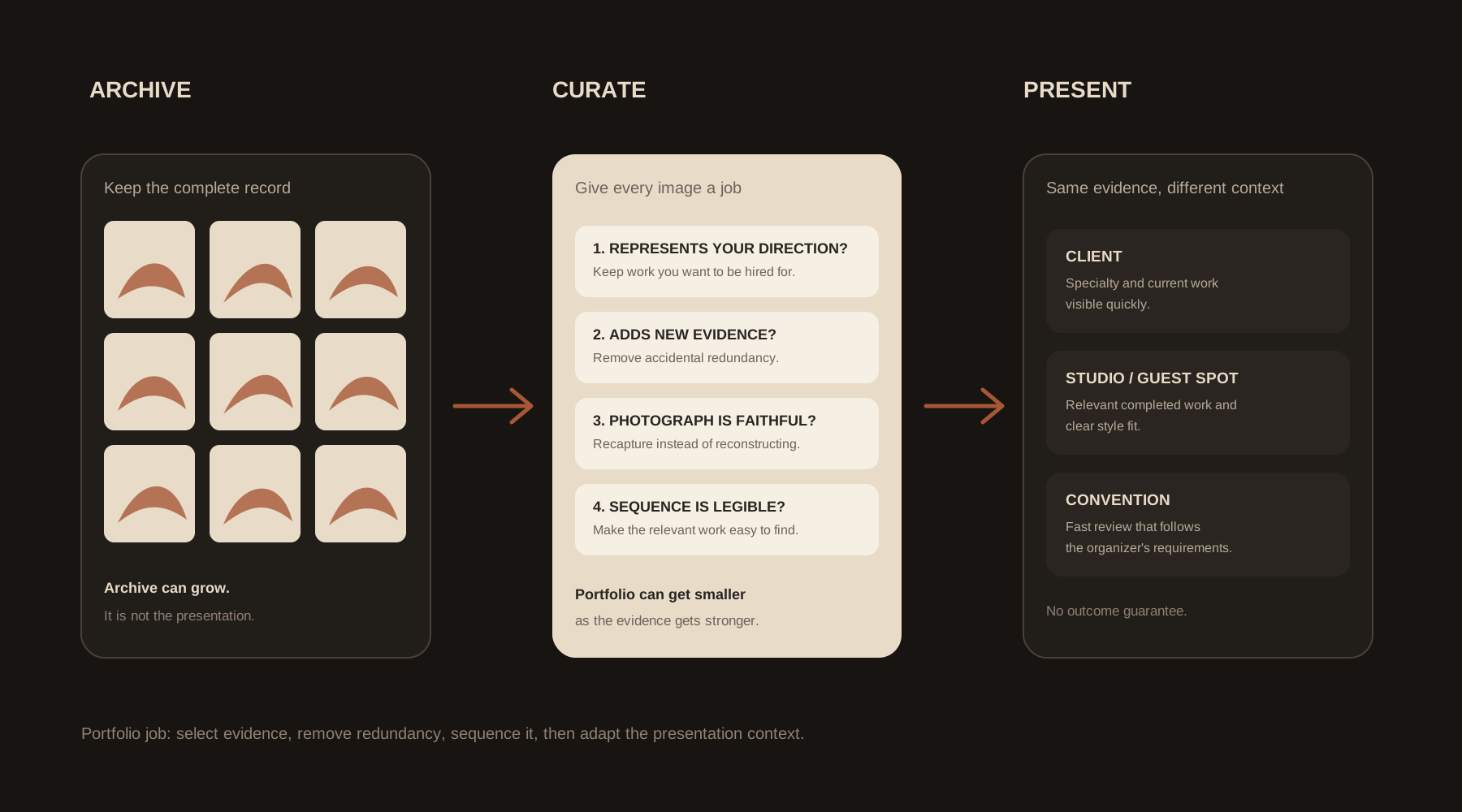
Keep the archive bigger than the portfolio
Your archive can contain years of work, alternate angles, older projects, and images you may need later. Your portfolio should be much more selective.
This distinction matters because portfolios often become weaker by accumulation. Five similar tattoos can make a page feel repetitive even when all five are individually good. One stronger example may communicate the same point faster.
Keep the archive broad. Build each portfolio version from it.
How many tattoos should be in a professional portfolio?
There is no universal number that works for every tattoo artist, format, and application.
Use enough work to make your level and direction clear, then stop adding pieces that repeat the same point. If a convention or guest application gives you a fixed image count, follow that requirement instead of a generic rule.
A useful test is simple:
If I remove this tattoo, does the reviewer lose something important about the kind of work I do?
If not, the piece may be better left out.
Several views of one project can still make sense when the tattoo wraps around a limb, spans a large area, includes a cover-up, or cannot be understood from one angle. Treat those views as one project rather than pretending they are separate portfolio pieces.
Make your specialty obvious early
Do not make a reviewer hunt through the whole portfolio to discover what you actually do.
If you want more black-and-grey realism, Japanese work, fine line, ornamental, traditional, lettering, or another direction, put strong relevant work near the beginning. You do not need to pretend to have a narrower specialty than you really have, but your current direction should be easy to understand.
A host studio or convention organizer should be able to answer quickly:
What kind of work would I bring this artist in for?
That is a better goal than trying to prove that you can tattoo every possible style.
Use a simple selection check before you design the layout
Choose the work before you choose the template.
For each photo, make five decisions:
- Relevant: does it fit the kind of work or opportunity this portfolio is for?
- Representative: does it reflect the level you want associated with your name now?
- Different enough: does it add something new rather than repeat a nearly identical piece?
- Readable: can the tattoo be judged without glare, blur, distorted perspective, or heavy editing getting in the way?
- Current: does it still represent the way you work today?
This also prevents padding. If your completed body of work is still small, use the strongest truthful selection you have. Do not fill a working-artist portfolio with unrelated drawings, unfinished tattoos, weak photographs, or synthetic-skin pieces just to make it longer unless the application specifically asks for those materials.
Fresh and healed tattoo photos serve different purposes
A session-day tattoo and a later healed tattoo can look materially different. Neither belongs in a portfolio simply because of the stage alone.
Use a healed photograph when you know it is healed, the image is trustworthy, and it helps the reviewer understand the finished work. Keep the labeling honest:
- say "healed" only when you know the stage;
- do not guess the healing stage from appearance;
- do not edit a fresh tattoo to imitate a healed result;
- do not turn a portfolio label into a medical or aftercare claim.
If you have both a strong session-day image and a strong healed image of the same important project, they can be shown together when the comparison is useful. They do not need to become two unrelated entries.
Order the portfolio so the work is easy to understand
The first few pieces matter because they establish direction quickly.
A practical sequence is:
- Lead with work that represents what you want the reviewer to understand first.
- Keep related projects near each other when grouping by style or project makes the portfolio easier to scan.
- Break up accidental repetition.
- Group multiple views of the same large or wraparound tattoo together.
- Finish with work that still feels current and representative, not whatever was left in the folder.
A website grid can be scanned in many directions, while a PDF or direct image upload has a more obvious order. In either case, make the strongest relevant work easy to find.
Client portfolios and professional applications need different emphasis
You do not need separate photo archives for every audience. You may need different selections from the same archive.
Portfolio for prospective clients
A client usually wants to understand:
- what your tattoos look like;
- whether your style matches the idea they have;
- how your work sits on the body;
- whether they trust your overall presentation;
- how to contact or book you.
Keep the visual direction clear and make the next action easy.
Portfolio for studios, guest spots, and conventions
A professional reviewer often has less time and a more specific reason for looking. Make it easy to see:
- the work you currently want to be known for;
- consistency across several relevant tattoos;
- whether the style named in your application matches the work shown;
- useful range in scale, placement, or project complexity when it strengthens the application;
- healed work when you have it and it genuinely helps;
- a current body of work rather than a mix of unrelated career leftovers.
Experience, dates, home studio, licensing, references, and equipment may also be requested. Those belong in the application fields, email, or bio unless the studio specifically asks for them inside the portfolio.
Read the guest-spot application before you build the package
Do not send the same PDF everywhere without reading what the studio asks for.
Current guest applications vary significantly. Lost Lakes Tattoo asks applicants about Instagram, preferred work, specialization, experience, previous guest spots, dates, and portfolio images. White Gate Tattoo asks for years of experience, a portfolio link or portfolio pictures, country of residence, tattoo style, preferred guest dates, and a message. Speakeasy Custom Tattoo asks prospective guest artists to email an Instagram or portfolio link with the dates they want to visit.
Before selecting the work, write down:
- whether the studio wants a URL, Instagram, direct upload, PDF, or email attachment;
- whether it specifies an image count or file limit;
- which style or specialty you are applying with;
- whether it asks for experience, current studio, previous guest spots, references, or credentials;
- the proposed dates;
- any practical information the studio requests separately from the portfolio.
The application instructions win over generic portfolio advice.
Tailor a guest-spot portfolio to the host studio
A guest spot is not only a review of your tattoo photos. The host also needs to decide whether your work and proposed visit fit the studio.
A practical approach:
- Look at the studio's resident artists and recent guest roster before choosing your images.
- Put the work most relevant to that studio near the front.
- Show consistency with several strong pieces rather than adding near-duplicates for volume.
- Keep broader work only when it helps the studio understand your range.
- Make sure every link works without requesting access.
- If the studio asks for Instagram, review what appears first on your public profile too.
The White Whale Tattoo Society says its guests are selected for aesthetic fit with the resident program rather than follower count. That is one studio's approach, not a universal industry rule, but it is a useful reminder: the relevant work needs to be clear quickly.
Convention applications: separate portfolio, booth, and permit decisions
A tattoo convention application can combine several different jobs.
Artist review: the organizer may ask for tattoo photos, portfolio or social links, style, bio, professional background, or a fixed set of uploads.
Booth registration: booth availability, size, payment, artist capacity, and other organizer terms can be handled separately.
Permission to tattoo: state, county, or city licensing and temporary-event requirements can still apply after the organizer accepts you.
For example, Villain Arts currently requires two years of shop experience for artist approval and collects website or social links and artist-style information. Its booth registration is a separate process. The Milano Tattoo Convention 2027 booth request currently asks for an Instagram link, an artist photo, and three tattoo photographs.
If the organizer asks for three images, choose three images for that application. Do not try to squeeze your entire archive into each upload. If it asks for Instagram or a website, make sure the first visible work supports the style you declared.
Use the U.S. Tattoo Conventions directory to compare current artist applications, booth information, and permit notes. Organizer acceptance does not replace the legal requirements for tattooing at the event.
Website, Instagram, PDF, or direct uploads?
Use the format the reviewer will actually open.
Website or dedicated portfolio page: best when you want a permanent professional home that you control. Send a link that opens close to the relevant work rather than making the reviewer navigate unrelated pages. For site structure, location, inquiry, and booking decisions, use the Tattoo Artist Website Blueprint.
Instagram: useful when a studio or organizer explicitly asks for it and as a current public view of your work. You control the sequence less than on a dedicated portfolio because reels, pinned posts, captions, and platform UI all compete for attention. Curate what a reviewer sees first.
PDF: useful when a fixed sequence is requested or an application allows an attachment. Keep the file easy to open and let the tattoos take more space than logos, backgrounds, or decorative layout.
Direct image upload: follow the form exactly. If it asks for three JPGs, send three JPGs. A fixed upload count is not an invitation to build a collage of twenty tattoos inside one image.
Shared folder: use it only when the recipient accepts that format, and test the permissions in a logged-out browser before sending it.
A physical book can still make sense in person, but it is not automatically the right answer for an online guest application or convention form.
Keep the presentation clean without changing the tattoo
Consistency helps a portfolio scan well. It should not make the tattoos look better than they actually are.
Reasonable preparation can include:
- consistent margins or grid spacing;
- deliberate crops that still show the tattoo honestly;
- grouping views from the same project;
- short labels when they help orientation;
- consistent export dimensions;
- restrained whole-photo exposure or white-balance correction.
Do not redraw linework, fill weak areas, reshape geometry, recolor the tattoo, hide technical problems with skin smoothing, or generate a cleaner-looking version of the tattoo for the portfolio.
If a selected photo has a capture problem, return to Tattoo Photography or recapture it. Use the Tattoo Portfolio Photo Editor when a usable photo needs crop, straighten, or whole-photo tonal correction without retouching the tattoo itself.
Keep labels short
Most tattoo portfolio images do not need a client record attached to them.
Useful labels can include:
- style or project family;
- body area;
- color or black-and-grey;
- known session-day or healed stage;
- project type;
- year, when recency matters.
Avoid unnecessary client names, contact details, medical information, or CRM-style notes. The portfolio should show the work, not recreate your client database.
Remove these before you submit
A strong final edit usually removes more than it adds.
Cut or replace:
- older work that no longer represents your current level;
- weak photos when a clearer view exists;
- several tattoos that show essentially the same thing;
- work unrelated to the specialty or opportunity when it buries the relevant pieces;
- unfinished work presented as a finished tattoo;
- drawings or flash added only to make a working-artist portfolio look longer;
- edits that materially change linework, fill, color, geometry, or skin appearance;
- broken links, restricted folders, outdated guest dates, and obsolete contact information.
Do not remove useful context just to make every tile look identical. A body-context photo, alternate angle, or healed follow-up can be more useful than another tightly cropped hero image.
A 90-second portfolio check before you submit
Read the application once more, then review the package in the same order the recipient will see it:
- Opportunity: am I following this studio or organizer's actual instructions?
- Direction: is the work I want to be hired for obvious quickly?
- Selection: does every image deserve its place?
- Consistency: do several tattoos support the level I am presenting?
- Photography: are the images clear and honestly edited?
- Stage: are session-day or healed labels accurate when I use them?
- Format: do the count, dimensions, file types, links, and permissions match the application?
- Application details: have I supplied the requested style, experience, studio, dates, bio, references, credentials, or equipment information in the right fields?
- Booth and permits: have I kept organizer payment and legal permission to tattoo as separate checks?
- Delivery: do the real files and links open correctly on a phone and in a logged-out browser?
If the application limits you to a small number of images, each image matters more, not less.
Maintain the portfolio by replacing, not only adding
As your work improves, the portfolio should become more representative of where you are now.
A simple maintenance pass:
- add new work that genuinely improves the selection;
- remove older work that no longer represents your level or direction;
- replace a weaker example when a stronger tattoo now covers the same style or project type;
- check that the opening group still shows the work you want more of;
- keep a larger private archive so you can build tailored versions later;
- test all links before using the portfolio for a client, studio, guest spot, or convention application.
The archive can grow indefinitely. The portfolio does not need to.
Where to go when the job changes
- Glare, angle, lighting, focus, white balance, and honest tattoo photography: use Tattoo Photography.
- Crop, straighten, and whole-photo tonal preparation after a usable capture exists: use the Tattoo Portfolio Photo Editor.
- Convention discovery, artist applications, booth details, and permit notes: use Tattoo Conventions.
- Tattoo apprenticeship portfolio: treat it as a separate early-career application problem.
- Website, local search, inquiry, and booking structure: use the Tattoo Artist Website Blueprint.
- Flash availability and catalog status: use the Flash Inventory Sheet Maker.
- Arranging finished flash into a presentation sheet: use the Flash Sheet Maker.
Completed tattoo photos and finished flash artwork serve different purposes. Do not use a flash catalog as a substitute for a portfolio of completed tattoo work.
FAQ
How many tattoos should a professional tattoo artist put in a portfolio?
There is no universal number. Use enough strong, relevant work to make your level and direction clear, then remove pieces that repeat the same point. If an application specifies an image count, follow that requirement.
What should be in a tattoo artist portfolio?
Include strong current completed tattoos, clear photographs, work that reflects the styles you want to be hired for, and enough related pieces to show consistency. Add alternate views or healed photos only when they help explain the work. Leave out filler, outdated pieces, and images that do not represent your current level.
What should I send when applying for a tattoo guest spot?
Follow the studio's application first. Current guest applications commonly ask for some combination of a portfolio link or image upload, Instagram or website, tattoo style, experience, home studio or location, and proposed dates. Some studios ask for additional practical information, so do not assume every guest application uses the same package.
Does a tattoo convention need a separate portfolio?
Not necessarily. Start from the same larger archive, then select the version the organizer requests. Some forms want a small number of direct tattoo-photo uploads, while others use a website, Instagram, artist account, or portfolio review. Artist approval, booth registration, and legal permission to tattoo can be separate steps.
Should a tattoo portfolio include healed work?
Healed photos can be useful when you know the tattoo is healed, the photo is trustworthy, and it helps the viewer understand the finished work. They are not a universal requirement for every portfolio or application. Label the stage honestly and do not infer it from appearance alone.
Is Instagram enough for a tattoo artist portfolio?
It can be enough when the studio or organizer explicitly accepts Instagram, but it gives you less control over order and presentation than a dedicated website, PDF, or fixed image upload. Use the format the reviewer requests and make the relevant work easy to find.
Is this the same as a tattoo apprenticeship portfolio?
No. This guide assumes a working artist already has completed tattoos to present. Apprenticeship portfolios can be judged on a different body of material, including drawings, flash, and other artwork made before professional tattoo experience.
Sources
Related Guides
Keep reading from here
Tattoo Photography for Artists: A Repeatable Portfolio Workflow
Photograph finished tattoo work with controlled lighting, glare reduction, faithful geometry, consistent color, and honest editing boundaries.
tattoo photography · how to photograph tattoos
Read guide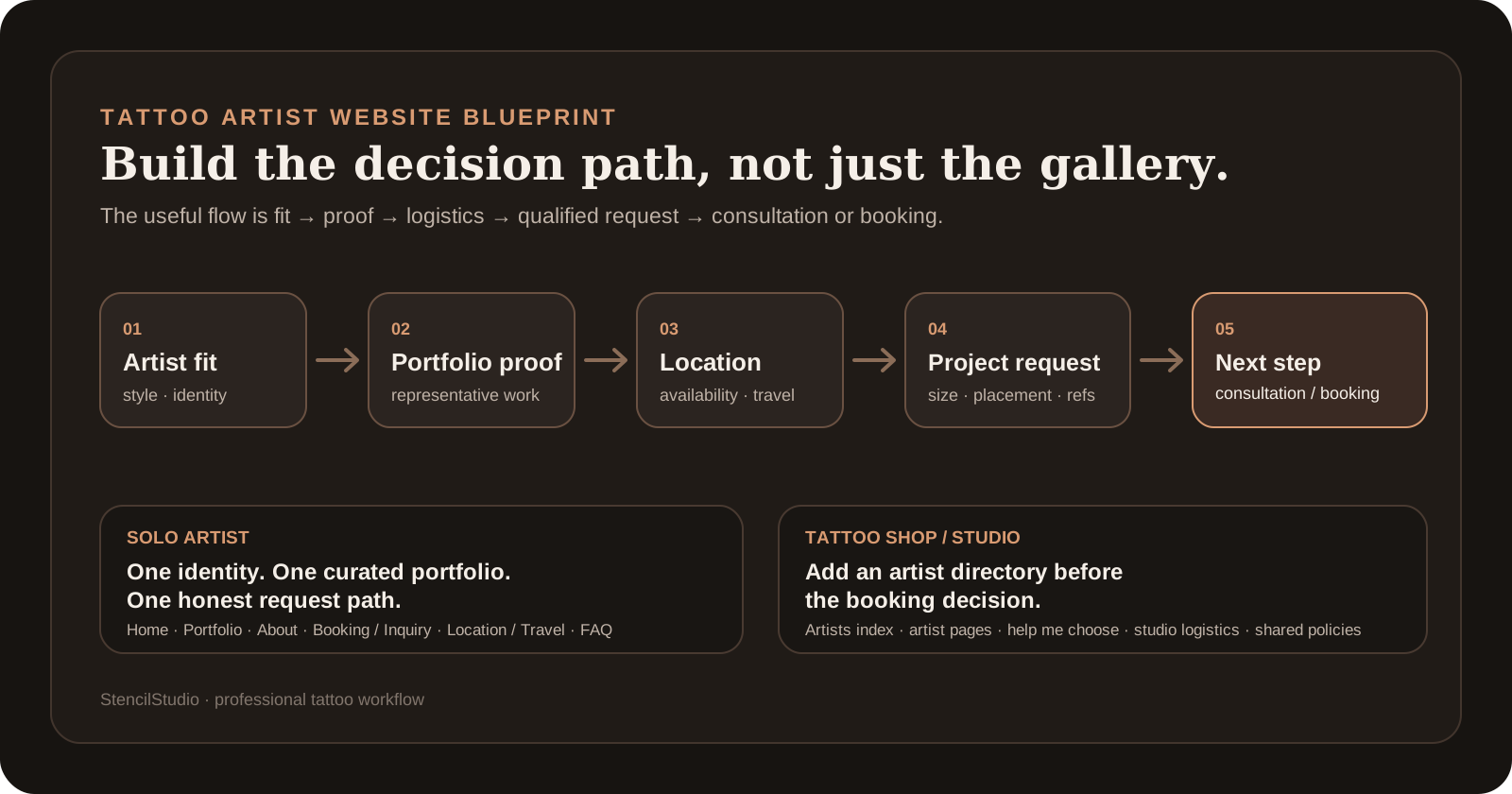
Tattoo Artist Website Blueprint: Pages, Portfolio, Booking and SEO
Plan a tattoo artist or tattoo shop website that makes style, location, portfolio and booking clear. Use this page-by-page blueprint for artists and studios.
tattoo artist website · tattoo shop website
Read guideAuthor
Andrea Mezzadra
Founder and product builder at StencilStudio
Andrea builds StencilStudio and tests how the tools fit into real stencil prep, using real references and outputs to document what works, what changes, and where artist judgment still matters.
In the App
Preparing for a tattoo convention?
Use the convention directory to compare current artist applications, booth details, and permit requirements before you apply.