
Kitsune Tattoo Stencil Ideas
This collection compares four Kitsune stencil directions: a floral fox mask, two masks built around a sword, a Japanese portrait that includes a Kitsune mask, and a full…
- 4
- Practical
- Artist-first
This collection compares four Kitsune stencil directions: a floral fox mask, two masks built around a sword, a Japanese portrait that includes a Kitsune mask, and a full fox-spirit scene. The useful comparison is how the fox identity survives as the design moves from compact mask iconography into denser Japanese illustration and a full-body yokai composition.
The Mask Silhouette Has to Read Before the Ornament
A Kitsune mask is recognizable from a small set of large landmarks: pointed ears, eye placement, muzzle direction, cheek width, and the outer face shape. Forehead marks, flowers, cords, tassels, and decorative lines can reinforce the design, but they should not be doing the work of identifying the fox. If the outer mask and eye-muzzle relationship disappear, more ornament usually makes the stencil harder to read rather than more specific.
Eyes, Ears, and Muzzle Carry the Fox Identity
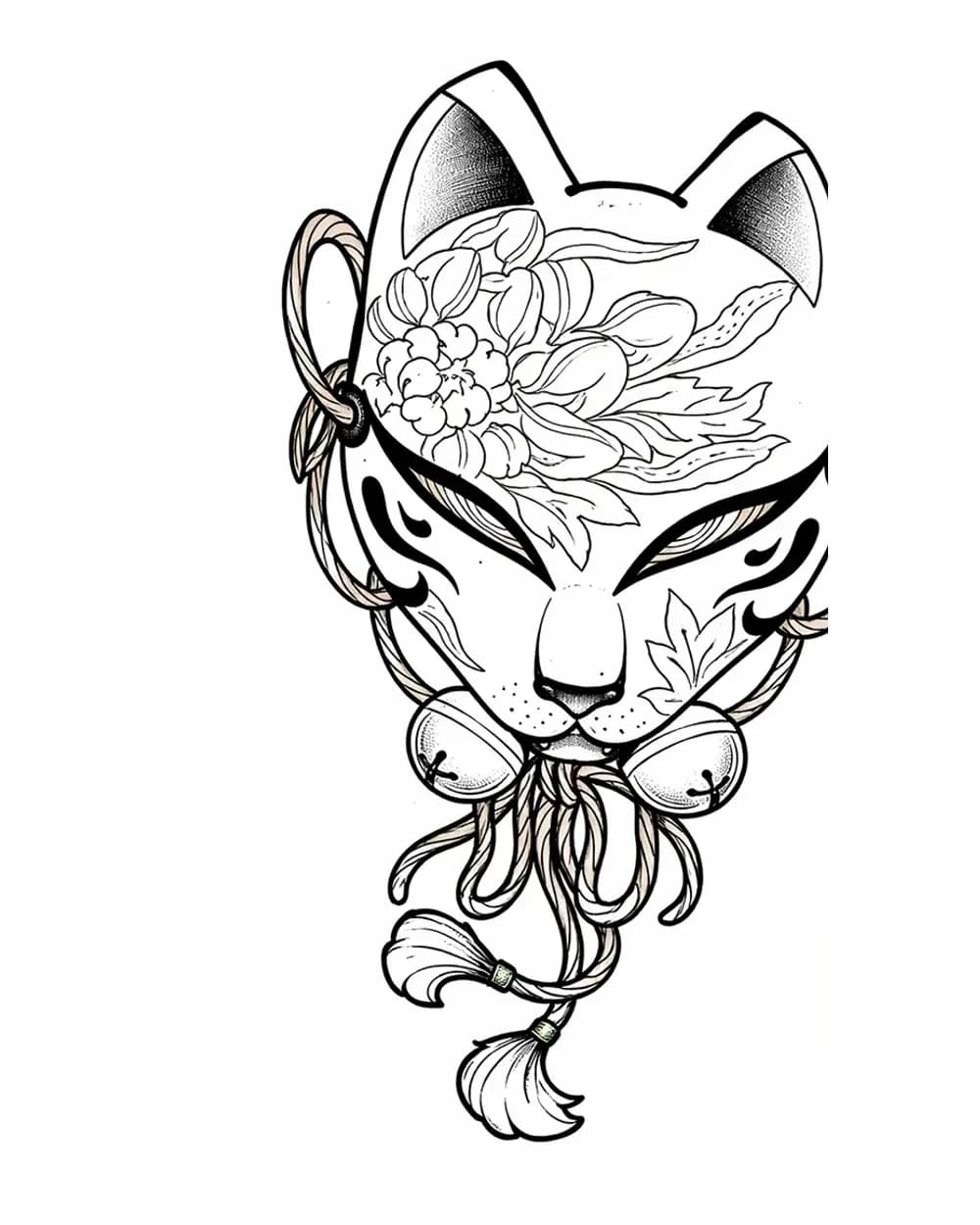
The two mask-led examples use different decoration, but both depend on the same facial map. Keep the ear points separated from surrounding leaves or flowers, preserve the eye openings as clear landmarks, and avoid letting cheek markings close the muzzle into one dark shape. At smaller sizes, simplify secondary markings before weakening those structural cues.
Sword and Floral Support Need a Secondary Role
In the double-mask composition, the sword creates a vertical spine while flowers and leaves soften the outside edge. The masks still need to remain the primary subject. Repeated petals, blade wrapping, leaves, and facial markings can all compete at the same visual frequency, so give the sword a clean silhouette and keep each mask separated before preserving small botanical or handle detail.
A Portrait With a Kitsune Mask Has Two Focal Systems
The Japanese portrait example is not the same problem as a standalone mask. The human face needs its own readable eye, nose, mouth, and jaw structure while the fox mask remains recognizable above it. Flowers, fan ribs, hair strands, and ornament should connect the composition without creating one uniform field of detail. If both faces lose their hierarchy, the stencil becomes busy even when every individual line is accurate.
Full Fox Spirits Need Space for Body and Tail Movement
A full Kitsune or yokai scene relies less on mask symmetry and more on the animal gesture. Head direction, back line, legs, body mass, and the separation of the flowing tails should read before the surrounding landscape. In a reduced stencil, background foliage and ground texture are usually easier to sacrifice than the spaces that separate the body and tails.
Check the Densest Japanese Detail at Final Size
Kitsune designs often combine several dense systems at once: mask markings, flowers, hair, leaves, sword detail, fur, tail strands, and landscape texture. Judge the stencil at its intended physical size rather than only zoomed in on screen. Protect the largest subject landmarks first, then remove the smallest repeated divisions from whichever area closes fastest.
Compare Kitsune Examples Before Preparing Your Own Reference
These are curated Kitsune tattoo stencil examples for visual comparison, not a separate Kitsune generator. Browse the broader animal tattoo stencil collection, anime stencil collection, or fantasy stencil collection to compare related composition structures. If you are starting from your own drawing or reference, use the photo-to-stencil workflow to prepare it, then generate one stencil online when the source is ready.
Examples
Kitsune stencil examples
Compare the linework, spacing and detail choices that make each stencil read differently.
A frontal kitsune mask where the fox ears, eye line, muzzle, cheek markings, and floral crown remain readable before the smaller ornamental details.
Explore more animal tattoo stencil gallery stencils
- The mask has a strong symmetrical face map, so the floral crown and hanging ornament can add density without replacing the fox landmarks that establish the subject.
- Artists comparing a decorative mask-led Kitsune direction where floral framing supports a compact, recognizable fox face.
- Flower centers, forehead pattern, whisker marks, and hanging ornament can become one texture field when reduced; protect ears, eyes, muzzle, and outer mask contour first.
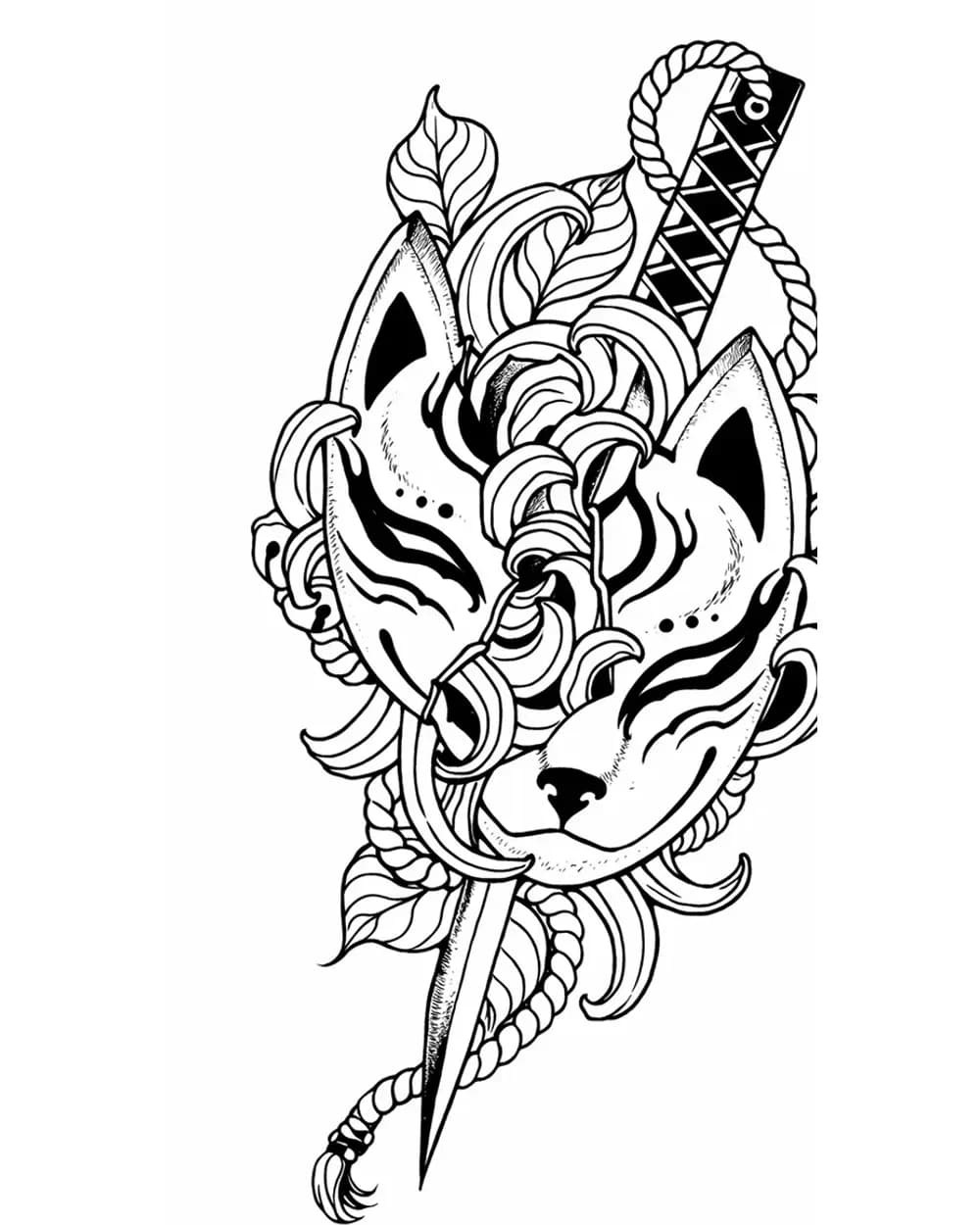
A vertical Kitsune composition combining two fox masks with a sword and botanical support while keeping each mask readable as a separate face.
Explore more animal tattoo stencil gallery stencils
- The sword creates a strong vertical spine and the two masks stay separated enough that ears, eyes, muzzles, and facial markings remain distinguishable instead of merging into one ornamental mass.
- Larger vertical Kitsune designs that pair mask imagery with a hard-edged object and need clear hierarchy between repeated faces and supporting ornament.
- Sword wrapping, petals, leaves, mask markings, and repeated facial detail can accumulate quickly; keep the sword silhouette and each fox face readable before minor botanical texture.
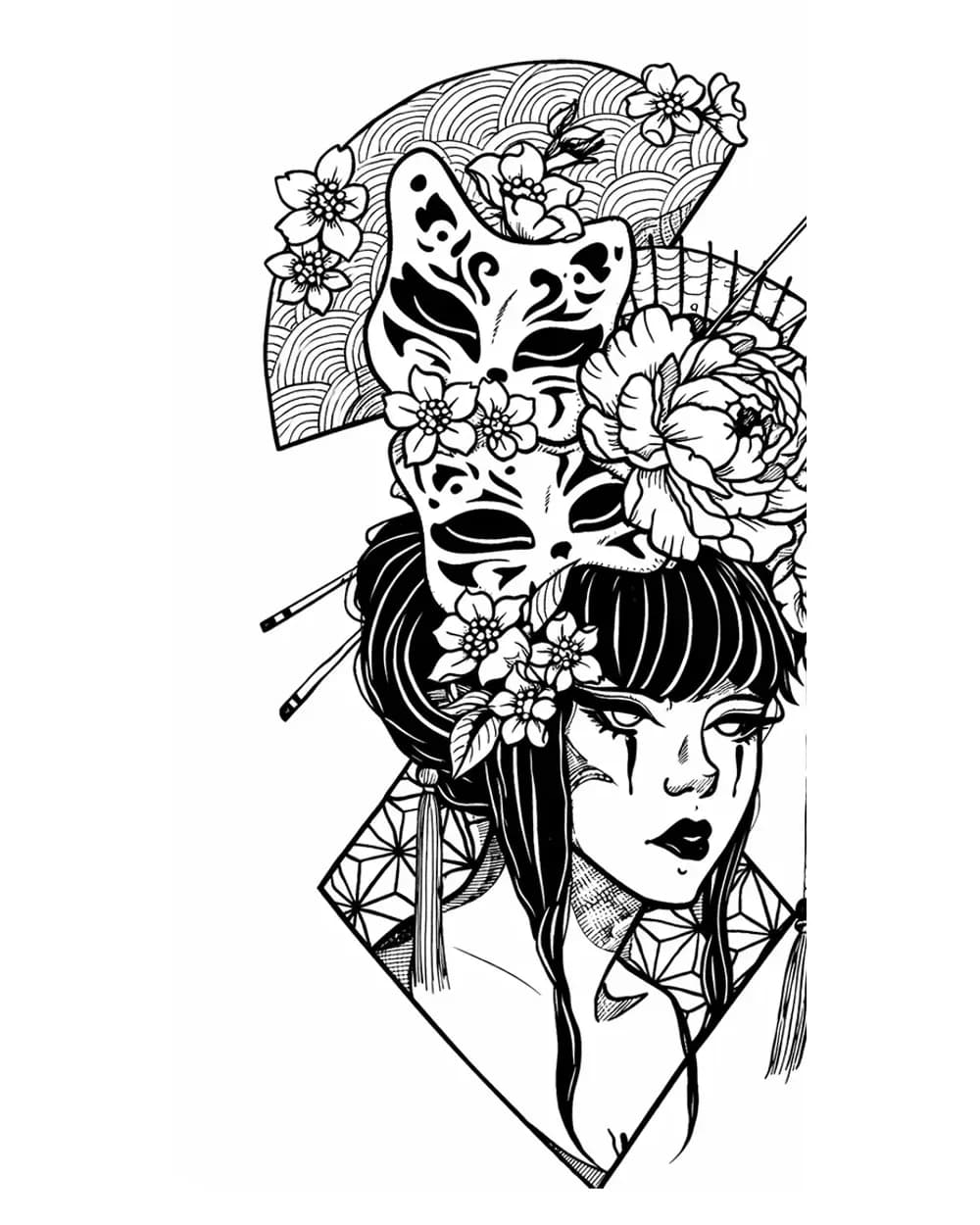
A portrait-led Japanese composition where a kitsune mask sits above the face inside a larger floral, fan, and hair-ornament structure.
Explore more anime tattoo stencil gallery stencils
- The human face and kitsune mask occupy distinct visual zones, allowing the mask silhouette and markings to remain identifiable while the portrait provides a separate focal layer.
- Artists comparing Kitsune imagery used inside a larger Japanese illustrative composition rather than as a standalone fox mask.
- Hair strands, flower centers, fan ribs, mask markings, and portrait features all compete at similar scale; preserve the human face, mask outline, and largest floral groups before small ornamental divisions.
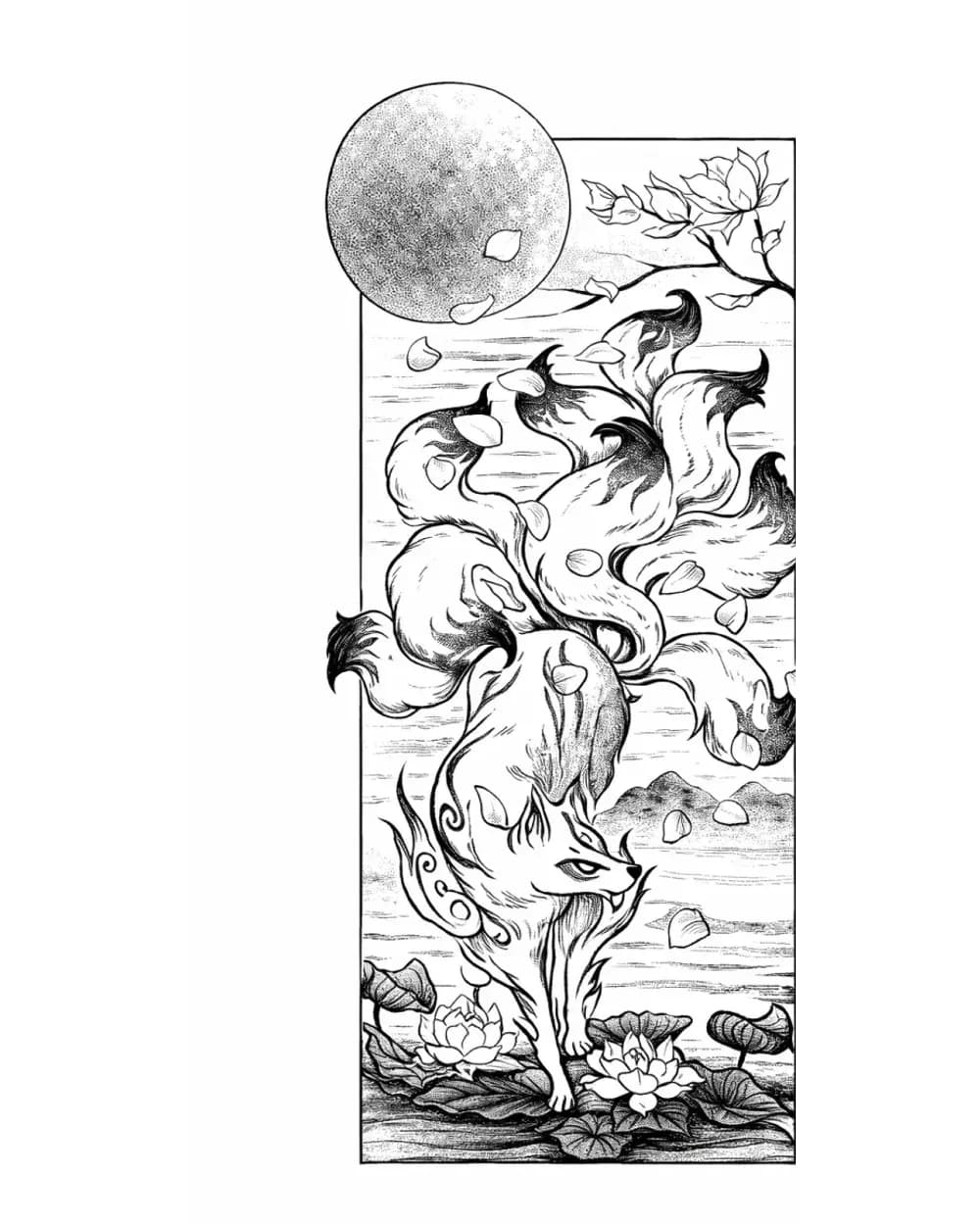
A full-body fox-spirit scene where the animal silhouette, head, legs, and flowing tails carry the first read before the surrounding landscape and botanical detail.
Explore more fantasy tattoo stencil group stencils
- This example expands Kitsune beyond the mask without losing the subject: the fox body and tail movement remain a single readable gesture inside the taller landscape frame.
- Larger narrative Kitsune compositions where a full fox or yokai figure needs enough space for tail movement and environmental support.
- Tail strands, fur marks, foliage, ground texture, and small landscape lines can close together at reduced size; retain the full-body silhouette and major tail separations before background texture.
Related galleries
Keep browsing nearby stencil ideas.
Browse more animal tattoo stencil gallery stencil examples and compare different compositions.
Browse more anime tattoo stencil gallery stencil examples and compare different compositions.
Browse more fantasy tattoo stencil group stencil examples and compare different compositions.
Next step
Turn your own reference into a clean stencil draft.
Use what reads clearly here as direction, then start from your own reference.