

Cat Tattoo Stencil Ideas
This collection compares cat references built around different recognition cues: a profile, a peeking portrait, repeated cat silhouettes, floral framing, an ornamental m…
- 7
- Practical
- Artist-first
This collection compares cat references built around different recognition cues: a profile, a peeking portrait, repeated cat silhouettes, floral framing, an ornamental mask, and a supporting moon composition. The examples show how ear angle, eye placement, muzzle shape, body posture, and the outer contour can keep the subject recognizably feline after the reference is simplified into stencil-ready linework.
What Keeps a Cat Stencil Recognizable
The strongest cat references establish the head and body silhouette before adding texture. Ear angle, eye placement, muzzle width, nose position, and the transition into the neck usually carry more recognition than individual fur strokes. A clean stencil should preserve those landmarks first.
Portraits, Floral Treatments, and Repeated Cats
A single profile or peeking portrait can concentrate detail around the face. Floral compositions work differently because the cat contour must remain readable while leaves, stems, or roses occupy the surrounding or interior space. Repeated-cat layouts need enough separation for every silhouette to remain distinct.
Scale and Line-Density Watchouts
Whiskers, eyelid lines, flower centers, fur hatching, and ornamental curves are usually the first details to crowd together when a design is reduced. Larger facial landmarks and outer contours should remain more decisive than supporting texture.
Choosing an Example for the Placement
Compact placements usually benefit from one clear profile, head, or silhouette. Larger placements can support floral framing, repeated figures, or ornamental detail. Use these examples to compare structure, spacing, and line hierarchy before preparing the final stencil.
Continue Through the Broader Workflow
These are curated cat stencil examples for visual comparison, not a separate cat-photo generator or a matched likeness study. Browse the wider animal tattoo stencil collection for more species and composition types. If you are starting from a photo of a specific cat and need to protect facial identity, coat landmarks, whisker spacing, and final-size readability, use the pet portrait tattoo stencil workflow. When the reference is ready, you can generate one stencil online.
Examples
Cat stencil examples
Compare the linework, spacing and detail choices that make each stencil read differently.
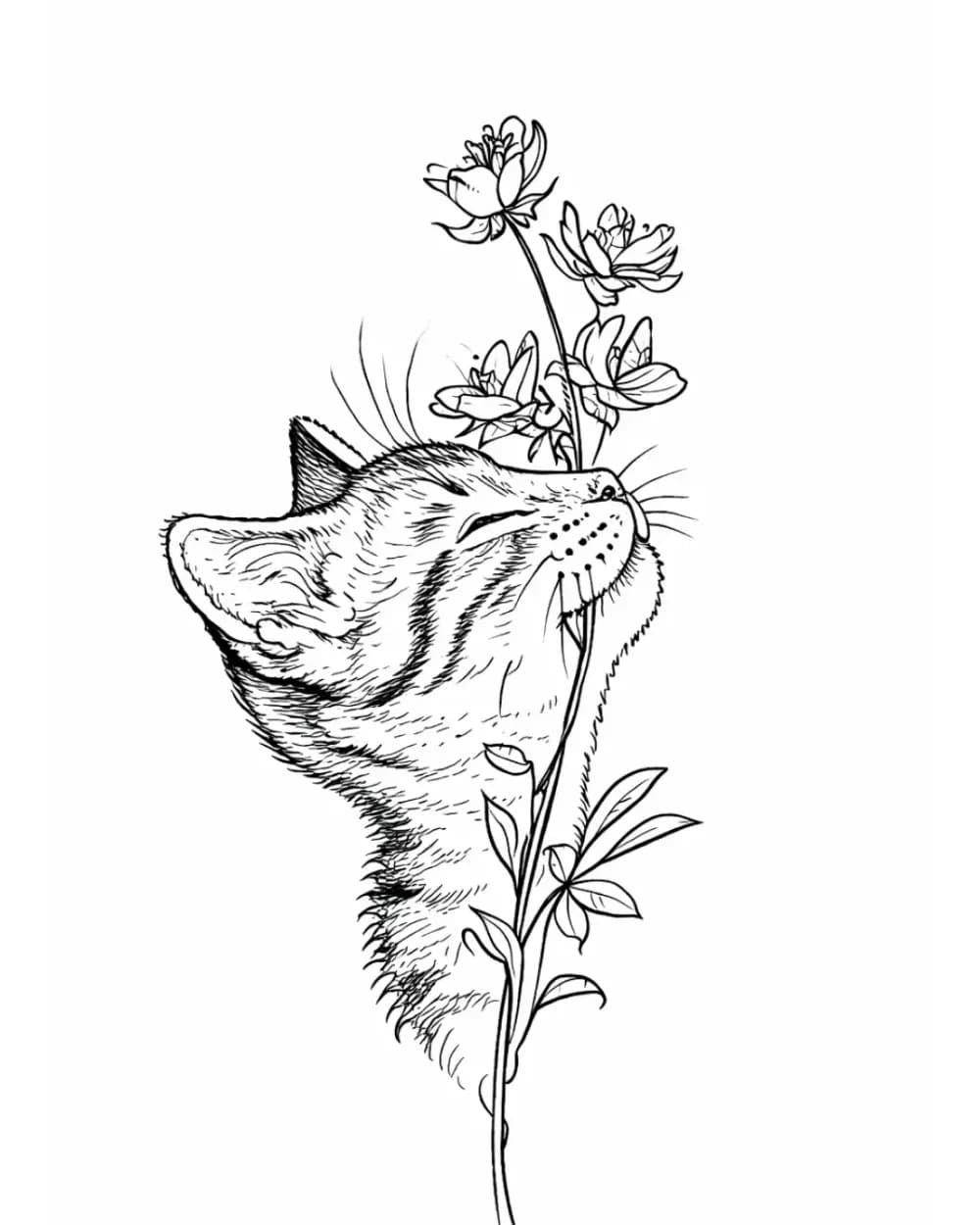
A profile-led cat stencil where ear angle, forehead, nose, muzzle, and neck contour carry the recognition before the flower detail.
Explore more animal tattoo stencil gallery stencils
- The profile stays readable because the outer head contour and facial direction are established before the botanical support enters the composition.
- Artists comparing compact side-profile cat references where a small decorative element should remain secondary to the head shape.
- Keep the flower stem and fine facial marks lighter than the nose, muzzle, ear, and neck transitions so the profile does not lose hierarchy at smaller sizes.
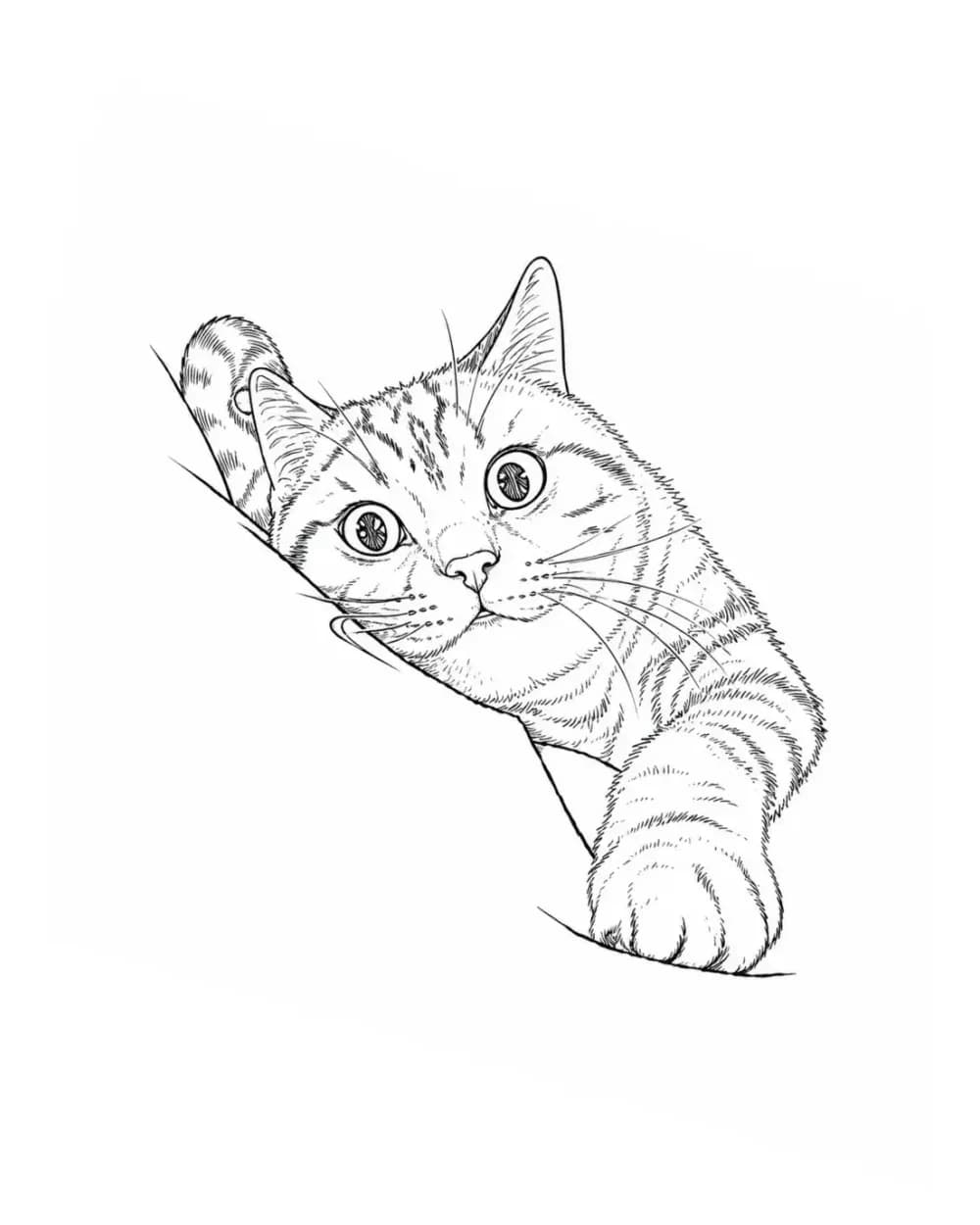
A cropped cat portrait that depends on eye placement, ear shape, forehead width, and the edge interaction more than on dense fur texture.
Explore more animal tattoo stencil gallery stencils
- The peeking pose reads quickly because the eyes and ears form a clear recognition triangle while the diagonal edge gives the crop an intentional boundary.
- Compact or playful cat compositions where only part of the head is visible and the expression must survive with limited information.
- Tabby markings and small fur lines can crowd the eye area; the gaze and head silhouette should stay clearer than the coat pattern.
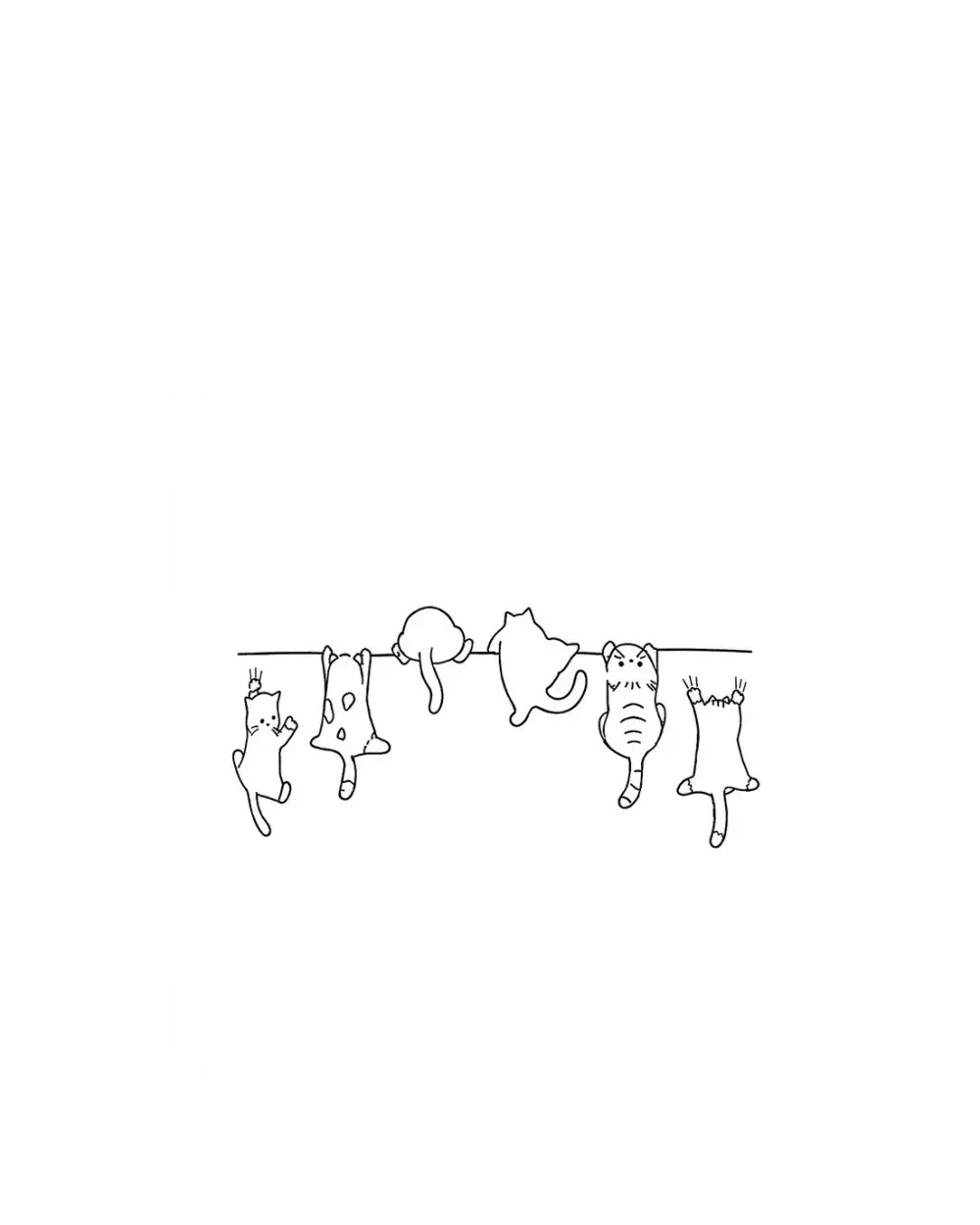
A repeated-cat composition that tests whether six separate silhouettes can stay distinct without relying on interior detail.
Explore more animal tattoo stencil gallery stencils
- Each figure remains legible because posture, spacing, tail direction, and body contour create separation before any small facial marks are needed.
- Artists reviewing multi-cat or repeated-character layouts where rhythm and silhouette separation matter more than portrait detail.
- Feet, tails, and adjacent body contours can merge quickly if the design is reduced; preserve negative space between figures before adding texture.
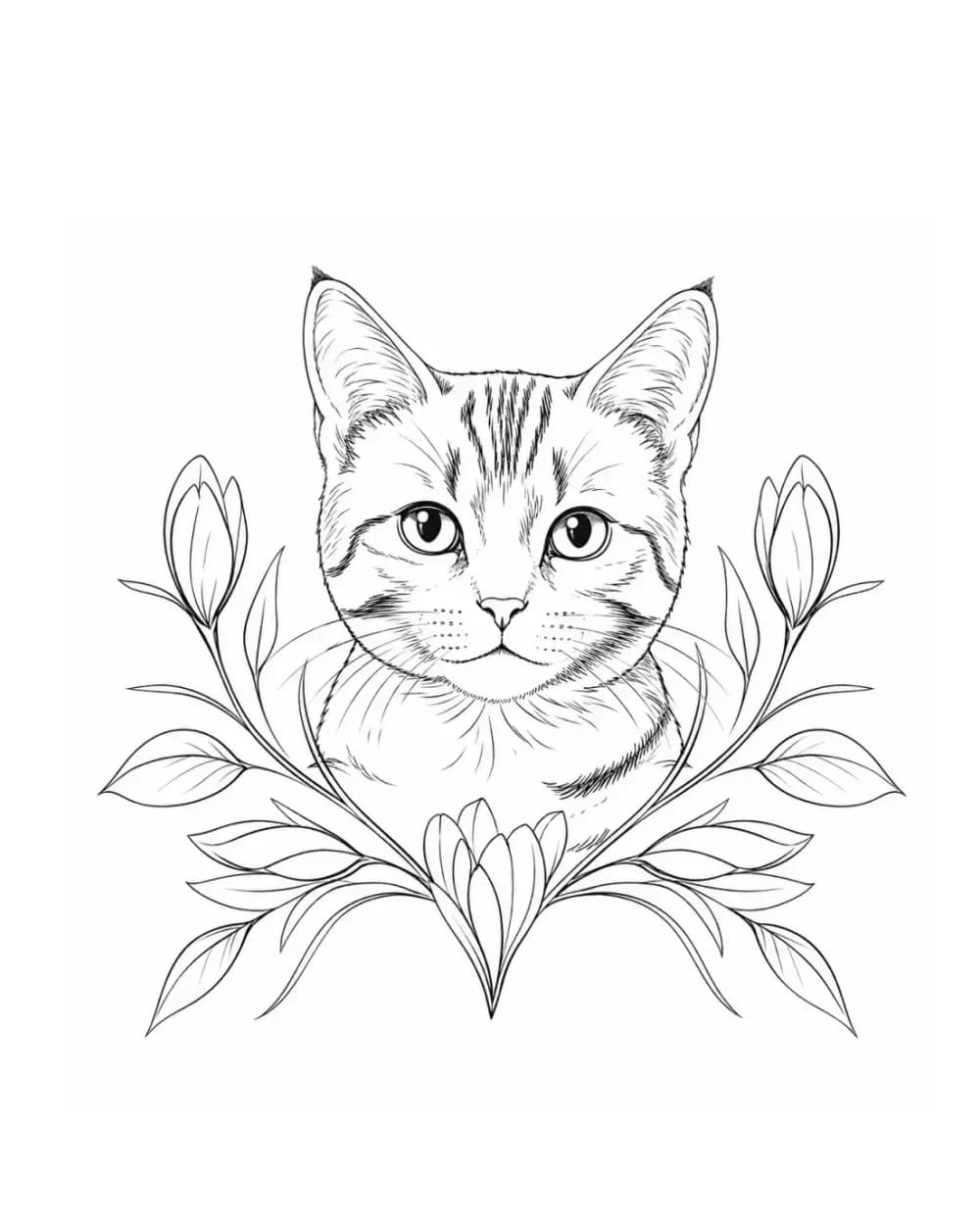
A face-first cat portrait where the floral wreath frames the head instead of competing with the eyes, muzzle, and ear structure.
Explore more animal tattoo stencil gallery stencils
- The cat remains the first read because the facial landmarks occupy the visual center while the floral shapes create an outer support ring.
- Medium portrait compositions that need decorative framing without sacrificing a clear pet or feline face structure.
- Petal centers, whiskers, and coat marks can create equal-weight clutter around the face; keep the eye line, nose, muzzle, and ear edges dominant.
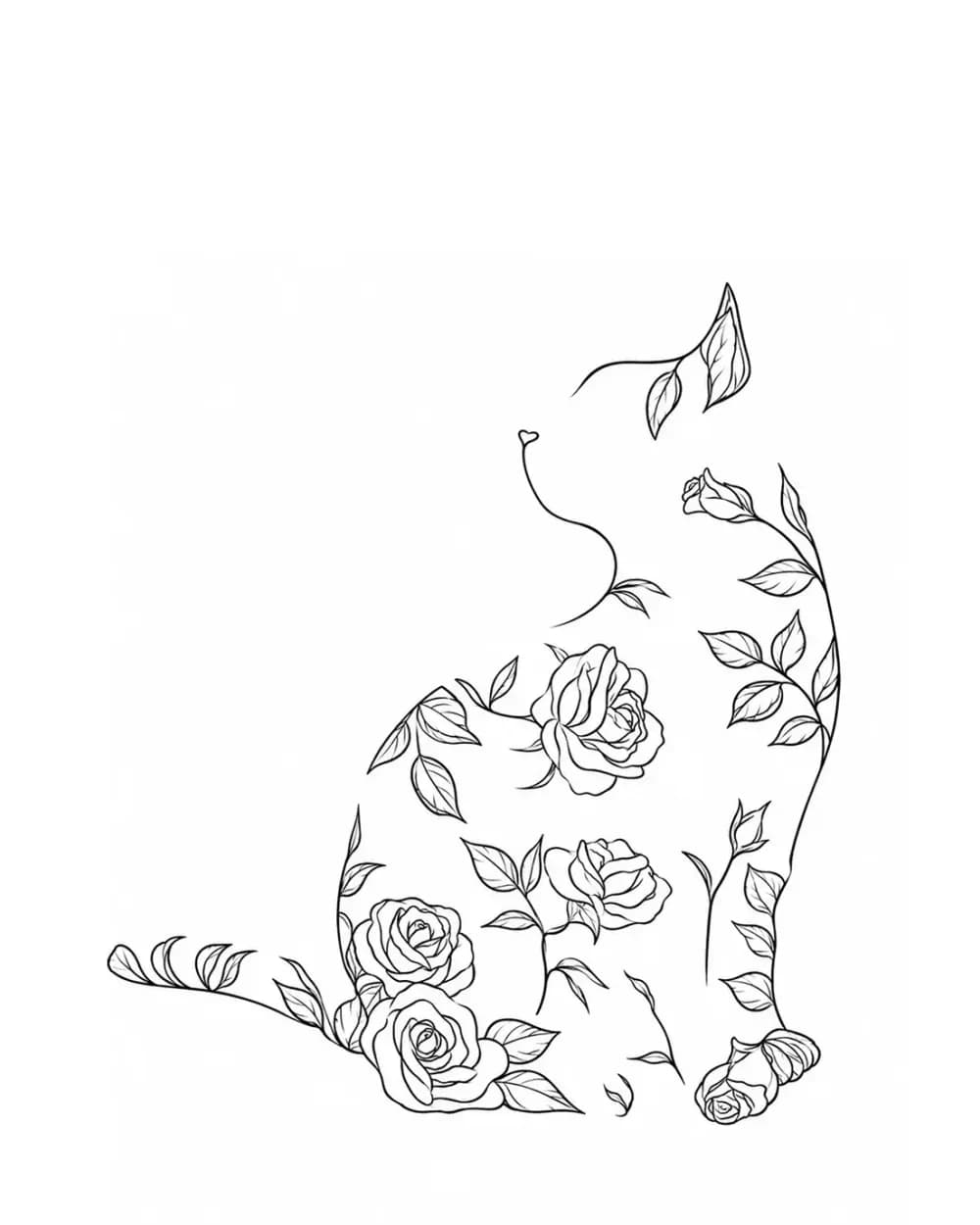
A silhouette-led cat stencil where the outer feline shape must remain obvious even while rose forms occupy the interior.
Explore more animal tattoo stencil gallery stencils
- The concept works when the cat contour is recognizable before the viewer starts reading individual rose petals inside it.
- Graphic cat concepts that combine a simple animal silhouette with denser internal floral structure.
- Do not let interior petals break or visually weaken the ear, back, chest, or tail contour; the exterior silhouette should remain the strongest boundary.
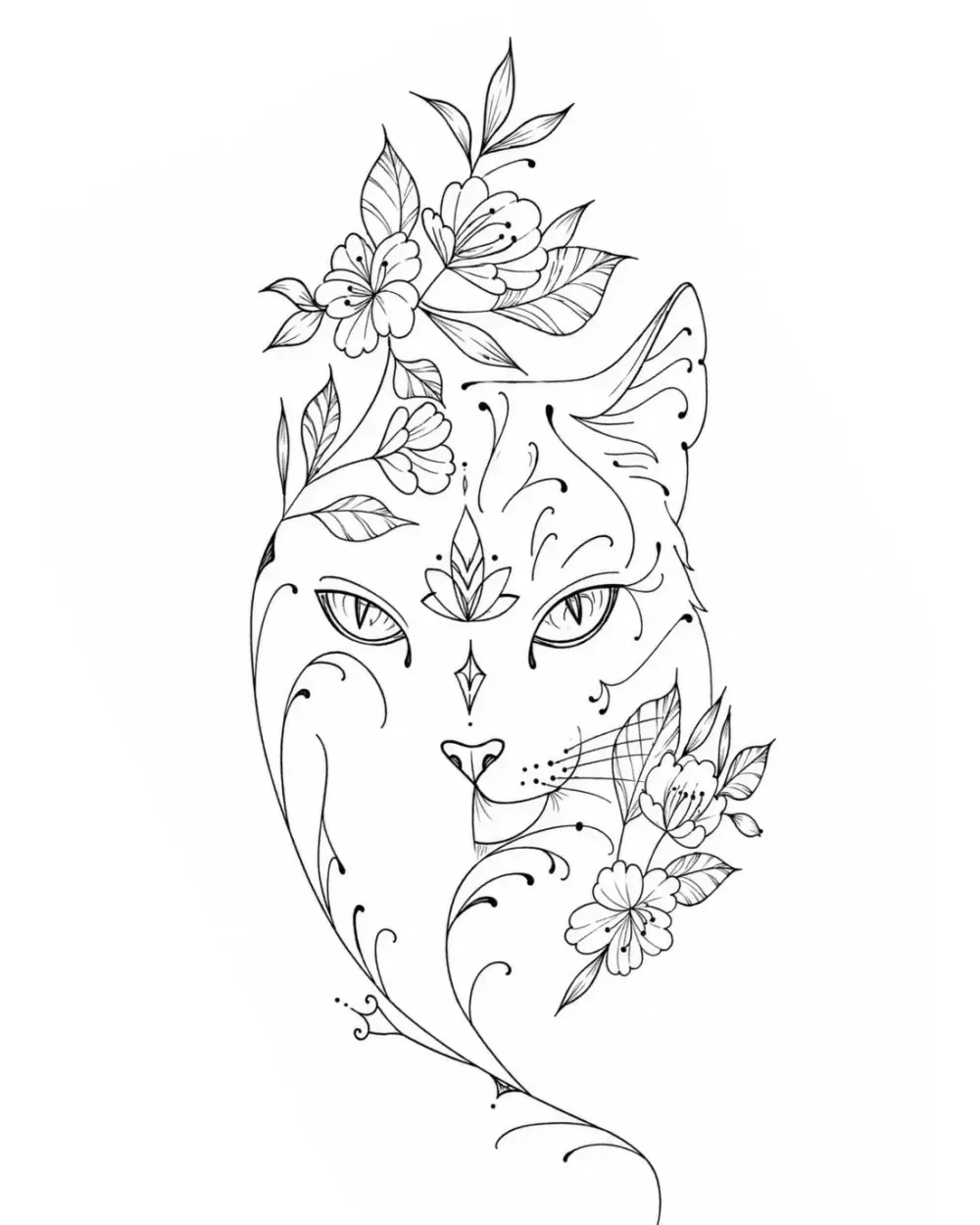
A symmetrical cat-mask stencil that relies on ear geometry, paired eyes, muzzle placement, and controlled ornament around the central face.
Explore more animal tattoo stencil gallery stencils
- The frontal read stays feline because the paired eyes, nose, muzzle, and ears create a stable face map underneath the decorative linework.
- Symmetrical or ornamental cat designs where the face needs to remain recognizable beneath added pattern and framing.
- Dense ornament can flatten the face if every curve has equal weight; preserve negative space around the eyes and muzzle and keep secondary pattern subordinate.
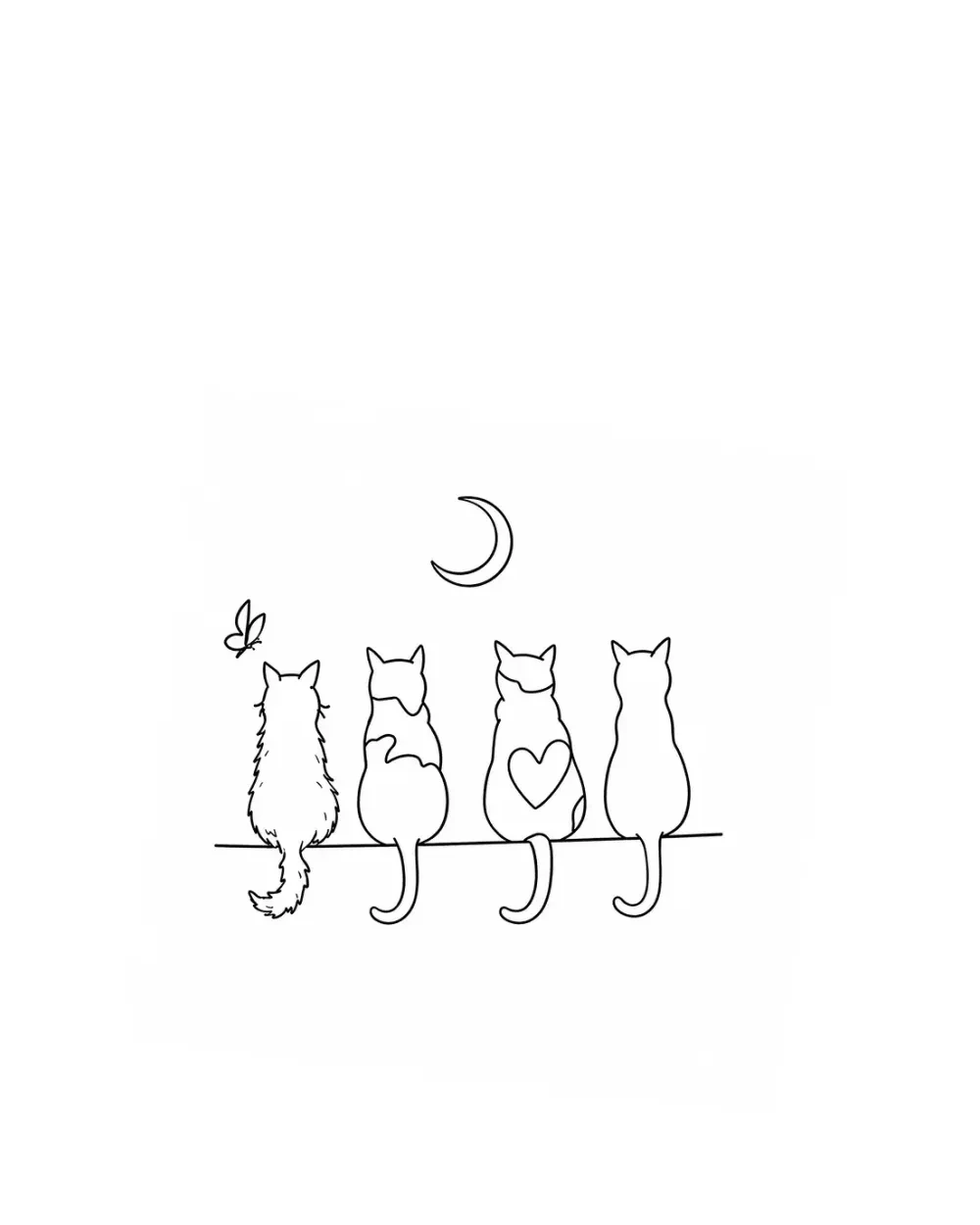
A supporting multi-cat composition where the moon establishes a shared frame while the individual cat silhouettes need enough spacing to stay separate.
Explore more animal tattoo stencil gallery stencils
- The crescent creates one clear compositional anchor while the cats still read as separate figures through body outline and spacing.
- Reference comparison for narrative or symbolic cat layouts with several figures and one larger framing element.
- Small ears, tails, paws, and moon-adjacent contours can collapse together at reduced scale; preserve figure separation before retaining minor internal marks.
Related galleries
Keep browsing nearby stencil ideas.
Next step
Turn your own reference into a clean stencil draft.
Use what reads clearly here as direction, then start from your own reference.