

Studio Workflow
Tattoo Shop Permits and Facility Regulations
Learn how tattoo shop permits differ from artist licenses, what facility requirements commonly need verification, and how fixed, home, mobile, and temporary locations are regulated across the U.S.
tattoo shop regulations · tattoo shop permits · tattoo facility requirements · tattoo establishment license · tattoo studio requirements
- September 15, 2026
- 10 min
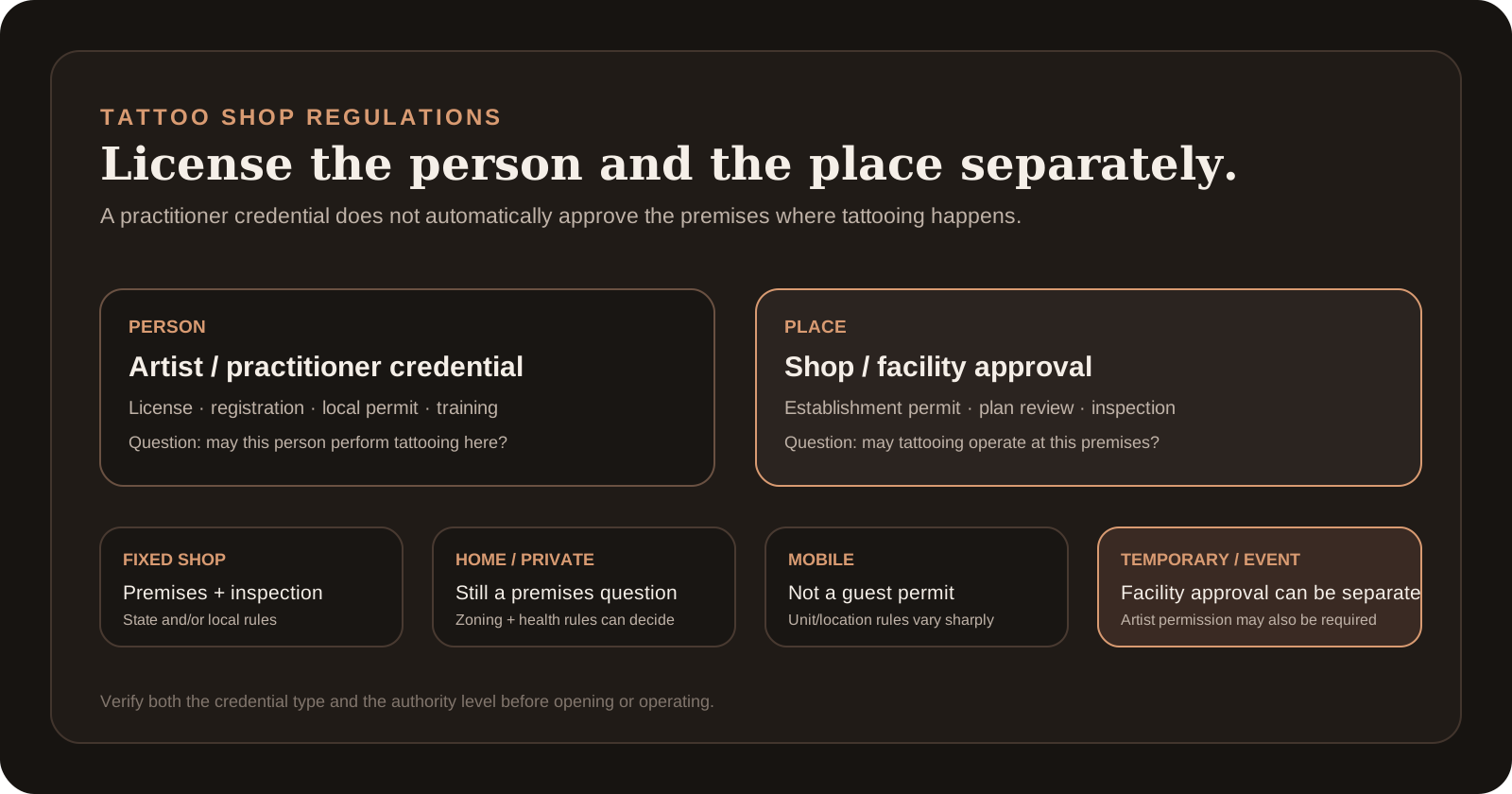
Often, yes: the tattoo artist's credential and the shop or facility's permission are separate regulatory objects. Depending on the jurisdiction, an artist may need a personal license or registration, the premises may need an establishment or facility permit, and a county or city may add plan-review, inspection, zoning, or local health requirements.
Do not assume that a valid artist license makes a location legal to operate. Do not assume that a licensed shop automatically authorizes every artist who works there. Check both the person and the place.
This guide covers tattoo- and body-art-specific facility regulation. It does not cover generic LLC formation, banking, payroll, leases, or tax registration.
Tattoo artist license vs tattoo shop permit
These permissions answer different questions.
| Regulatory object | What it answers | Typical authority | | --- | --- | --- | | Artist / practitioner credential | May this person legally perform tattooing here? | State board or health department, county, city, or local health authority | | Shop / facility / establishment permit | May tattooing operate at this premises? | State health department, county/city environmental health, or both | | Temporary facility / event approval | May tattooing operate at this temporary site or event? | State or local health authority, sometimes with organizer filings | | Business / zoning / use approval | May this address be used for this business activity? | City, county, zoning, planning, or business-licensing authority |
A jurisdiction can require one layer without using the same model for another.
Michigan is a clear example. The Michigan Department of Health and Human Services says it licenses the body art facility, not individual artists at state level. Local jurisdictions can still require practitioner licenses or impose stricter facility rules. Michigan Body Art Licensing
Florida uses a different model: it separately licenses tattoo artists and tattoo establishments. Florida Tattoo License FAQ
For personal licensing, use the U.S. Tattoo Artist Licensing directory and select the jurisdiction where the artist will work. Facility approval is a separate premises check.
Who regulates tattoo studios?
There is no single U.S. authority model.
A tattoo studio may sit under:
- a statewide body-art or tattoo-establishment program;
- a state framework administered or inspected locally;
- county or city environmental-health rules;
- local rules that are stricter than the state baseline;
- separate zoning or permitted-use approval for the address.
Michigan requires a state Body Art Facility License, but the operator must contact the local health department for plan review before applying. Local health departments perform inspections, and some jurisdictions maintain additional local licenses. Michigan facility licensing
Los Angeles County separately handles body-art practitioner registration and facility permitting. Its program also notes that some cities in the county operate their own environmental-health programs. Los Angeles County Body Art Program
The practical rule is simple: identify both what is being regulated and which level of government regulates it before relying on a checklist.
Common facility requirements to verify
The items below are categories that recur in official tattoo/body-art rules, not a national checklist. Your state, county, or city may require some, all, different, or more detailed controls.
Establishment or facility permit
Some jurisdictions issue a specific tattoo establishment, body-art facility, or studio permit in addition to any practitioner credential.
Florida requires a Tattoo Establishment License and a satisfactory inspection. Its current establishment guidance also directs operators to the county health department and notes that local business or zoning requirements may apply. Florida Tattoo Establishment Licensure Requirements
Zoning and permitted use
Health approval and land-use approval are not the same thing. Before signing a lease or building out a studio, confirm whether the address can legally be used for tattoo/body-art services and whether local approvals are required.
Florida's establishment guidance explicitly tells applicants to check city/county operating and zoning requirements before relying on the health license alone.
Plan review and floor plan
A regulator may need to approve the proposed layout before opening or remodeling.
Iowa requires an establishment floor plan with a new application. Its process reviews the plan for compliance, then sends a pre-opening inspection request to the local inspection agency. Iowa Tattoo Establishment Permits
Michigan similarly tells new facilities to complete local plan review before applying for the state facility license.
Pre-opening and recurring inspection
A permit application does not necessarily mean the shop may begin operating immediately. Some systems require an inspection before a facility license is issued.
Iowa's published sequence is: application, floor-plan review, local pre-opening inspection, then permit processing. Florida also requires a satisfactory establishment inspection.
Handwashing, water, wastewater, and sinks
Official facility rules commonly address handwashing access and water/wastewater, but the exact construction or equipment requirement is jurisdiction-specific.
Florida's tattoo-establishment rules include water and sewage provisions and specific handwashing requirements. Temporary events can have different sink rules from fixed establishments. Do not copy a temporary-event sink setup into a permanent shop without checking the fixed-location rule.
Cleanable surfaces and procedure-area layout
Rules may specify floors, walls, furniture, procedure surfaces, lighting, barriers, or separation from incompatible uses.
Iowa's permanent and temporary establishment guidance requires smooth, easily cleanable flooring and furniture in tattoo areas. Florida requires easily cleanable surfaces in relevant areas and restricts direct openings into living or sleeping quarters.
Sterilization and reusable instruments
If a jurisdiction allows reusable instruments, facility rules may govern cleaning, packaging, sterilization, autoclave operation, spore testing, storage, and records. If your workflow is entirely single-use, do not assume that eliminates every facility requirement.
Always follow the rule that applies to your actual equipment and jurisdiction rather than copying another shop's setup.
Sharps and regulated waste
Sharps containers, biomedical or regulated waste, and disposal arrangements can be part of the facility approval. Florida, for example, includes a Biomedical Waste Permit or exemption in its tattoo-establishment licensing workflow.
Records, posted permits, and infection-control procedures
Facility rules can require permits to be displayed, client or procedure records to be retained, written infection-control procedures to exist, or employee/practitioner documentation to be available during inspection.
Training requirements belong to a different layer. For Bloodborne Pathogens course and credential questions, use the BBP certification guide for tattoo artists rather than treating facility approval and training as one credential.
Fixed shop: verify the premises before build-out
For a permanent tattoo shop or private studio, a safer order of operations is:
- Find the tattoo/body-art regulator for the exact jurisdiction. Start with the state licensing directory, then follow the official facility or local-health source.
- Check zoning or permitted use for the exact address. Health-department approval does not replace land-use permission.
- Ask whether plan review is required before construction or remodeling. Do this before sinks, walls, stations, flooring, or sterilization areas are fixed in place.
- Submit the establishment/facility application and required plans. Use the regulator's current forms rather than a generic opening-a-shop checklist.
- Complete the required inspection before operating. If the regulator requires pre-opening approval, an application alone is not permission to open.
- Verify each artist's credential separately. A permitted facility does not automatically solve practitioner licensing, registration, training, or local requirements.
- Track renewals and material changes. Location changes, ownership changes, remodeling, or floor-plan changes can trigger a new filing or inspection.
Iowa demonstrates why this sequence matters: the state reviews the plan, the local inspection agency completes the pre-opening inspection, and only then does the department process the establishment permit.
Home or private tattoo studios
A home studio is not automatically exempt because the artist works by appointment or does not advertise a storefront.
The relevant questions can include:
- does the jurisdiction allow tattooing at a residential address at all?
- does zoning permit the use?
- must the tattoo area be physically separated from living or food-preparation space?
- can the space meet the same sink, surface, waste, storage, restroom, and inspection rules as another establishment?
- does the local health authority issue a facility permit for that type of premises?
Florida provides a concrete example of why the premises matters. Its Tattoo License FAQ says an artist license does not authorize tattooing at a customer's home: conventional and cosmetic tattooing must occur in a licensed tattoo establishment. Florida's facility rule also requires separation from living or sleeping quarters. Florida Tattoo License FAQ
Do not generalize Florida's rule to another state. Treat home tattooing laws as a facility-location question and verify the exact state and local rule.
Mobile tattooing is not the same as guest tattooing
These are different problems:
- Guest / visiting artist permission asks whether the person may tattoo while travelling.
- Mobile facility permission asks whether the vehicle, unit, or changing location can legally function as the place where tattooing happens.
A guest credential does not turn any vehicle, hotel room, private home, or pop-up space into an approved facility.
Florida says it does not issue a general mobile tattoo license. Tattooing must occur at a licensed fixed or temporary establishment. A mobile unit may qualify for a temporary establishment license only in the limited event context described by the state and only if it meets the applicable establishment requirements.
Iowa says no new mobile establishment applications are accepted; existing mobile units have their own renewal and event process. Iowa Tattoo Establishment Permits
For the travelling artist's personal route, use the Guest Artist Permit Checker. Do not use a facility rule as evidence that the artist has permission to work.
Temporary facilities and tattoo conventions
At a convention or temporary event, there may be at least two separate regulatory layers:
- permission for the individual artist to perform tattooing; and
- permission for the temporary establishment, booth area, or event site to operate.
Florida requires the promoter to apply for a Temporary Tattoo Establishment License and biomedical-waste permit at least 30 days before the event, while artists at the event must separately hold the appropriate Florida artist or guest-artist credential. Florida Temporary Tattoo Events
Iowa requires temporary-establishment applications at least 30 days before the event, a pre-opening inspection, a floor plan, and a list of participating artist permit numbers. The temporary establishment can operate for a maximum of 14 days.
Los Angeles County's temporary body-art guidance likewise treats practitioner registration and temporary-facility conditions separately.
If you are evaluating a specific event, use the U.S. Tattoo Conventions directory for event-specific organizer and permit handoffs, then verify the regulator's current forms.
How to verify the exact tattoo shop rule where you work
Use this sequence rather than searching only for a generic tattoo shop license:
1. Start with the jurisdiction guide
Open the U.S. Tattoo Artist License Requirements directory and select the state. The state guide tells you whether the model is primarily state-run, local-first, or mixed and links the current official authorities.
2. Separate the artist from the facility
Write down the exact permission you are checking:
- artist/practitioner license or registration;
- establishment/facility permit;
- temporary establishment/event permit;
- zoning/use or local business approval.
Do not let one approval stand in for another.
3. Follow the facility source, not only the practitioner application
Look for regulator terms such as tattoo establishment, body art facility, studio permit, environmental health, plan review, inspection, or temporary establishment.
4. Check county and city authority when the state model is local or mixed
A state health page may set the baseline while a county performs inspections, charges local fees, or requires additional permits. A city can also control zoning or use of the exact premises.
5. Confirm before spending money on the premises
If a floor plan, sink, construction detail, sterilization area, or separation requirement could affect the build-out, confirm it with the authority that will inspect the shop before the work is completed.
Four official examples that show why one U.S. checklist fails
| Jurisdiction | Facility model | What it demonstrates | | --- | --- | --- | | Florida | State tattoo-establishment license administered through county health departments | Artist and establishment licenses are separate; fixed and temporary premises have operational requirements | | Michigan | State Body Art Facility License + local plan review/inspection | A state can license the facility while not licensing individual artists statewide | | Iowa | State establishment permit + local pre-opening inspection | Floor-plan approval, inspection, permanent/temporary facility distinctions, and mobile-unit limits can be explicit | | Los Angeles County | Local body-art facility permit + separate practitioner registration | County/city environmental-health authority can be decisive even inside a state framework |
Use these examples to understand the regulatory objects, not as substitutes for the rules where your shop is located.
Before you open or operate a tattoo shop
Use this as a verification checklist, not a claim of compliance:
- [ ] I know whether each tattoo artist needs a state or local credential.
- [ ] I know whether the premises needs a tattoo/body-art establishment or facility permit.
- [ ] I have checked the authority that performs plan review or inspections.
- [ ] I have checked zoning/permitted use for the exact address.
- [ ] I have the current facility application, floor-plan guidance, and inspection checklist if published.
- [ ] I have verified handwashing, water/wastewater, surfaces, waste, storage, and reprocessing requirements that apply to my setup.
- [ ] I know whether changing ownership, location, or layout triggers another filing or inspection.
- [ ] If the work is temporary, mobile, home-based, or event-based, I have verified that specific location mode instead of assuming the fixed-shop rule carries over.
- [ ] If artists are travelling, I have checked their personal guest/temporary route separately from facility approval.
The final authority is the regulator responsible for the exact premises. StencilStudio's licensing pages are routing and research tools, not permission to open or operate.
Related Guides
Keep reading from here
Author
Andrea Mezzadra
Founder and product builder at StencilStudio
Andrea builds StencilStudio and tests how the tools fit into real stencil prep, using real references and outputs to document what works, what changes, and where artist judgment still matters.
In the App
Check the rule for your state
Start with the U.S. licensing directory, then follow the official state or local authority for the premises where you plan to operate.