

Lion Tattoo Stencil Ideas
This collection compares four lion stencil directions that solve different readability problems: a faceted geometric head, a cleaner lioness profile, a floral portrait,…
- 4
- Practical
- Artist-first
This collection compares four lion stencil directions that solve different readability problems: a faceted geometric head, a cleaner lioness profile, a floral portrait, and a denser geometric-mandala composition. The point is not to choose one universal lion style. It is to compare which landmarks keep the animal readable as the reference moves from natural anatomy into decorative or geometric treatment.
The Face Has to Read Before the Mane
Lion stencils often become dense around the mane long before the face itself needs more information. Eye placement, nose width, muzzle direction, jaw shape, forehead, and the relationship between face and mane establish the animal first. If those landmarks disappear inside texture, petals, facets, or ornament, adding more lines rarely restores the read.
Profile and Frontal Lions Need Different Hierarchies
The lioness profile depends heavily on one uninterrupted facial contour: forehead into nose, muzzle, jaw, and neck. A frontal lion works differently. Symmetry, paired eyes, nose placement, muzzle width, and mane distribution become the stronger anchors. Compare both directions before deciding which information deserves the darkest or most continuous stencil paths.
Geometry Should Describe Structure, Not Replace It
The geometric examples work when triangular planes and mandala cells follow an already understandable lion face. Geometry is useful as a secondary map for direction and rhythm, but it should not make the eyes, nose, muzzle, or mane boundary harder to find. At smaller sizes, remove minor facets before compromising the large facial planes.
Floral Support Needs Its Own Space
Flowers can soften or frame a lion portrait without competing with it, but only when their edges stay outside the most important facial landmarks. Petal centers, leaf veins, mane texture, and whisker lines can all occupy the same visual frequency. Keep the face dominant and let floral detail become progressively lighter or simpler toward the edges.
Check the Tightest Detail Cluster at Final Size
The outer lion silhouette is rarely the first thing to fail when a design is reduced. Small mane separations, inner geometric cells, flower centers, whiskers, and short fur marks usually close first. Judge the stencil at the intended physical size and simplify the tightest cluster before removing the major face structure.
Continue Through the Broader Workflow
These are curated lion stencil examples for visual comparison, not a separate lion generator. Browse the wider animal tattoo stencil collection to compare lion structure against other animal silhouettes. If you are starting from a photo or detailed reference, use the photo-to-stencil workflow to prepare the source, then generate one stencil online when the reference is ready.
Examples
Lion stencil examples
Compare the linework, spacing and detail choices that make each stencil read differently.
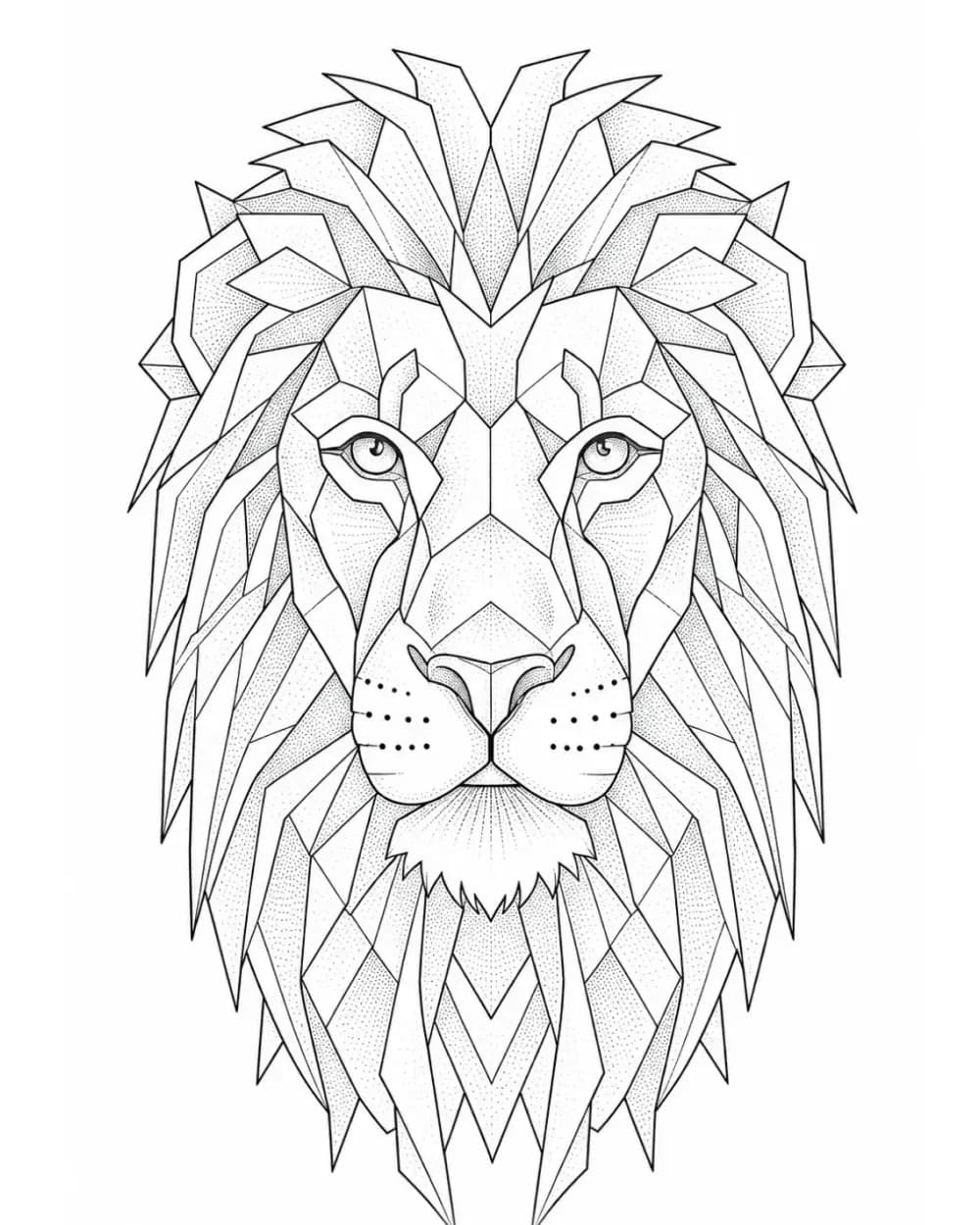
A frontal geometric lion where the mane silhouette, eye line, muzzle, and nose remain readable underneath the faceted construction.
Explore more animal tattoo stencil gallery stencils
- The geometric treatment succeeds because the lion face is established by a stable frontal structure before the triangular facets become the second read.
- Medium-to-large lion designs that need a graphic, symmetrical direction without losing the face-first recognition of the animal.
- Small facets around the eyes, muzzle, and mane can collapse into texture when reduced; preserve the main facial planes and outer mane before minor internal geometry.
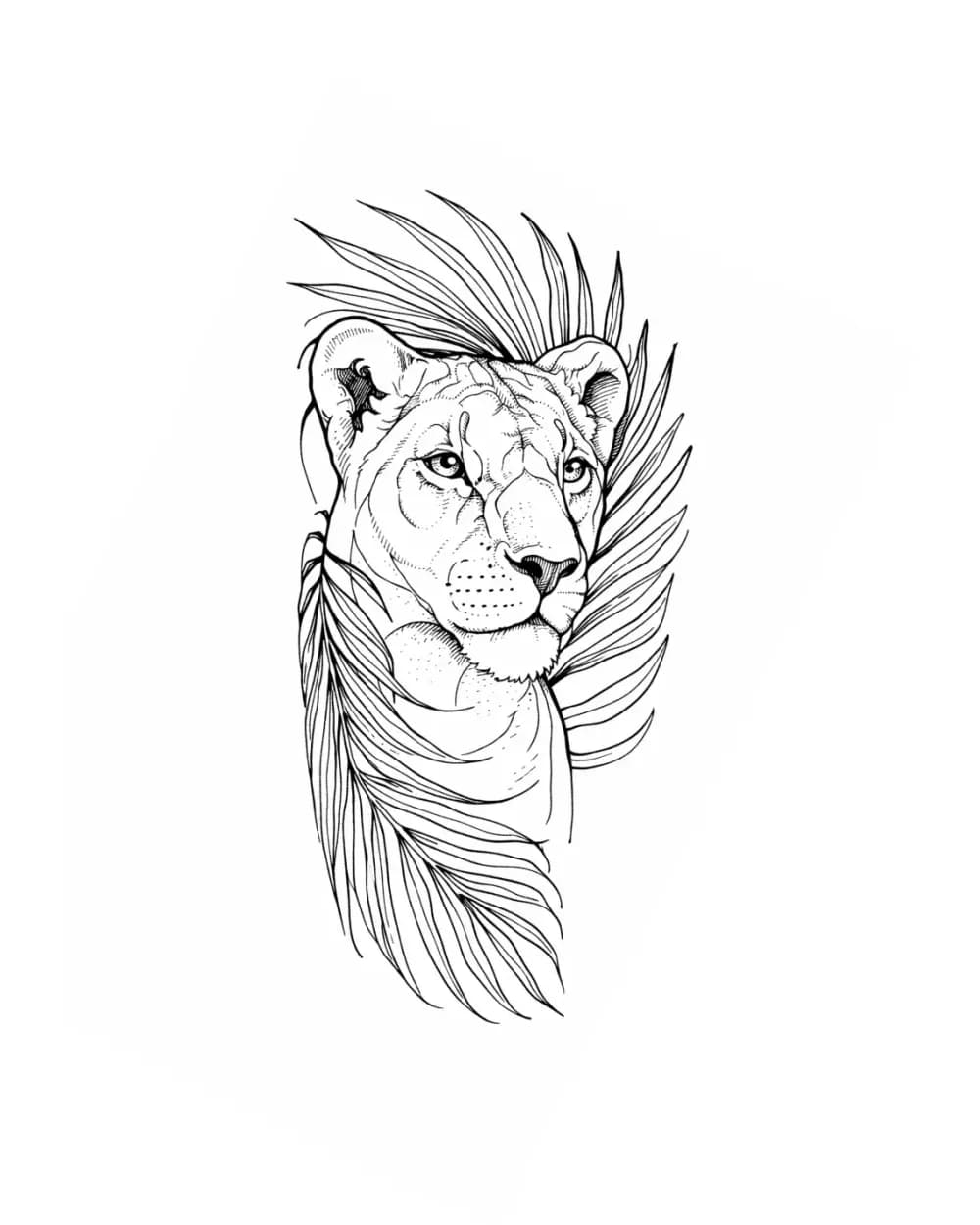
A side-profile lioness stencil where forehead, eye, nose, muzzle, jaw, and neck contour carry recognition before the botanical support matters.
Explore more animal tattoo stencil gallery stencils
- The profile stays unmistakably feline because the face contour and muzzle direction remain uninterrupted while the supporting leaves sit outside the critical landmarks.
- Artists comparing a cleaner, less mane-heavy Lion direction where profile anatomy and negative space do most of the work.
- Botanical lines near the jaw and neck should remain lighter than the face contour; small whisker and fur marks are the first details to simplify at reduced size.
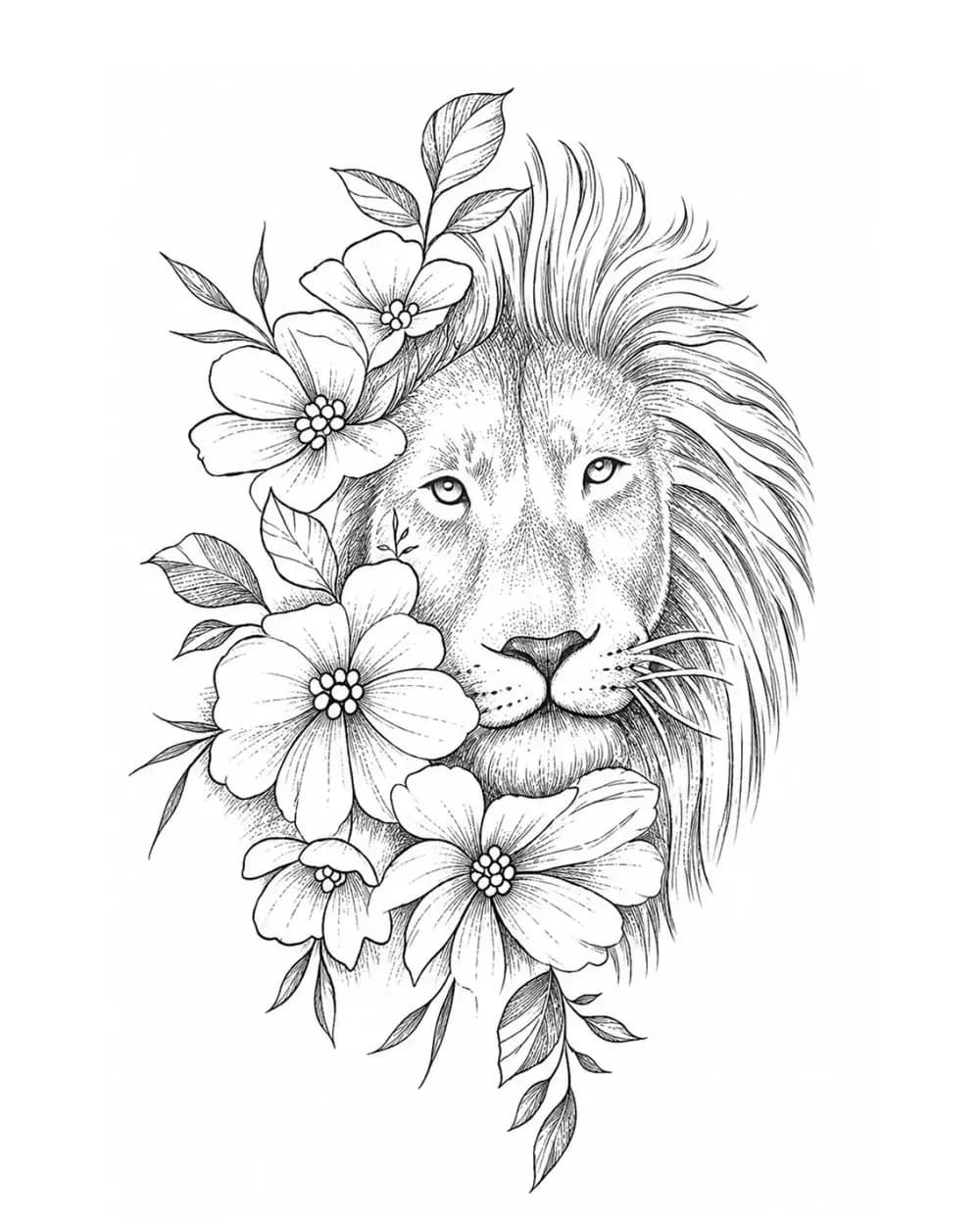
A decorative lion portrait where the eyes, nose, muzzle, and mane remain the primary read while flowers create an outer framing layer.
Explore more animal tattoo stencil gallery stencils
- The lion remains dominant because the face occupies the center of the composition and the floral shapes support the perimeter instead of cutting through the main landmarks.
- Medium-to-large decorative lion portraits that need floral support without turning the stencil into one uniform field of detail.
- Petal centers, mane texture, and whisker lines can accumulate around the face; keep the eye line, nose, muzzle, and mane boundary stronger than the floral micro-detail.
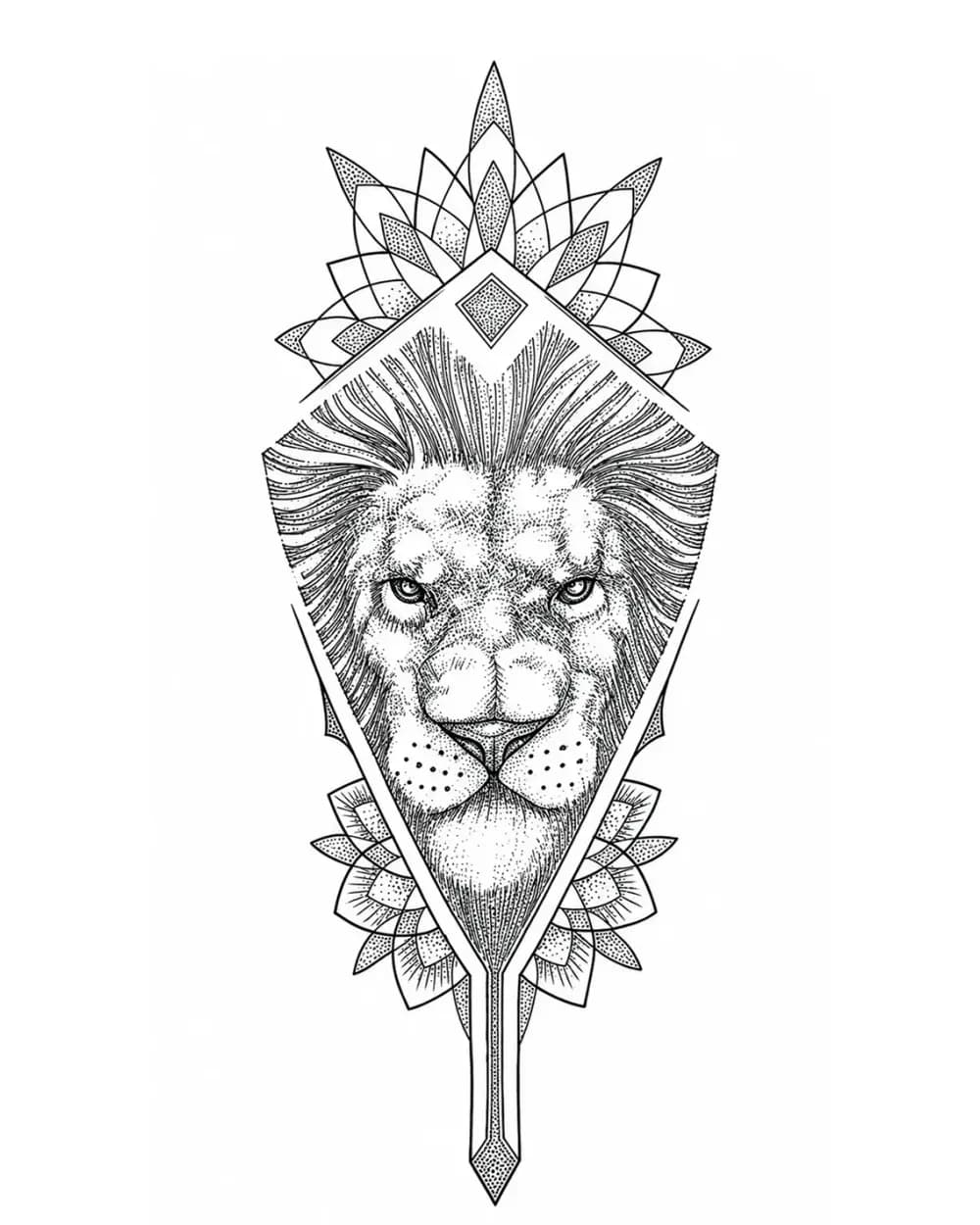
A lion stencil combining a recognizable frontal face with a denser ornamental and geometric support system around the mane.
Explore more animal tattoo stencil gallery stencils
- The design holds together because the face remains a stable central map while the mandala geometry expands outward through the mane instead of replacing the eyes, nose, and muzzle.
- Larger ornamental lion compositions where symmetry and patterned structure have enough physical space to stay separated after transfer.
- Repeated geometric cells can close rapidly at smaller print sizes; protect the face and major mane channels before retaining the smallest ornamental divisions.
Related galleries
Keep browsing nearby stencil ideas.
Next step
Turn your own reference into a clean stencil draft.
Use what reads clearly here as direction, then start from your own reference.