

Elephant Tattoo Stencil Ideas
These elephant references compare ornamental symmetry, floral framing, geometric contrast, full-body patterning, a simplified calf, a conceptual puzzle-piece portrait, a…
- 9
- Practical
- Artist-first
These elephant references compare ornamental symmetry, floral framing, geometric contrast, full-body patterning, a simplified calf, a conceptual puzzle-piece portrait, and one hybrid composition. Elephants remain recognizable through a small set of dominant landmarks: the trunk, ears, tusks, forehead, eye position, and the overall width of the head. The stencil must protect those landmarks even when the interior becomes highly decorative.
The Trunk and Ears Create the Main Read
In frontal designs, the trunk acts as a central spine while the ears establish the width and symmetry of the composition. Tusks and eye placement help distinguish the face from surrounding mandala or floral detail. If those large forms become interrupted, the stencil may retain ornament while losing the animal.
Ornamental, Floral, and Geometric Variations
Mandala-filled elephants need consistent spacing inside the ears, forehead, and trunk. Floral portraits work best when petals frame rather than replace the facial contour. Split realistic and low-poly designs depend on a precise central division so the contrast between the two rendering systems remains intentional.
Density and Scale Watchouts
Small pattern cells, ear ornament, puzzle-piece gaps, flower centers, stippling, and repeated trunk motifs need a larger line budget than a simple calf or portrait. When reducing the design, simplify interior decoration before altering the trunk, tusks, eye, or ear edge. Dense patterns should remain separated by visible negative space.
Selecting an Elephant Reference
Choose a simple calf or cleaner portrait for compact placement. Use full ornamental, geometric, or floral compositions where the placement can support width and interior detail. The hybrid example belongs here only as supporting material because it deliberately combines elephant structure with another creature.
Continue Through the Broader Workflow
Browse the complete animal tattoo stencil collection, or prepare an elephant reference in the tattoo stencil maker.
Examples
Elephant stencil examples
Compare the linework, spacing and detail choices that make each stencil read differently.
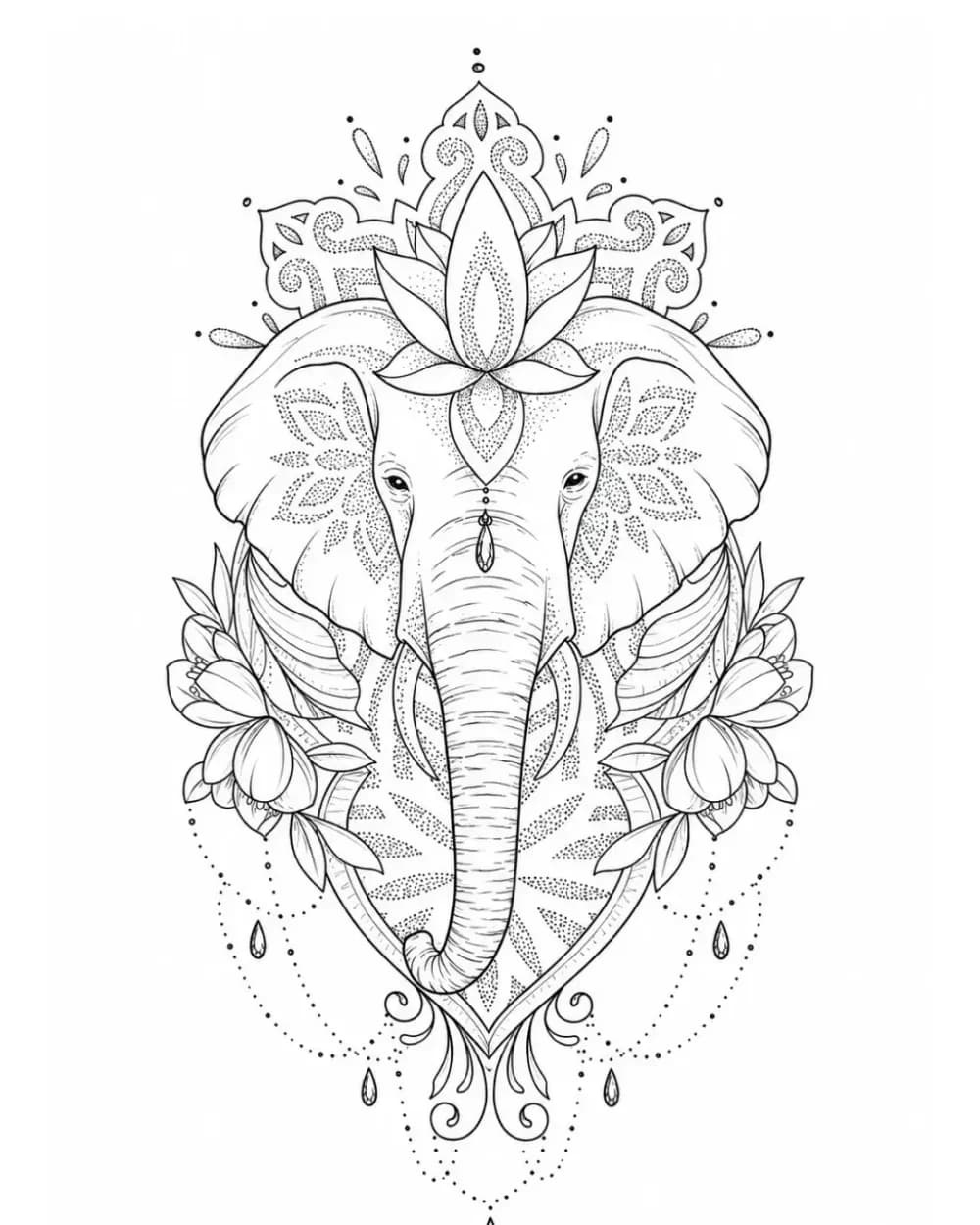
A frontal elephant stencil where the trunk and ears establish the animal before the lotus and mandala structure begins to fill the interior.
Explore more animal tattoo stencil gallery stencils
- The head remains readable because the trunk acts as a central spine and the ears preserve the broad outer silhouette while the ornament stays contained inside that structure.
- Medium-to-large ornamental elephant designs where symmetry and negative space can remain open around the face.
- Mandala cells, lotus petals, and facial landmarks can become equal-weight noise; preserve the trunk edge, eyes, tusks, and ear boundary before smaller pattern detail.
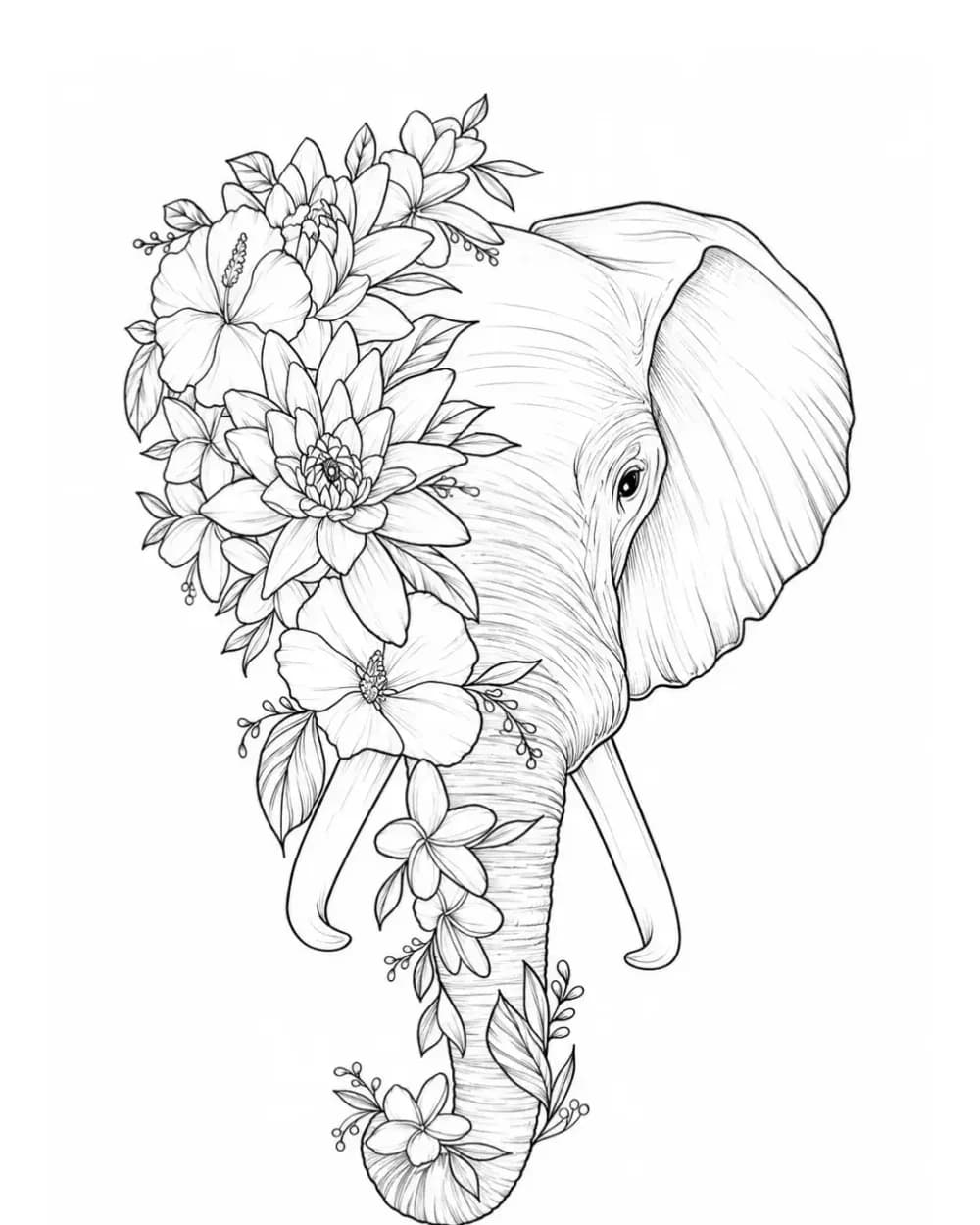
A split elephant portrait balancing a readable animal face against one floral side without losing the trunk, eye, or ear geometry.
Explore more animal tattoo stencil gallery stencils
- The split treatment remains coherent because the elephant landmarks still cross the composition and the floral side behaves as a rendering variation rather than a replacement face.
- Decorative elephant portraits that combine natural structure with floral support inside one controlled silhouette.
- Petals and leaf edges near the eye, tusk, and trunk can interrupt the face if they become too dense; protect the central facial relationships first.
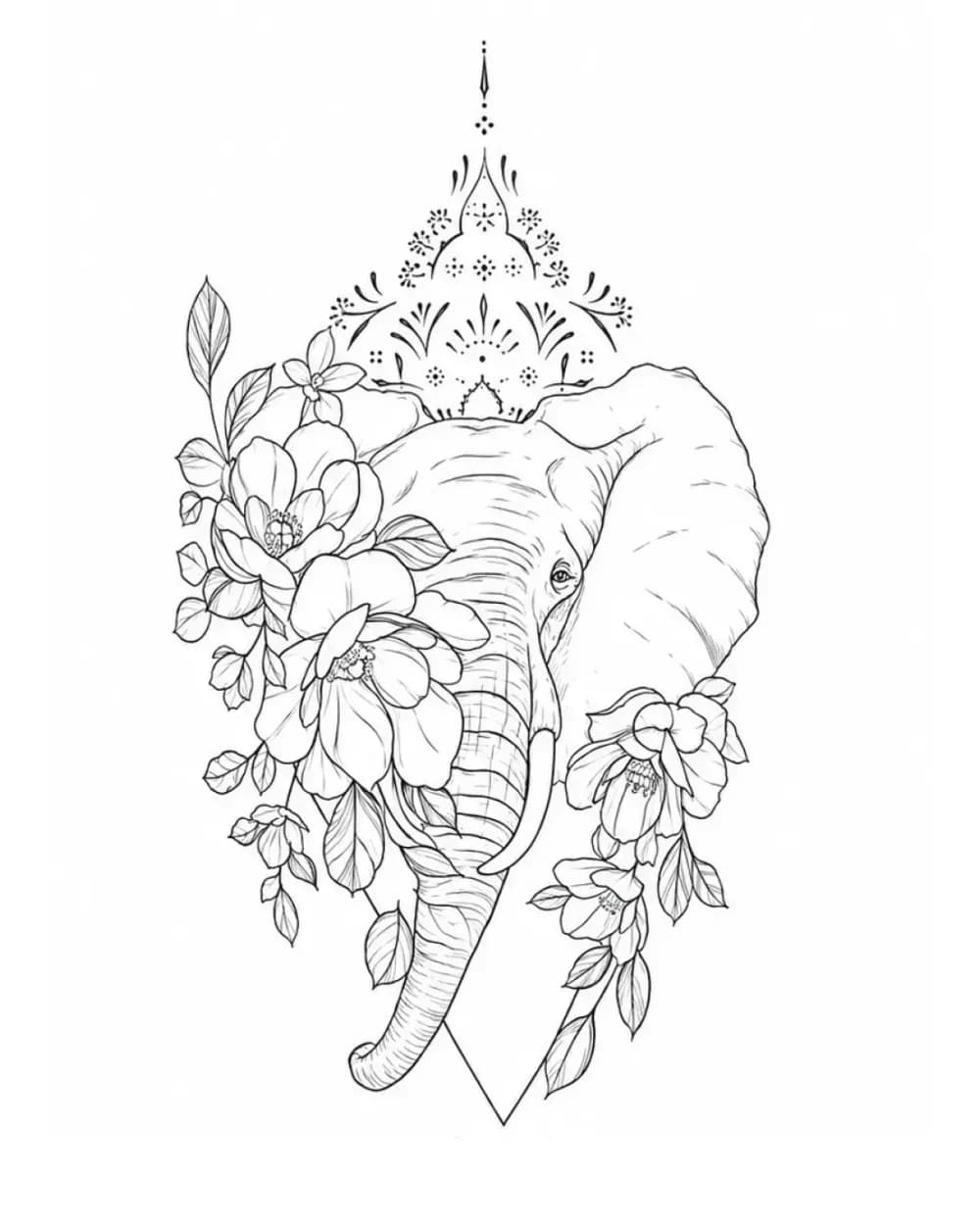
A decorated elephant portrait where the crown and flowers frame the face while the ears, forehead, trunk, and tusks keep the animal as the first read.
Explore more animal tattoo stencil gallery stencils
- The composition keeps a clear hierarchy because the facial centerline stays open and the ornament grows outward around the elephant rather than through its main landmarks.
- Larger vertical elephant compositions that need decorative framing without sacrificing a face-first stencil read.
- Crown geometry, flower centers, and ear detail need enough spacing at print size; reduce secondary ornament before compressing the elephant face.
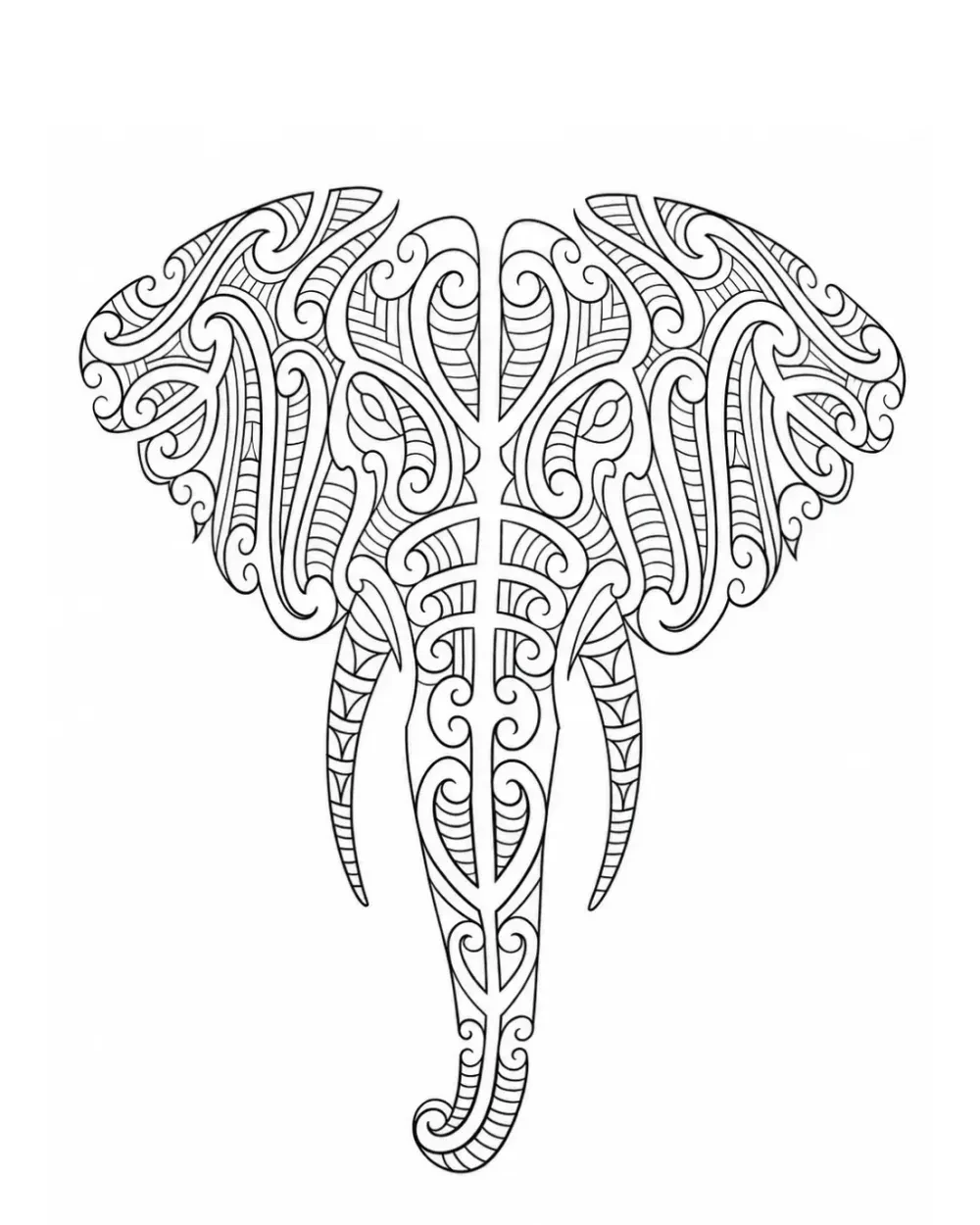
A dense ornamental elephant stencil that tests how much repeated interior pattern can be carried while the head silhouette remains dominant.
Explore more animal tattoo stencil gallery stencils
- The elephant stays recognizable when the repeated pattern follows the head, ears, and trunk instead of flattening those forms into one decorative field.
- Large ornamental placements where interior pattern density has enough physical room to remain separated after transfer.
- Repeated cells can close quickly when reduced; keep clear negative space around the eyes, tusks, trunk edges, and major ear divisions.
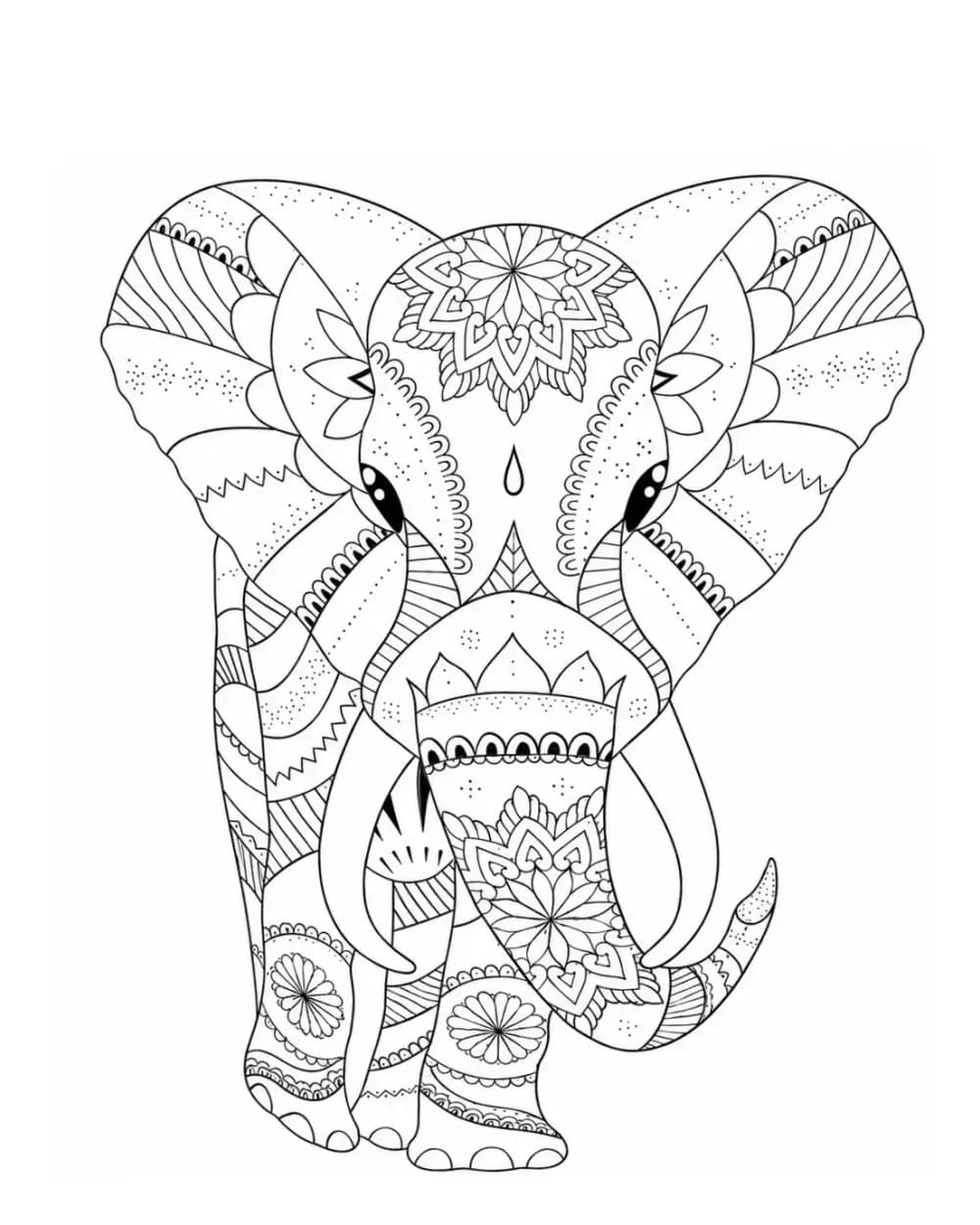
A full-body elephant composition where leg spacing, trunk direction, and body silhouette must survive alongside dense mandala patterning.
Explore more animal tattoo stencil gallery stencils
- The full animal reads when the body mass, legs, ears, and trunk are established as large connected shapes before the internal ornament is inspected.
- Larger placements that can support both a complete elephant silhouette and substantial interior decorative structure.
- Leg gaps, trunk-to-body spacing, and small pattern cells are the first areas to collapse; simplify internal pattern before sacrificing body separation.
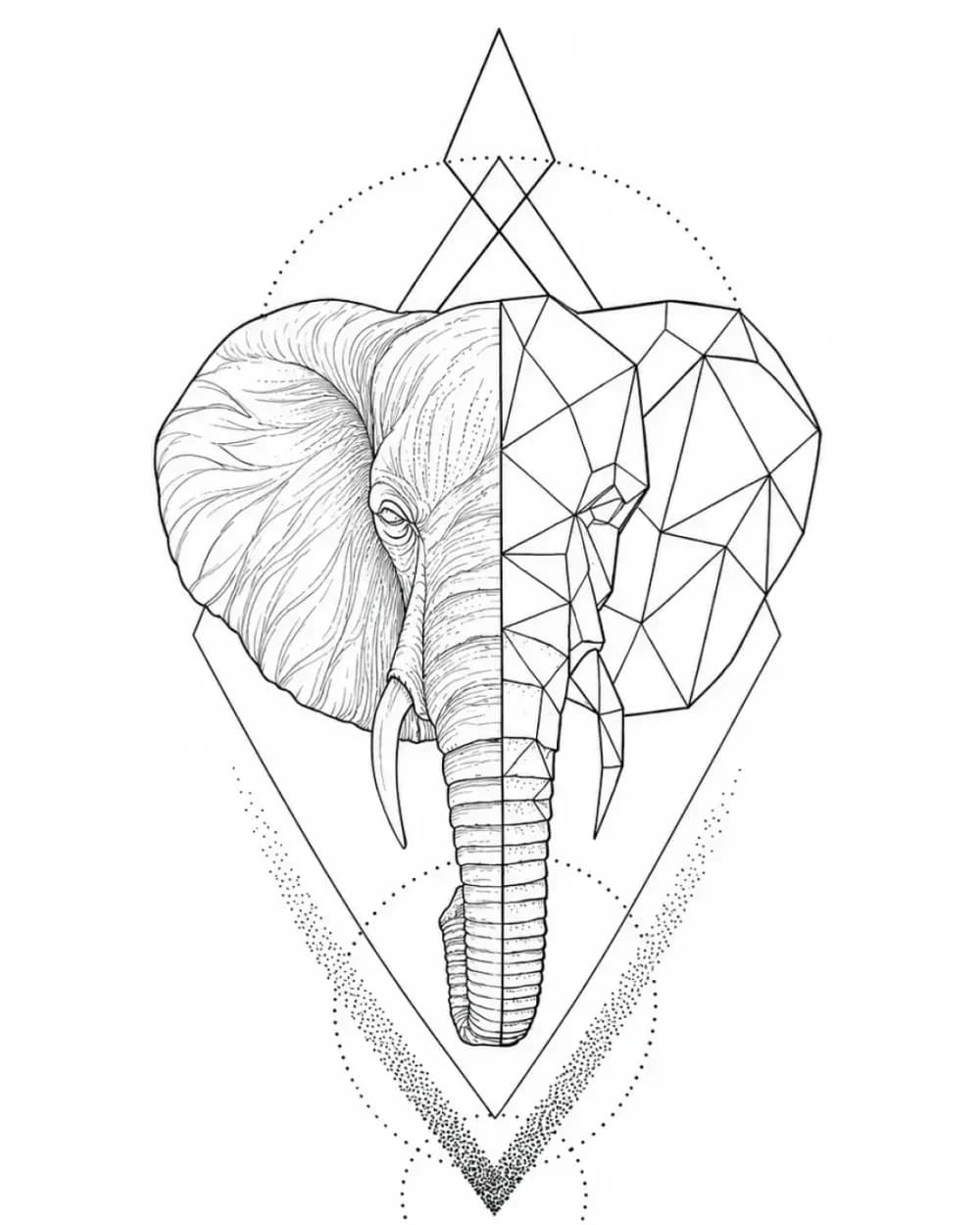
A half-realistic, half-geometric elephant study where the central split must stay precise enough for both rendering systems to share one face.
Explore more animal tattoo stencil gallery stencils
- The contrast works because both halves preserve the same elephant proportions while using different internal line logic on either side of a stable centerline.
- Conceptual elephant designs comparing organic facial structure with geometric simplification in one symmetrical composition.
- If the centerline drifts or geometric facets become too dense, the two halves stop reading as one animal; keep the trunk, eyes, and ear width aligned across the split.
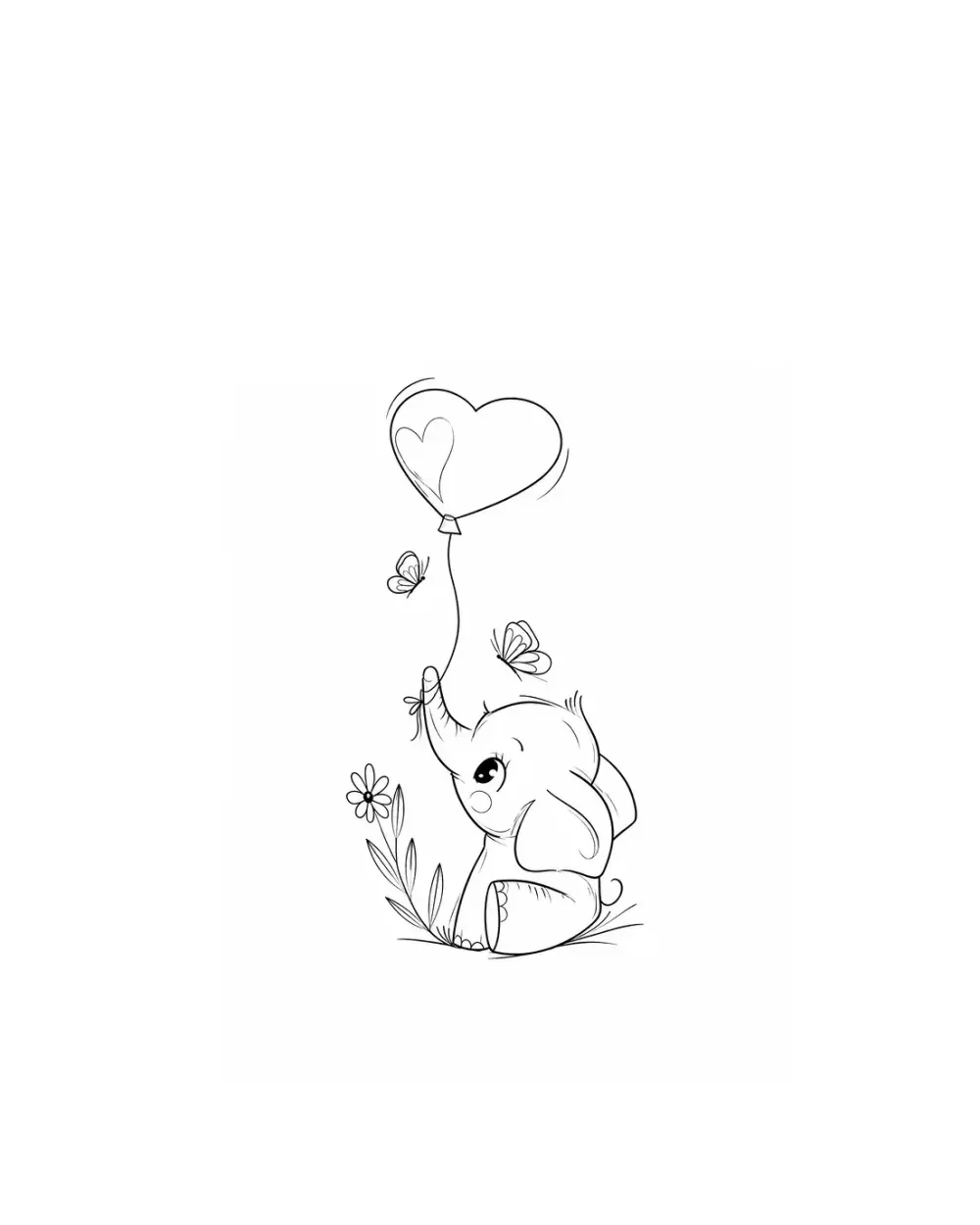
A simplified calf composition where the small elephant silhouette and trunk gesture carry the subject before the balloon adds the narrative cue.
Explore more animal tattoo stencil gallery stencils
- The design remains readable with a low line budget because the ear-to-head ratio, trunk direction, body stance, and balloon are clearly separated.
- Smaller or lighter elephant concepts where a clean silhouette matters more than dense skin or ornamental texture.
- Balloon string, trunk, and legs can overlap visually at small scale; preserve clear gaps between those thin directional elements.
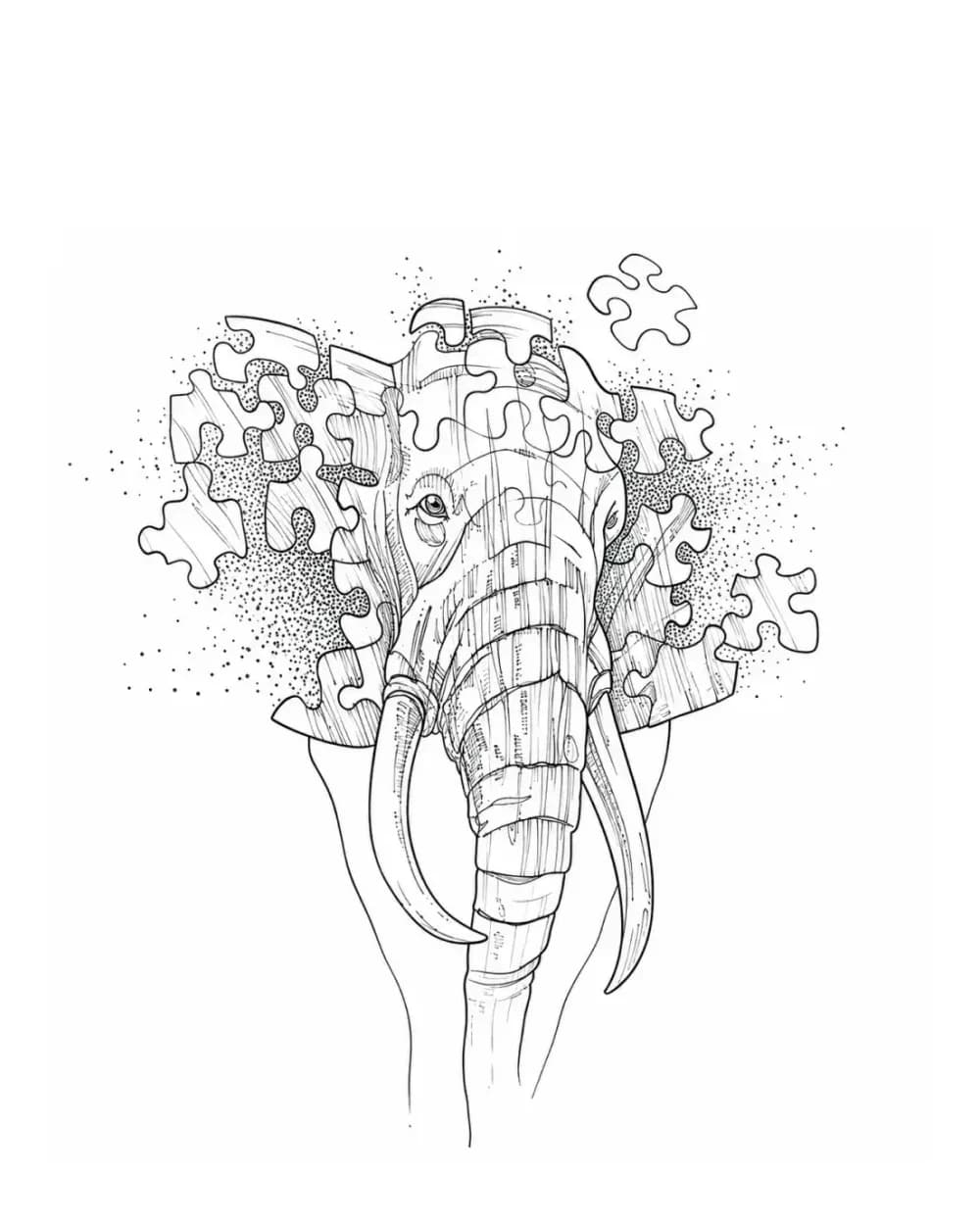
A conceptual elephant portrait where the puzzle-piece breakaway effect must remain secondary to the intact trunk, ear, and facial structure.
Explore more animal tattoo stencil gallery stencils
- The concept lands because enough of the elephant remains structurally complete before the outer edge begins to fragment into puzzle shapes.
- Concept-led elephant compositions where a controlled disintegration effect is part of the story but the animal still needs an immediate read.
- Too many small puzzle gaps can turn the edge into noise; keep the eye, trunk, forehead, and major ear contour intact before fragmenting peripheral areas.
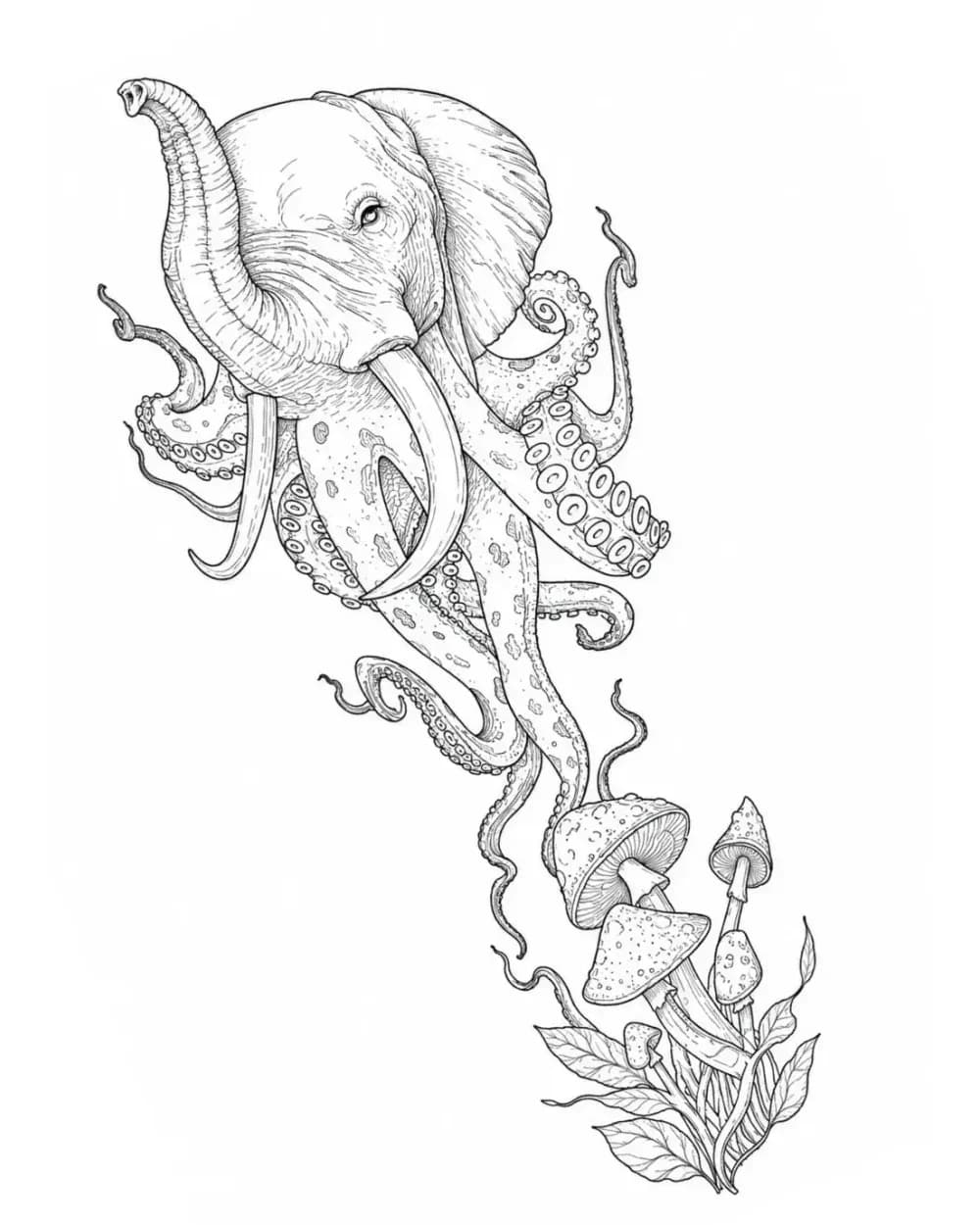
A supporting hybrid example showing how elephant head landmarks can remain legible even when tentacles and mushrooms deliberately complicate the lower silhouette.
Explore more animal tattoo stencil gallery stencils
- The elephant component stays identifiable because the upper head, ears, eye region, and trunk origin remain clear before the hybrid tentacle structure takes over.
- Comparing how far an elephant concept can move into fantasy or hybrid territory before the primary animal landmarks become ambiguous.
- Tentacle overlaps, mushroom contours, and lower-face transitions can create a dense knot; keep the elephant head hierarchy clearly stronger than the supporting hybrid detail.
Related galleries
Keep browsing nearby stencil ideas.
Next step
Turn your own reference into a clean stencil draft.
Use what reads clearly here as direction, then start from your own reference.