

Stencil Gallery

Cybersigilism Tattoo Stencil Gallery

Compare ten curated Cybersigilism stencil references built around abstract blackwork structure rather than literal objects or traditional tribal motifs. Use the set to judge primary axis, orientation, negative space, junction density, and which lines still read when the piece gets smaller. Cybersigilism, cyber sigilism, cyber tribal, and neo-tribal overlap in search language; this gallery stays on abstract structure so it does not collapse into generic blackwork, fine line, ornamental, or culturally specific tribal owners.

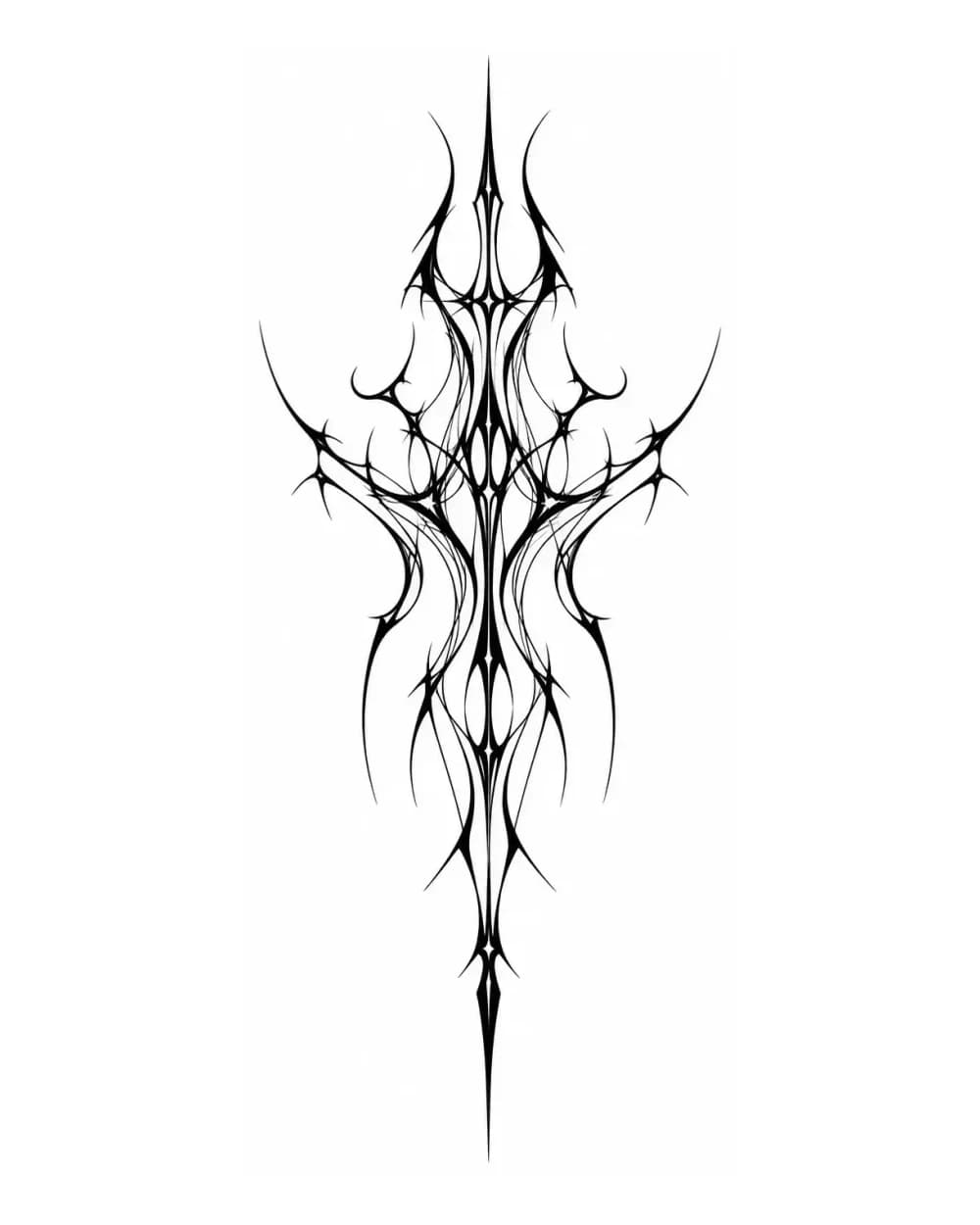
Cybersigilism tattoo stencil with a central vertical axis and open negative space
10
September 9, 2026
Collection

Examples

Browse the collection.

Use the images first, then open the reading notes when a composition needs more context.

Cybersigilism tattoo stencil with a central vertical axis and open negative space

Central-axis example with controlled near-symmetry and open channels along the spine.

The central skeleton lands first, so the hooked lateral extensions stay secondary instead of competing for the first read.
Comparing a clean vertical axis against denser or more asymmetric Cybersigilism structures.
Fine web lines near the midsection can close if the piece is reduced without protecting the open counters.
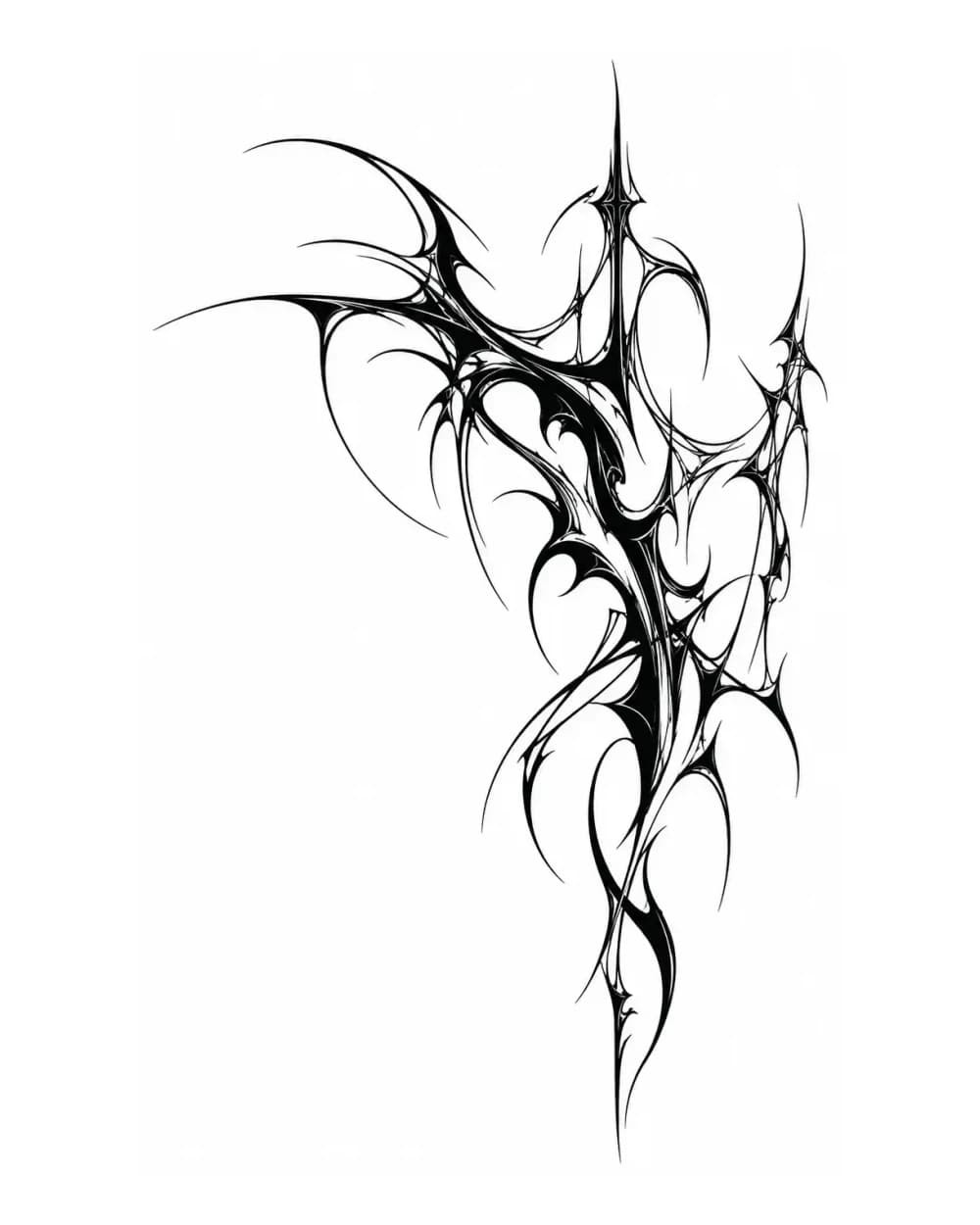
Asymmetric Cybersigilism tattoo stencil with off-center glyph balance

Asymmetric glyph example where the visual weight sits off-center without losing overall balance.

Deliberate asymmetry stays readable because one dominant hooked mass carries the composition before the thinner terminals matter.
Studying off-center Cybersigilism balance that still feels intentional rather than unfinished.
The lightest trailing tips can disappear at small size; protect the main mass before preserving every whip line.
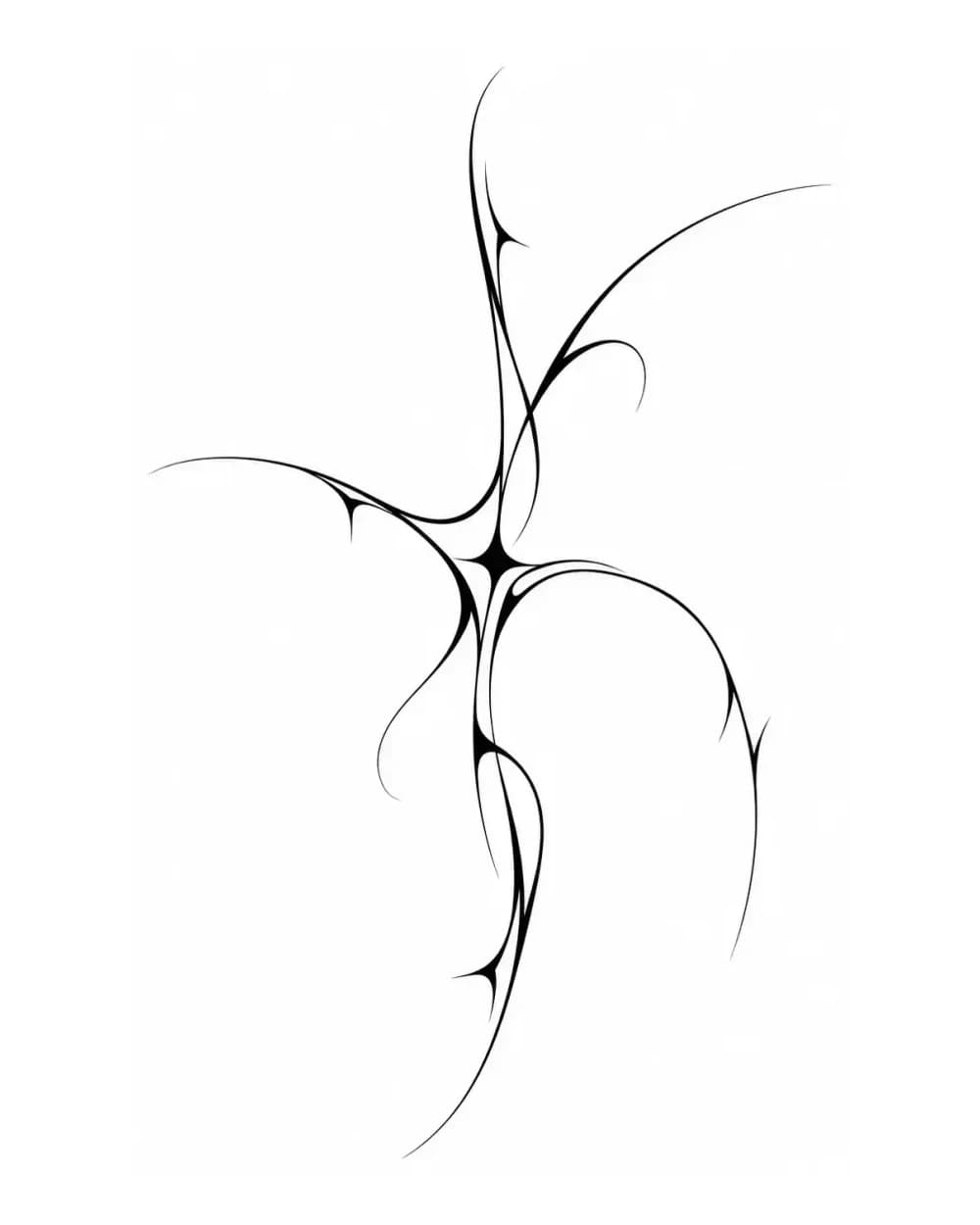
Minimal Cybersigilism tattoo stencil with sparse thorn terminals and high negative space

Sparse/minimal example that relies on generous negative space and a few decisive terminals.

The open field makes the sparse structure easy to judge, so hierarchy is obvious even with very few lines.
Comparing a high-negative-space Cybersigilism direction against denser network compositions.
Do not densify the design merely to make it look more complex; extra junctions can erase the minimal read.
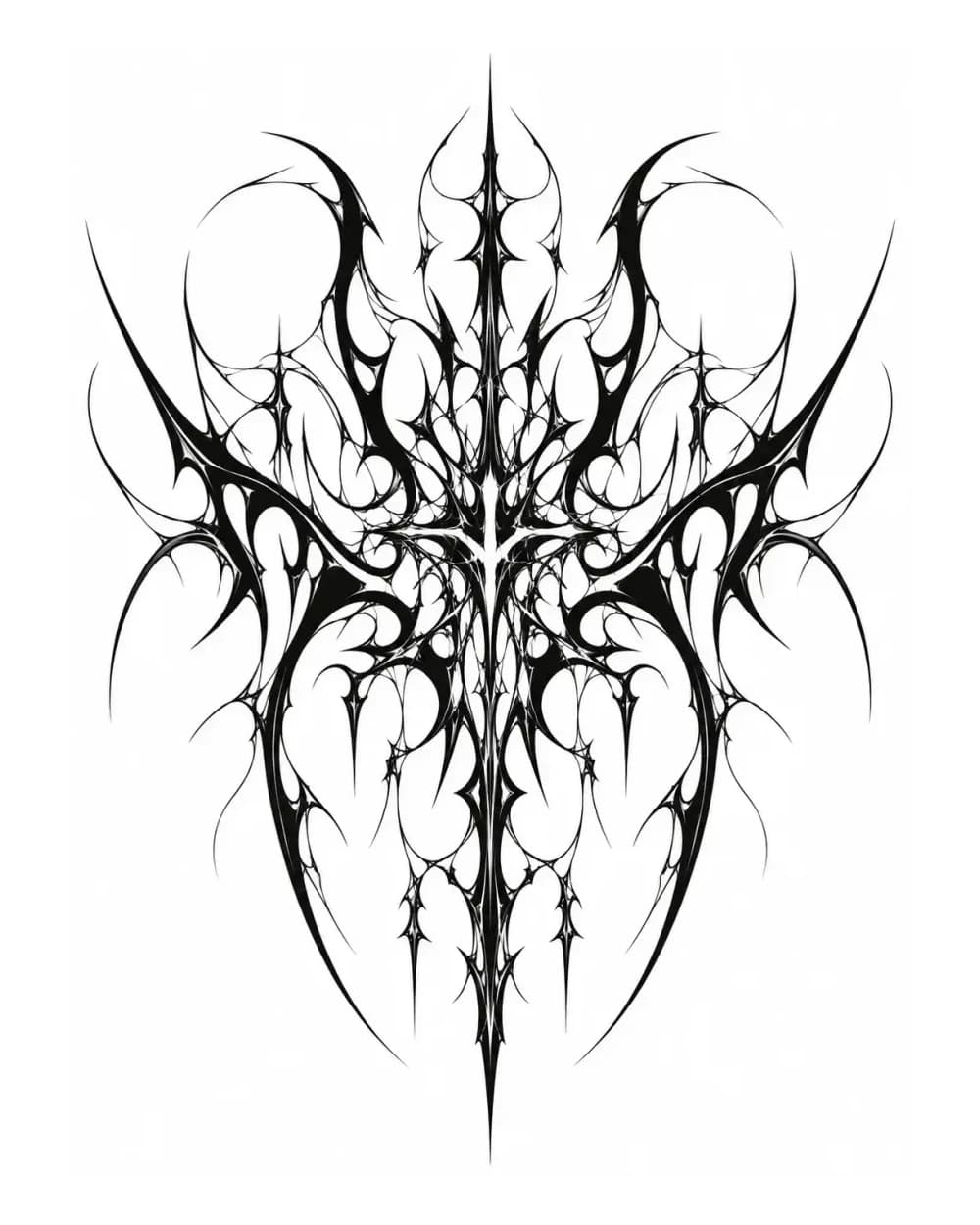
Dense Cybersigilism tattoo stencil with layered central line hierarchy

Dense central composition with layered junctions and controlled internal voids.

Despite the density, a central hierarchy remains visible, so the stencil still has a primary structure instead of a flat tangle.
Stress-testing whether a denser Cybersigilism network still keeps a readable skeleton at the intended tattoo size.
This is the highest final-size risk in the set; crowded junctions can grey out quickly if physical size is underestimated.
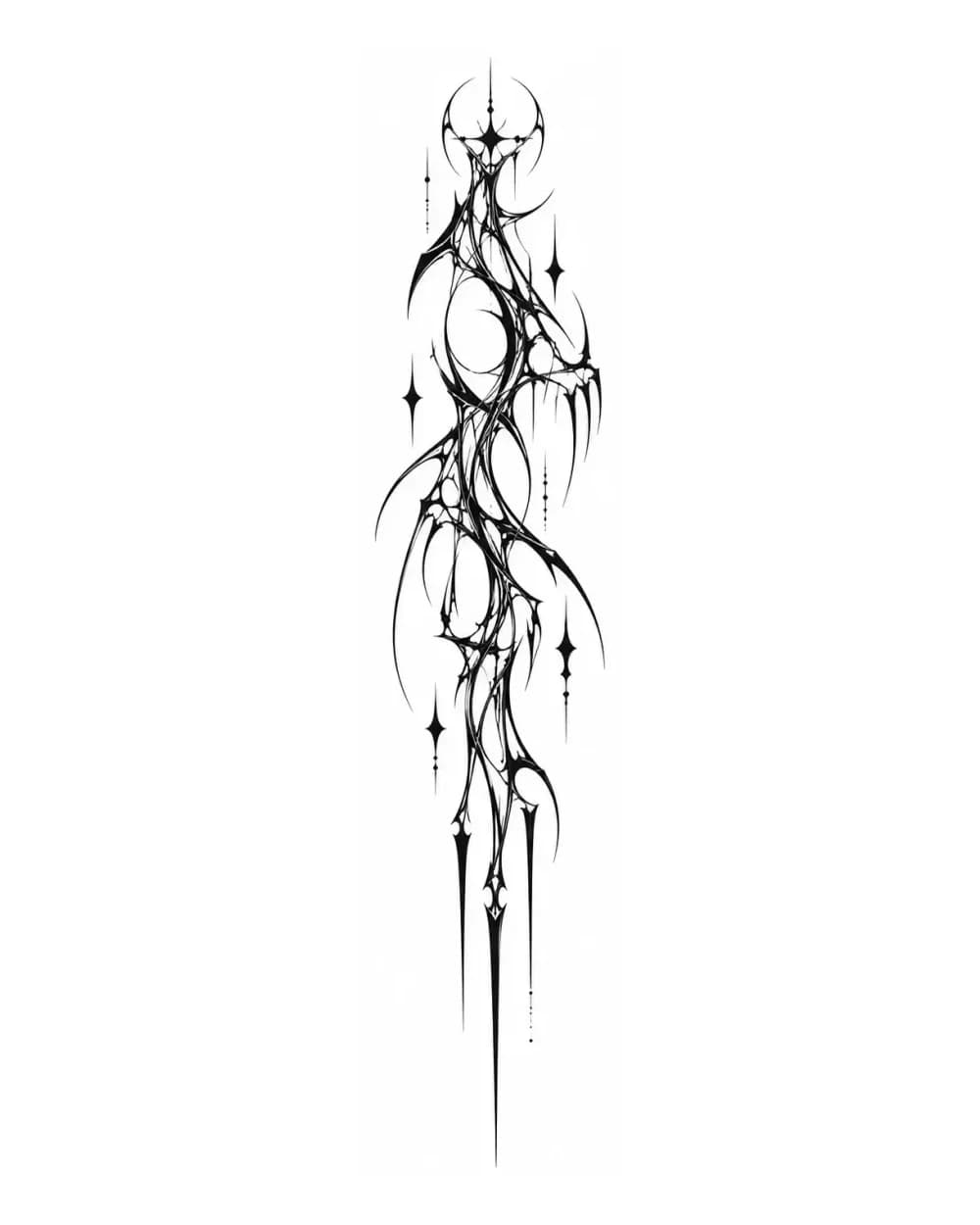
Elongated vertical Cybersigilism tattoo stencil with linked abstract nodes

Vertical body-flow example built from linked nodes and long tapered terminals.

The elongated path reads as one continuous structure, which helps evaluate body-flow orientation before ornament density rises.
Planning tall placements where Cybersigilism needs a clear vertical travel path.
Small diamond nodes need enough separation or they merge into the spine when reduced.
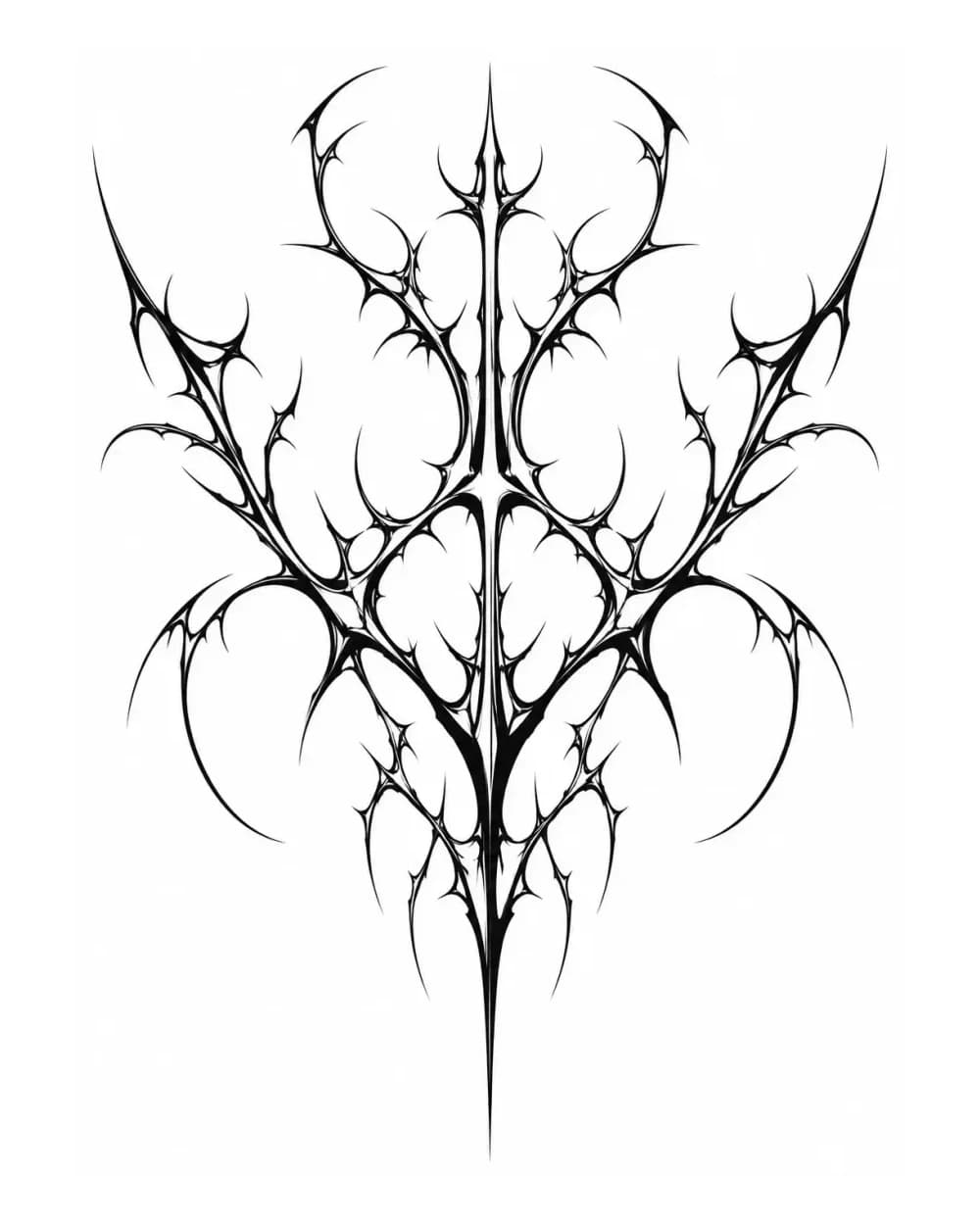
Cybersigilism tattoo stencil with branching thorn and barb network

Thorn-network example with barbed terminals and multi-scale branch hierarchy.

The branching remains abstract: the barbs read as network terminals rather than literal botanical leaves or vines.
Comparing abstract thorn networks against ribbon/bio-organic and radial Cybersigilism structures.
Repeated barb clusters can flatten into one dark mass if negative space between branches is not protected.
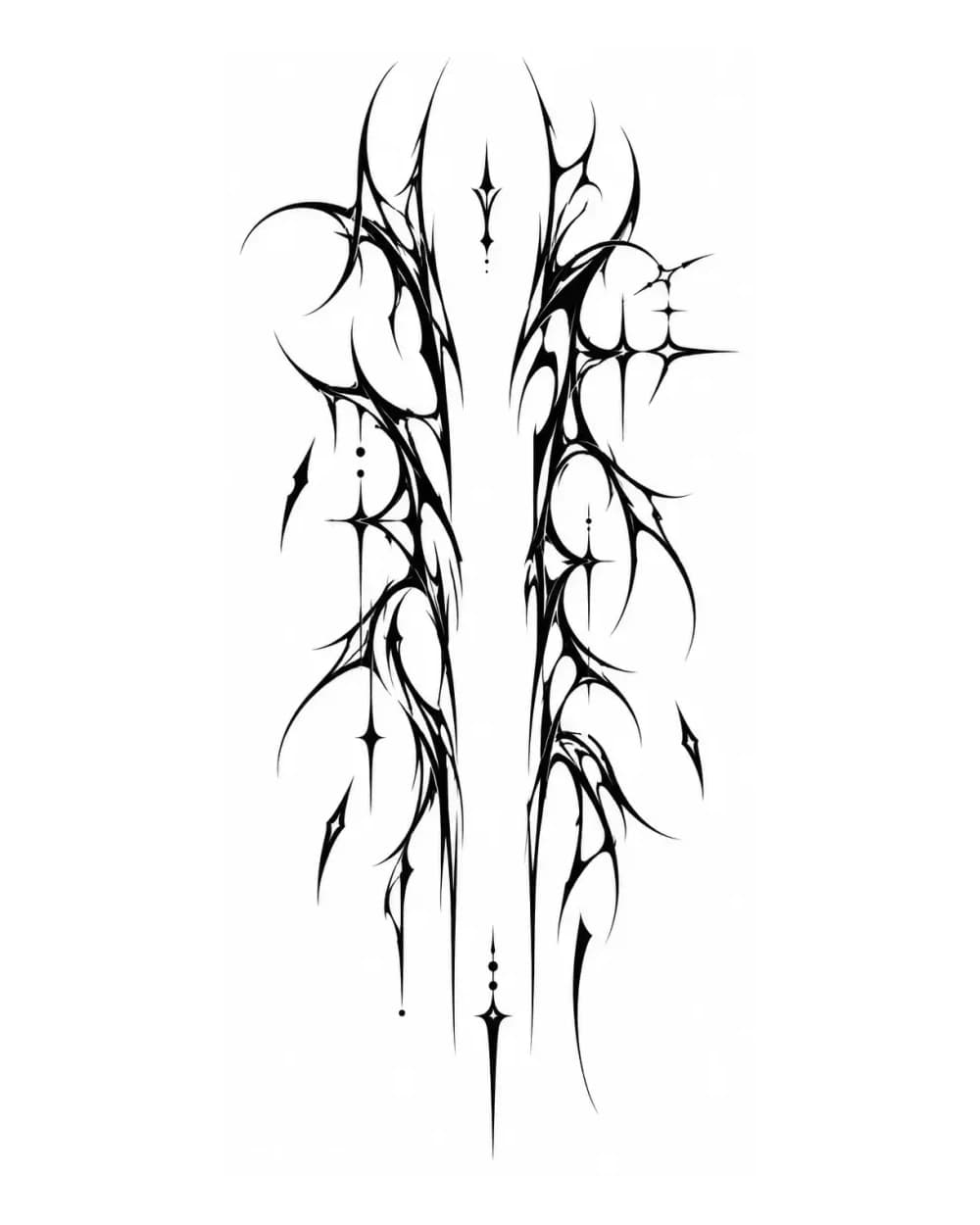
Broken bilateral Cybersigilism tattoo stencil with a central negative-space channel

Fragmented symmetry example with a deliberate central gap and detached side structures.

The broken bilateral read stays clear because the central channel separates the fragments instead of forcing a continuous mirror.
Studying Cybersigilism that uses interrupted symmetry as a design decision rather than a failed mirror.
If the gap closes at small size, the composition can accidentally read as one denser block.
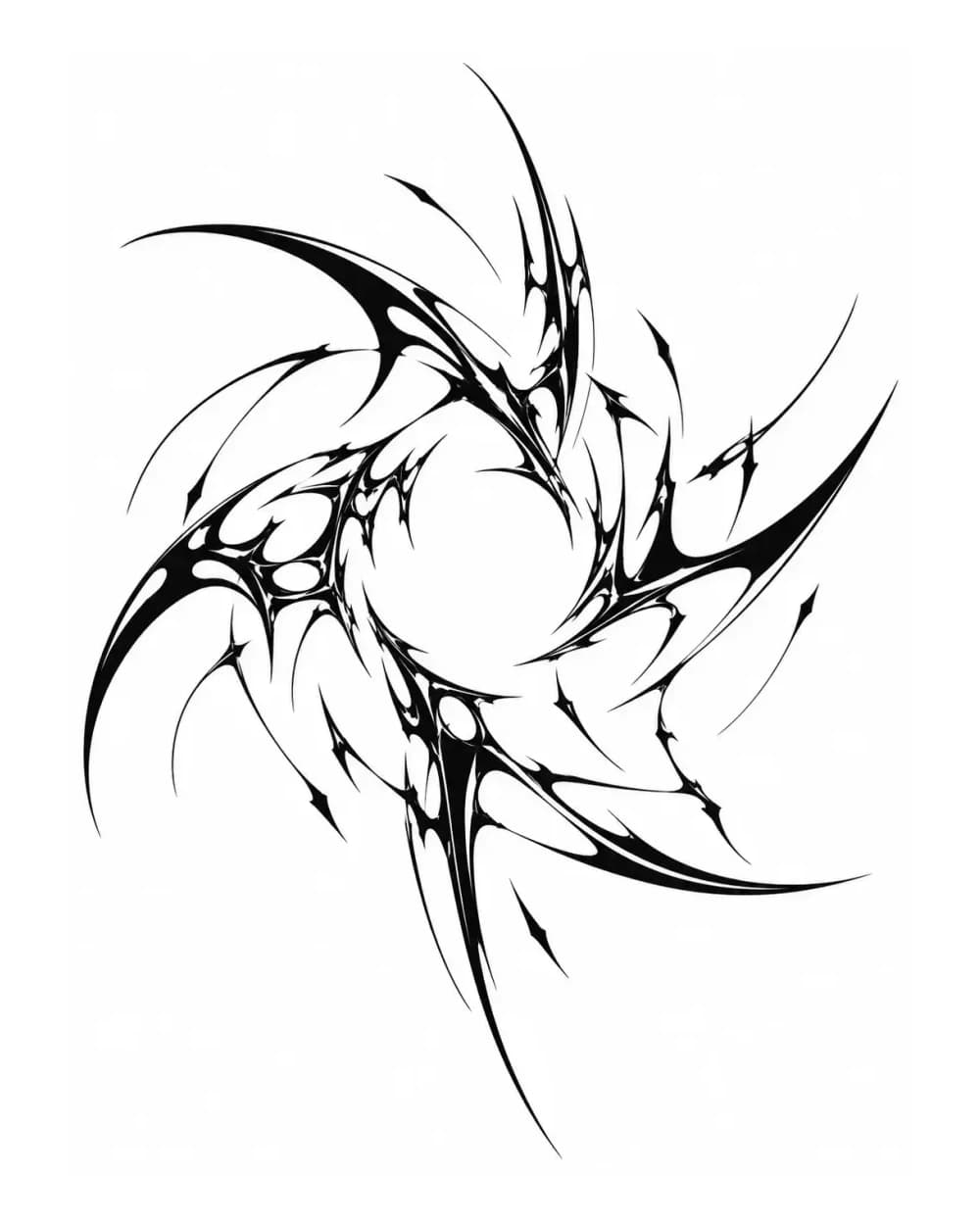
Radial orbital Cybersigilism tattoo stencil with irregular curved blades

Irregular radial/orbital example with asymmetric curved blades and motion around an open core.

The orbital motion stays irregular enough to avoid a perfect mandala or symbol lockup while still reading as one rotating structure.
Comparing Cybersigilism radial motion against axial and lateral flow without importing religious or mandala symbolism.
Peripheral fine arcs can vanish first; keep the thicker blade masses if the piece must stay readable when small.
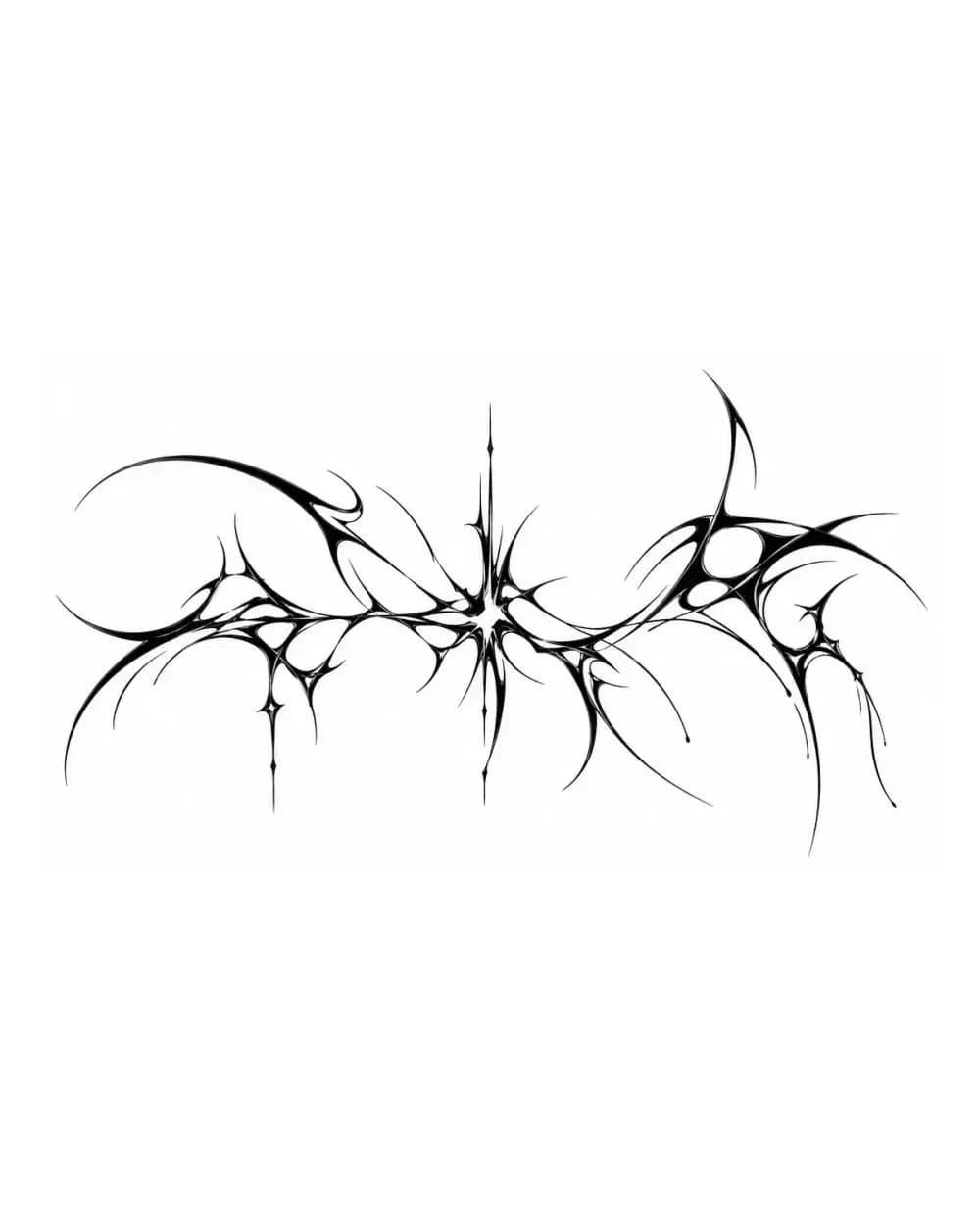
Wide lateral Cybersigilism tattoo stencil with sweeping whip lines

Lateral-flow example with wide sweeping terminals and asymmetric horizontal balance.

The wide orientation is carried by the sweeping whip lines, so the piece reads as horizontal flow rather than a vertical spine with side decoration.
Planning shoulder, chest, or other wide placements where Cybersigilism needs horizontal travel.
Do not force a wing or antler read onto the terminals; keep them abstract so the reference stays Cybersigilism rather than creature silhouette.
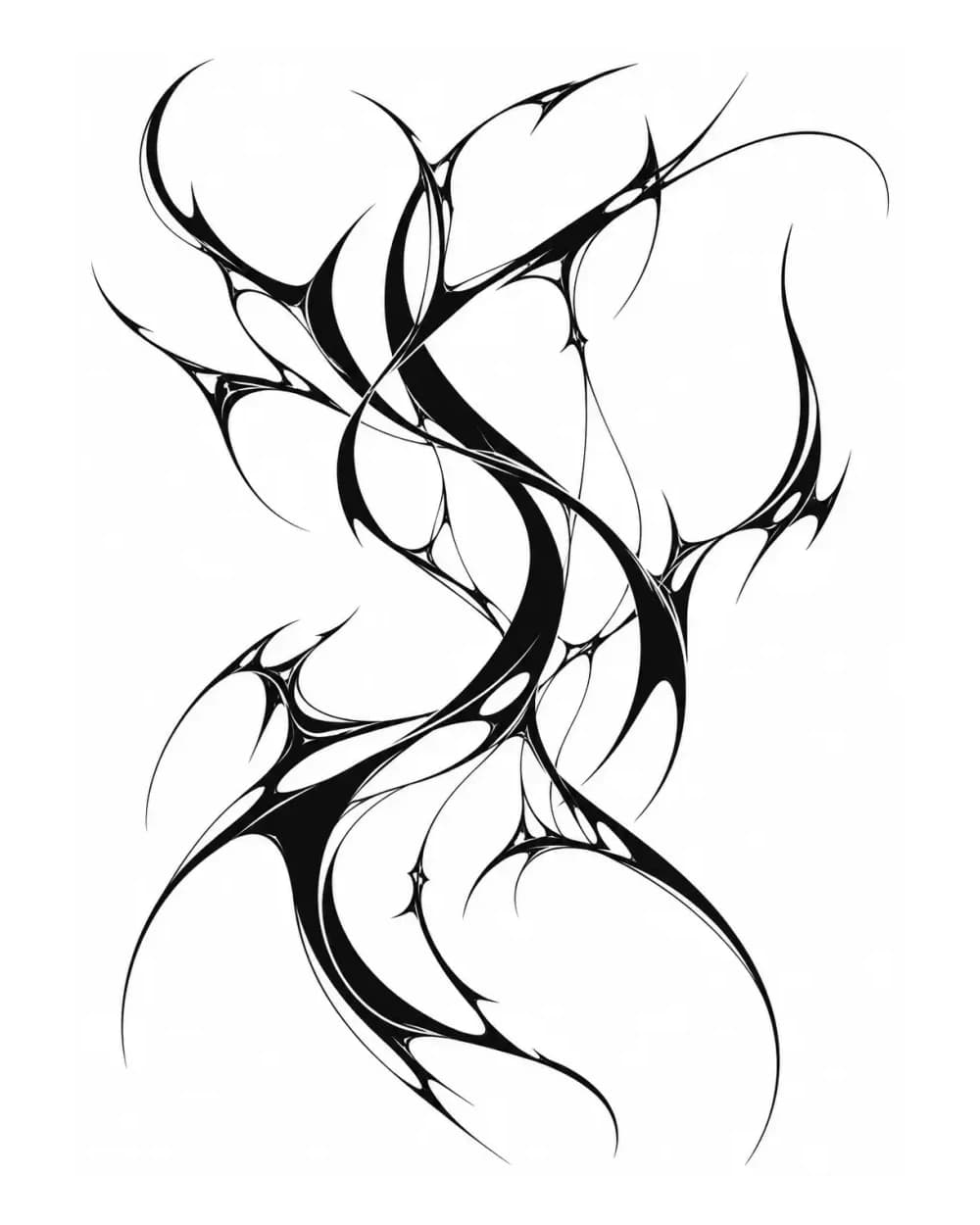
Ribbon bio-organic Cybersigilism tattoo stencil with elastic flowing blades

Ribbon/bio-organic adjacency example with elastic line tension and blade-like flows.

The thicker ribbon masses create organic tension without resolving into a literal creature, anatomy study, or botanical subject.
Comparing bio-organic Cybersigilism adjacency against sharper thorn networks and open minimal structures.
Webbed connectors between ribbon masses can clutter if every hairline is preserved at small size.

Reading notes

What to pay attention to in this category.

These notes stay secondary to the gallery, but they help explain where the subject reads well and where it starts to collapse.

Judge the skeleton before the densest terminals

Useful Cybersigilism stencils usually win or lose on primary axis, orientation, and major junctions before the finest whip lines matter. Compare the central spine, broken symmetry channel, radial core, or lateral sweep first. If that skeleton is unclear, adding more terminals will not fix the reference.

Protect the openings that keep the composition readable

The open counters between spines, barbs, and ribbon masses are part of the design. When those channels close at the intended physical size, a sharp Cybersigilism structure can turn into a grey tangle. Prefer fewer, stronger openings over preserving every micro-connection.

Keep Cybersigilism distinct from nearby style labels

Searchers may use cybersigilism, cyber sigilism, cyber tribal, or neo-tribal for overlapping requests. This gallery stays on abstract structural comparison so it does not become a synonym clone of ornamental blackwork or a culturally specific tribal page. If the reference starts reading as a literal object, animal, face, or traditional tribal motif, it no longer belongs here.

Use the gallery to choose a direction, then convert your own reference

These ten examples are curated visual references, not a free flash download set and not a Cybersigilism generator. After you know which structural direction fits the placement, move into the reference-to-stencil workflow with your own artwork.

FAQ

Quick questions about this cybersigilism tattoo stencil gallery.

It helps you compare stencil readability, silhouette control, and detail density across 10 examples before you start drawing from your own references.

Next step

Turn your own Cybersigilism reference into a stencil draft

Upload your own reference, keep the structural hierarchy you need, and compare the generated stencil before placement, print, or transfer.